
Buying a home in Toronto involves more than finding a property you like. You also need to secure financing that fits your income, savings, existing debts, and long-term plans. With different lenders offering varying mortgage rates and conditions, comparing your options can quickly become complicated. Working with a mortgage broker can make this process easier. Instead of approaching lenders individually, you can get professional assistance comparing mortgage products, understanding eligibility requirements, and preparing your application. However, not every broker offers the same lender access, experience, or level of service. This guide explains how to find the best mortgage brokers in Toronto, what to look for when comparing them, and which questions to ask before choosing someone to handle your mortgage application.
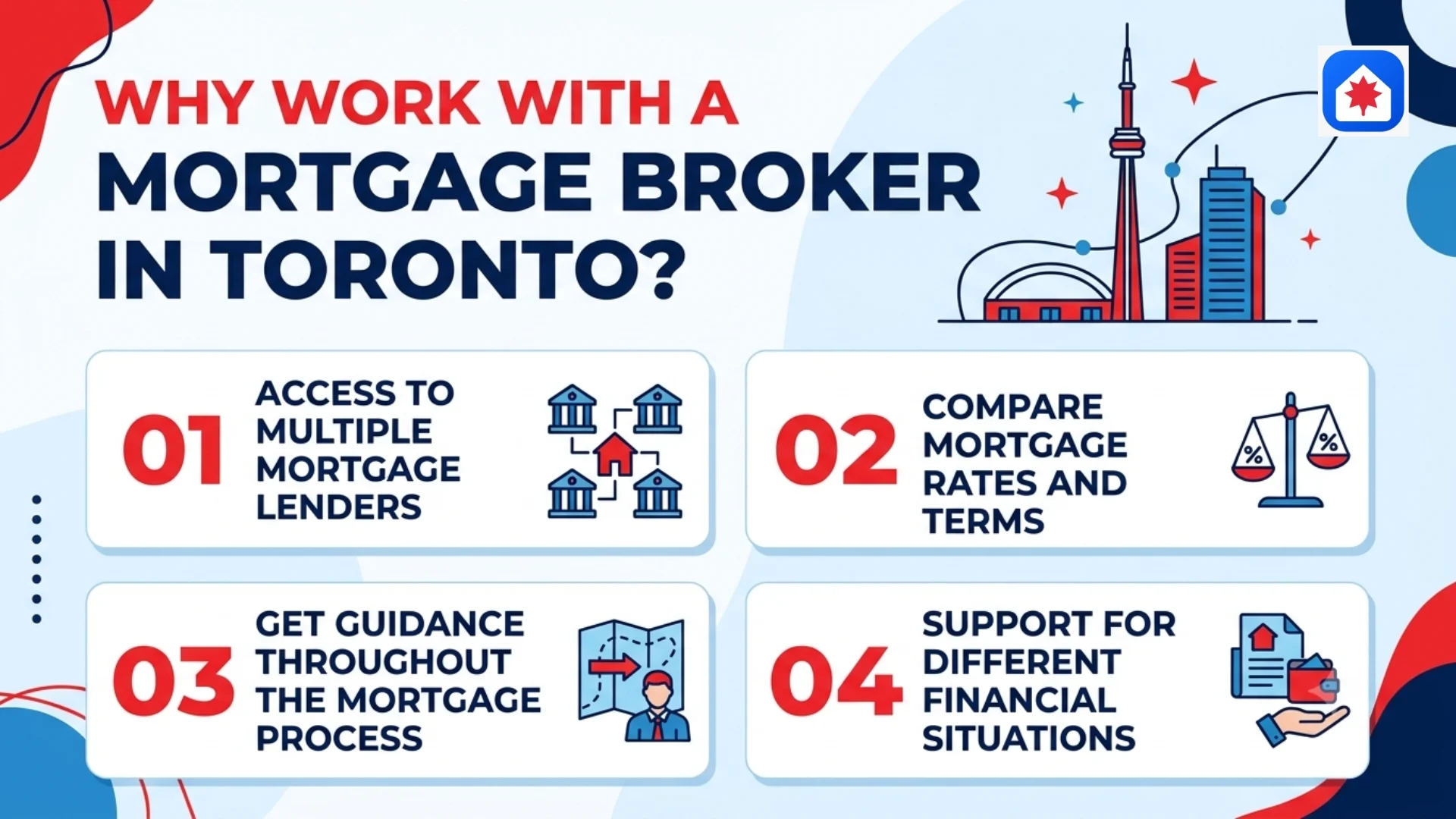
1. Why Work With a Mortgage Broker in Toronto?
A mortgage broker acts as an intermediary between borrowers and mortgage lenders. Rather than lending money directly, they assess your financial situation, identify suitable financing options, and help arrange a mortgage with a lender. Here are some reasons why working with a mortgage broker can be useful when buying a home in Toronto.
1.1. Access to Multiple Mortgage Lenders
One of the main advantages of using a mortgage broker is access to different lenders through a single point of contact. A broker can help identify which lenders are more likely to consider your application based on factors such as income, credit history, down payment, and employment status. This can be especially useful if you are self-employed, have variable income, or don't meet the standard lending requirements of traditional financial institutions.
However, lender access varies between brokerages. Not every broker works with the same financial institutions, so ask for an overview of their lender network before proceeding.
1.2. Compare Mortgage Rates and Terms
Mortgage rates can differ between lenders, even when they offer similar products. A mortgage broker can help you compare available options based on more than the advertised interest rate. For example, two lenders may offer similar rates but have different prepayment privileges, payment flexibility, mortgage penalties, or renewal conditions. Comparing these details helps you understand a mortgage's overall value rather than choosing an option based solely on its initial rate.
1.3. Get Guidance Throughout the Mortgage Process
A mortgage application involves several stages, from reviewing your finances to submitting documents and receiving lender approval.
A mortgage broker can help you:
- Assess your borrowing capacity.
- Prepare a mortgage pre-approval application.
- Identify suitable lenders and mortgage products.
- Gather and submit the required documents.
- Review mortgage commitments and conditions.
- Coordinate with the lender and your real estate lawyer during closing.
This support can be especially valuable if you are buying your first home or are unfamiliar with Canadian mortgage requirements.
1.4. Support for Different Financial Situations
Not all borrowers have the same financial background. A salaried employee with a stable income may have different financing options from a self-employed individual, a newcomer to Canada, or someone with an existing mortgage. An experienced broker should understand these differences and explain which lenders and mortgage products may be suitable. The goal is not simply to find a lender willing to approve your application. It is to identify financing that you can reasonably manage over the mortgage term.
2. Where to Find the Best Mortgage Brokers in Toronto
Before comparing individual professionals, you need reliable ways to build a shortlist. Instead of relying on a single recommendation or search result, use several sources to identify potential candidates.
2.1. Search Licensed Mortgage Professionals Through FSRA
The first step is checking whether a mortgage broker or agent is legally licensed to operate in Ontario. FSRA is the provincial regulator responsible for licensing and overseeing mortgage brokerages, mortgage brokers, mortgage agents, and mortgage administrators. You can use its official searchable database to look up a professional or brokerage by name. When checking a potential candidate, pay attention to:
- The individual's full name and licensing status.
- The brokerage they are associated with.
- Whether the brokerage also holds a valid licence.
- Whether the professional has the appropriate licence level for the mortgage services they offer.
Ontario has two mortgage agent licence levels. Level 1 agents can arrange mortgages through traditional lenders, while Level 2 agents can also work with alternative and private lenders. Mortgage brokers are licensed separately and may supervise mortgage agents. If you are considering non-traditional financing, confirming the professional's licence level is particularly important.
2.2. Explore Professional Directories and Referrals
Professional directories can help you discover mortgage brokers based on location, services, and other relevant criteria. CanadaHomeHub also provides a professional directory designed to help users explore Canadian mortgage brokers and other property-related professionals.
You can also ask for recommendations from people who have recently purchased a home in Toronto. Friends, family members, real estate agents and other homeowners may be able to share their experiences with particular professionals. However, professional directories or recommendations should be treated as a starting point rather than proof of quality.
2.3. Compare Online Searches and Local Recommendations
Searching for phrases such as top mortgage brokers Toronto or best mortgage brokers in Toronto can help you identify professionals who serve the Toronto market. However, search visibility does not necessarily indicate professional experience or service quality.
Once you have identified several candidates, compare them using the same criteria. This makes it easier to distinguish between professionals who simply advertise competitive rates and those who can provide meaningful guidance.
3. How to Choose the Best Mortgage Brokers in Toronto
Finding several licensed professionals is only the beginning. The next step is determining which one can offer the most suitable mortgage advice for your circumstances. Use the following criteria to evaluate your options.
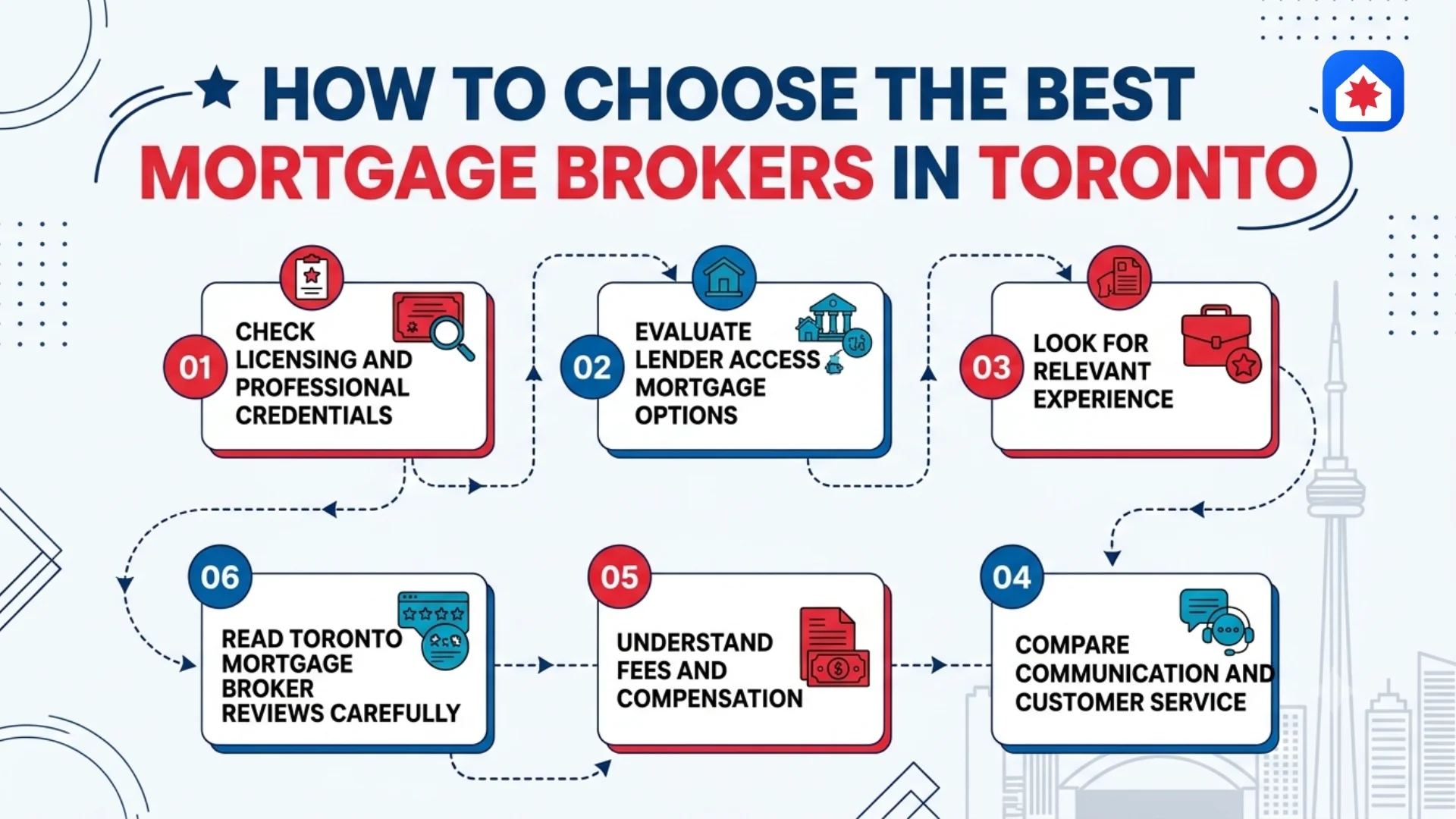
3.1. Check Licensing and Professional Credentials
Licensing should be your first screening requirement, not an optional consideration. In Ontario, individuals and businesses conducting regulated mortgage brokering activities generally need to hold the appropriate FSRA licence unless exempted under the legislation.
Check both the individual professional and their brokerage. A professional's website, business card, or online profile should not replace an independent licence search. You should also ask about their experience, professional background and any specialized training relevant to your situation.
Remember that a valid licence establishes regulatory eligibility, but it does not automatically guarantee that a broker will provide the best service or recommendation for you.
3.2. Evaluate Lender Access and Mortgage Options
A broker's lender network directly affects the range of mortgage products they can present. Some professionals primarily work with traditional financial institutions, while others have relationships with credit unions, alternative lenders, and private lenders.
When evaluating a broker, ask:
- How many lenders does your brokerage work with?
- Which financial institutions do you regularly arrange mortgages through?
- Do you have access to lenders that specialize in my financial situation?
- Can you explain why one lender would be more suitable than another?
FSRA requires brokerages to disclose their relationships with lenders, including the number of lenders they arranged mortgages with during the previous fiscal year. You can ask for this information when comparing professionals. However, a larger lender network does not automatically mean better service. What matters is whether the broker can identify suitable options from the lenders they actually work with.
3.3. Look for Relevant Experience
Mortgage experience is more valuable when it relates directly to your needs. For example, if you are buying your first home, look for someone who regularly works with first-time buyers and understands the questions they are likely to have. If you are self-employed, prioritize a professional who understands how lenders assess business income, tax documents, and income fluctuations. Other situations may require different expertise.
During your initial consultation, ask the broker to explain how they have handled applications similar to yours. You do not need confidential information about previous clients. You just want to understand whether the professional has relevant knowledge and a practical approach to your particular circumstances.
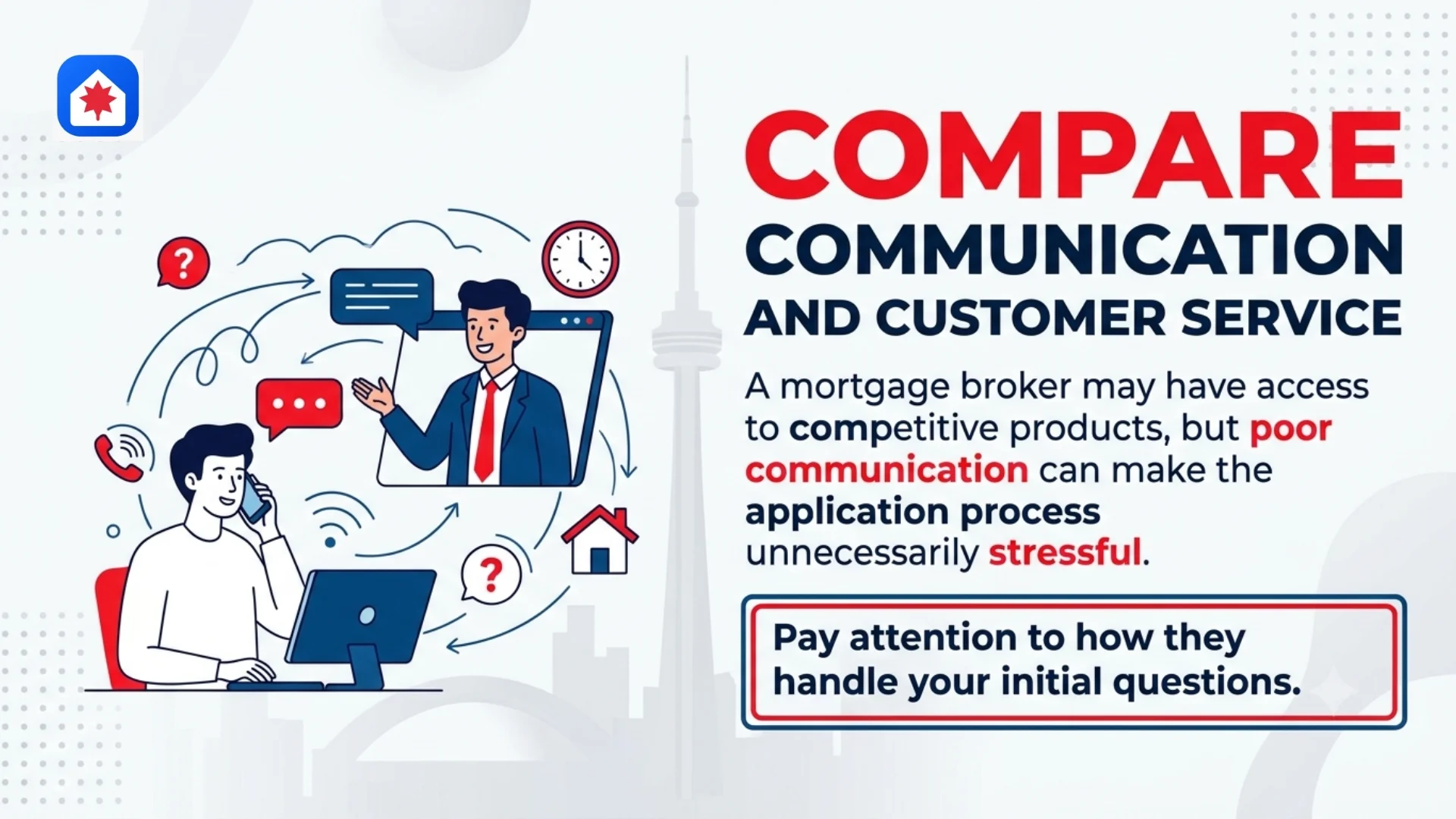
3.4. Compare Communication and Customer Service
A mortgage broker may have access to competitive products, but poor communication can make the application process unnecessarily stressful. Pay attention to how they handle your initial questions.
A reliable professional should:
- Explain mortgage terminology in understandable language.
- Respond to questions within a reasonable timeframe.
- Clearly communicate document requirements.
- Explain the next steps and expected timelines.
- Inform you about changes to your application.
- Discuss potential problems rather than making unrealistic assurances.
If a broker avoids explaining important details, gives inconsistent answers, or pressures you into making decisions before you understand the options, consider speaking with another professional.
3.5. Understand Fees and Compensation
Mortgage brokers in Canada are generally compensated through commissions paid by lenders when they arrange a mortgage. However, some brokerages may also charge borrowers fees, depending on the transaction and lending arrangement.
Before proceeding, clarify:
- Whether you will pay a brokerage fee.
- Whether the lender will pay the brokerage a commission.
- Whether the broker or brokerage receives other incentives.
- When any borrower-paid fees become payable.
- Whether cancellation or administrative fees apply.
- Whether the recommended mortgage involves additional borrowing costs.
Ontario requires mortgage brokerages to provide written disclosures about relevant fees, compensation, relationships and conflicts of interest. You should also understand whether the brokerage represents you, the lender or both parties in the transaction.
3.6. Read Toronto Mortgage Broker Reviews Carefully
Online best mortgage brokers in Toronto reviews can provide useful information about how a broker communicates and handles client relationships. When comparing Toronto mortgage broker reviews, look beyond the overall star rating.
Focus on recurring feedback about:
- Responsiveness throughout the application.
- Clarity when explaining mortgage conditions.
- Ability to handle complicated applications.
- Transparency about fees and interest rates.
- Support when unexpected issues arise.
- Communication after mortgage approval.
Recent, detailed reviews are generally more useful than short comments that simply say a broker is great. You should also pay attention to negative reviews. A single complaint does not necessarily indicate poor service, but repeated concerns about hidden fees, misleading information, or communication problems deserve further investigation.
4. Questions to Ask Before Hiring a Mortgage Broker
After narrowing down your shortlist, arrange an initial consultation with two or three professionals. Asking the same questions to each candidate will make their answers easier to compare.
- Which Lenders Do You Work With?
Ask about the types of lenders available through their brokerage and whether they have access to financial institutions that suit your circumstances. A good answer should explain the lender options relevant to your application, rather than simply emphasizing the total number of lenders.
- How Are You Compensated?
Ask whether the broker receives commissions from lenders, charges borrower-paid fees, or receives other incentives. Request written explanations of any compensation arrangements that may affect your transaction.
- What Mortgage Options Do You Recommend for My Situation?
Explain your financial background, including income, savings, existing debts, and home-buying plans. Then ask which mortgage products may be appropriate and why. The broker should explain the advantages, disadvantages, and risks of each option instead of presenting only one recommendation.
- What Fees and Conditions Should I Expect?
Ask for a breakdown of all costs associated with the mortgage. These may include brokerage fees, lender fees, appraisal costs, legal expenses, and other transaction-related charges. Also clarify the mortgage term, amortization period, prepayment privileges, and potential penalties for breaking the agreement early.
- How Will You Handle My Application?
Understand what happens after you decide to work with the broker. Ask about document collection, credit checks, lender submissions, approval conditions, and communication throughout the process. You should also clarify who will be your main contact and how often you can expect updates.
5. Finding a Mortgage Broker for First-Time Buyers in Toronto
First-time buyers often need more guidance than simply finding a competitive interest rate. If you are buying your first home, look for a mortgage broker for first-time buyers Toronto.
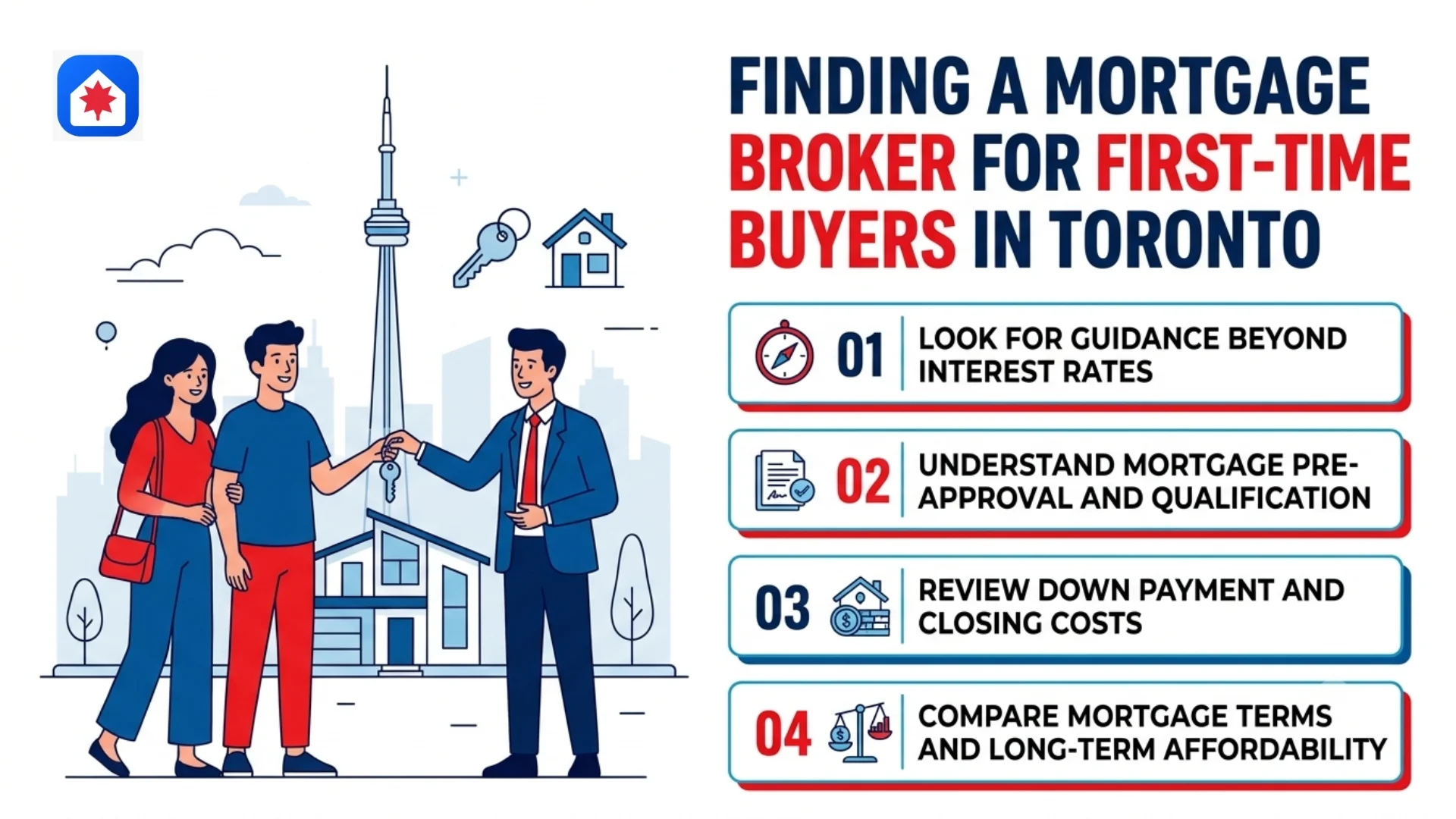
5.1. Look for Guidance Beyond Interest Rates
A good first-time buyer mortgage broker should help you understand how different mortgage products affect your finances. For example, they should explain the differences between fixed and variable rates, how mortgage terms work, and what happens when your mortgage reaches its renewal date.
They should also help you consider the costs of homeownership beyond the regular mortgage payment, such as property taxes, home insurance, utilities and maintenance, condominium fees, if applicable, closing costs, and legal expenses.
5.2. Understand Mortgage Pre-Approval and Qualification
A mortgage pre-approval can help you establish a realistic home-buying budget before making an offer. During the process, a lender or broker may review your income, employment, debts, assets, and down payment to estimate how much financing you could qualify for.
However, it is important to understand that a mortgage pre-approval does not guarantee final approval. The lender may still need to verify your documents, assess the property, and review other conditions before issuing a final mortgage commitment.
You should also understand Canada's mortgage stress test. For uninsured mortgages from federally regulated lenders, OSFI's current minimum qualifying rate is the greater of the contractual mortgage rate plus 2% or 5.25%. The qualifying rate is used to assess whether borrowers can manage higher interest costs. Your broker should explain how this requirement affects your borrowing capacity.
5.3. Review Down Payment and Closing Costs
Your down payment affects the mortgage amount, loan-to-value ratio and whether mortgage default insurance is required. For eligible owner-occupied properties in Canada, the minimum down payment generally follows these price brackets:
- 5% on the first $500,000.
- 10% on the portion between $500,000 and $1.5 million.
- 20% on the portion of the purchase price at or above $1.5 million.
You should also budget for closing expenses, including land transfer taxes, legal fees, title insurance and other transaction costs. Toronto buyers should pay particular attention to land transfer taxes because eligible property purchases within the City of Toronto are generally subject to both Ontario's provincial land transfer tax and Toronto's municipal land transfer tax.
5.4. Compare Mortgage Terms and Long-Term Affordability
The mortgage with the lowest initial payment is not necessarily the most suitable option. Similarly, a longer amortization period may reduce regular payments but increase the total interest paid over time.
Before choosing a mortgage, consider:
- Whether you prefer predictable payments or can manage rate fluctuations.
- How long you expect to stay in the property.
- Whether you may need to sell or refinance before the term ends.
- Whether you expect to make additional payments.
- How much financial flexibility you want to maintain.
Your broker should help you compare these scenarios so you can choose financing that supports your long-term budget.
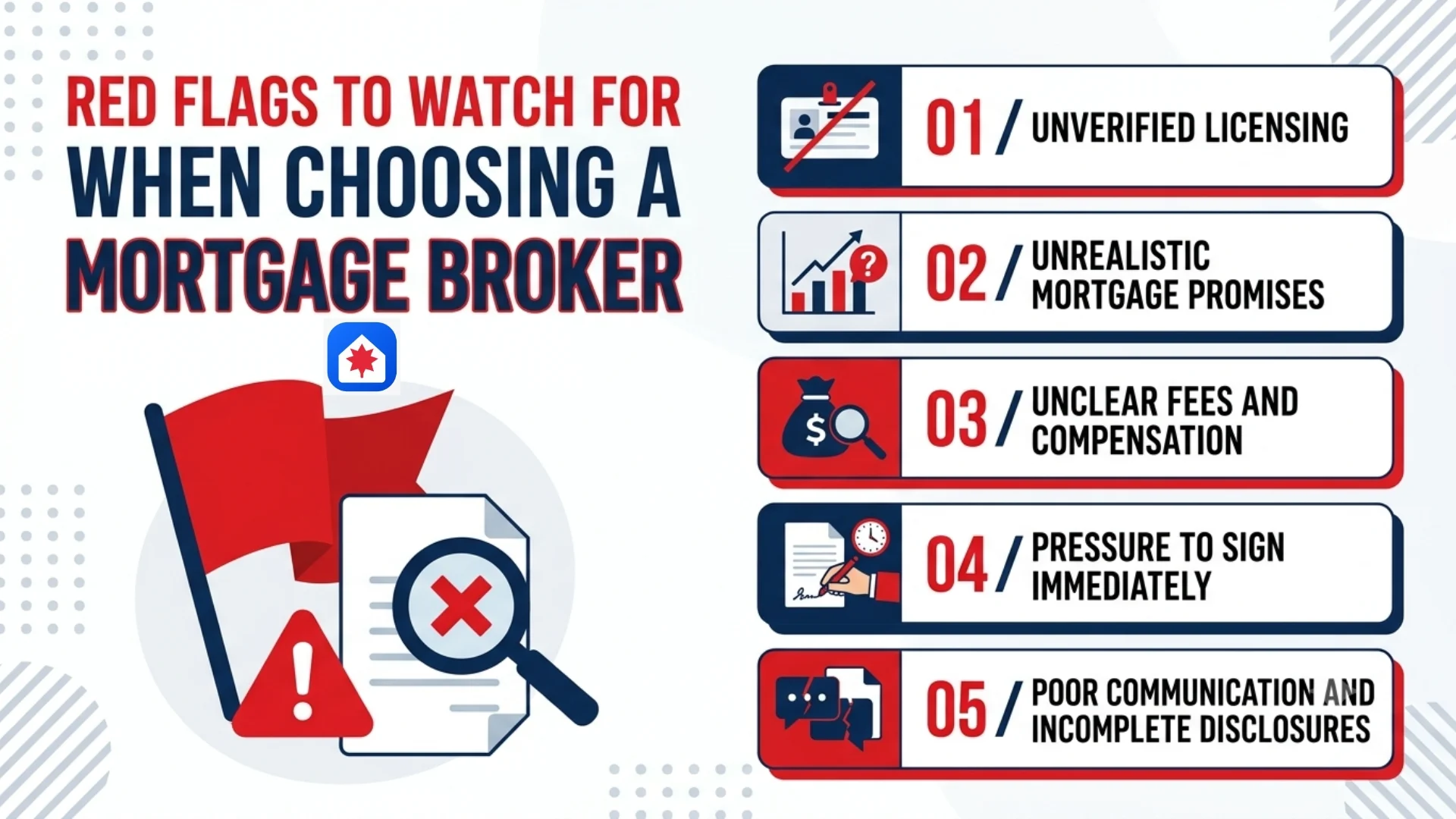
6. Red Flags to Watch for When Choosing a Mortgage Broker
Even if a broker appears experienced and has positive online reviews, you should remain cautious throughout the selection process. The following warning signs deserve particular attention.
- Unverified licensing: Avoid working with individuals who cannot provide verifiable licensing information when their activities require an FSRA licence. Always check the individual and brokerage independently.
- Unrealistic mortgage promises: Be cautious of professionals who guarantee mortgage approval, promise unusually low interest rates without reviewing your finances, or claim they can bypass standard qualification requirements. Mortgage approval depends on lender criteria, borrower information, and property conditions.
- Unclear fees and compensation: A broker should explain how they are compensated and disclose applicable fees in writing. Avoid arrangements involving unexplained charges or requests to pay an individual directly.
- Pressure to sign immediately: Take time to review mortgage commitments, service agreements, and disclosure documents. A professional should give you clear explanations rather than pressure you into accepting an offer before you understand its terms.
- Poor communication and incomplete disclosures: If a broker repeatedly avoids questions, fails to explain risks, or does not provide required written information, reconsider whether they are the right person to handle your mortgage.
Frequently Asked Questions
1. How do I find a good mortgage broker in Toronto?
Start by searching for licensed mortgage professionals through FSRA's official database. Then compare several candidates based on lender access, relevant experience, communication, compensation, and customer feedback. Choose someone who can explain mortgage options clearly and provide recommendations suited to your financial circumstances.
2. Are mortgage brokers free in Toronto?
Many mortgage brokers receive commissions from lenders when they arrange a mortgage, so borrowers may not have to pay a separate brokerage fee. However, some transactions involve borrower-paid fees.
3. Is it better to use a mortgage broker or a bank?
It depends on your needs. A mortgage broker can compare products from multiple lenders within their network, while a bank offers its own mortgage products directly.
4. How do I check if a mortgage broker is licensed in Ontario?
Visit the Financial Services Regulatory Authority of Ontario (FSRA) website and use its searchable mortgage professional database. Search for the individual's name and verify their licensing status and brokerage affiliation. You should also check the brokerage's licence separately.
5. Can a mortgage broker help first-time homebuyers?
Yes. A mortgage broker can help first-time buyers assess their borrowing capacity, explore mortgage products, prepare pre-approval applications, and understand lender requirements. They can also explain mortgage terms and conditions that may affect long-term affordability.
6. When should I contact a mortgage broker before buying a home?
Ideally, contact a mortgage broker before starting your property search. This gives you time to review your finances, understand your borrowing capacity, and explore mortgage pre-approval options before making an offer.
Finding the best mortgage brokers in Toronto requires more than comparing advertised interest rates or choosing the broker with the highest online rating. You should verify licensing, assess lender access, review relevant experience, and understand all fees and compensation arrangements before making a decision. Before making your final choice, review your borrowing capacity, compare mortgage options, and ask for written disclosures.
You can also use CanadaHomeHub's resources and financial tools to calculate and prepare for the next steps in your home-buying journey.
Thank you for taking the time to read this article.