Buying a home in Canada involves more than saving for a down payment. Before you receive the keys, you need to cover several upfront expenses, including legal fees, land transfer tax, title insurance, and property tax adjustments. These expenses are commonly known as closing costs Canada. Depending on the province, property type, and purchase price, closing costs can add thousands of dollars to your home-buying budget. This article will help you understand what you need to pay, when payments are due, and which costs may be reduced to avoid financial surprises on closing day.
1. What Are Closing Costs in Canada?
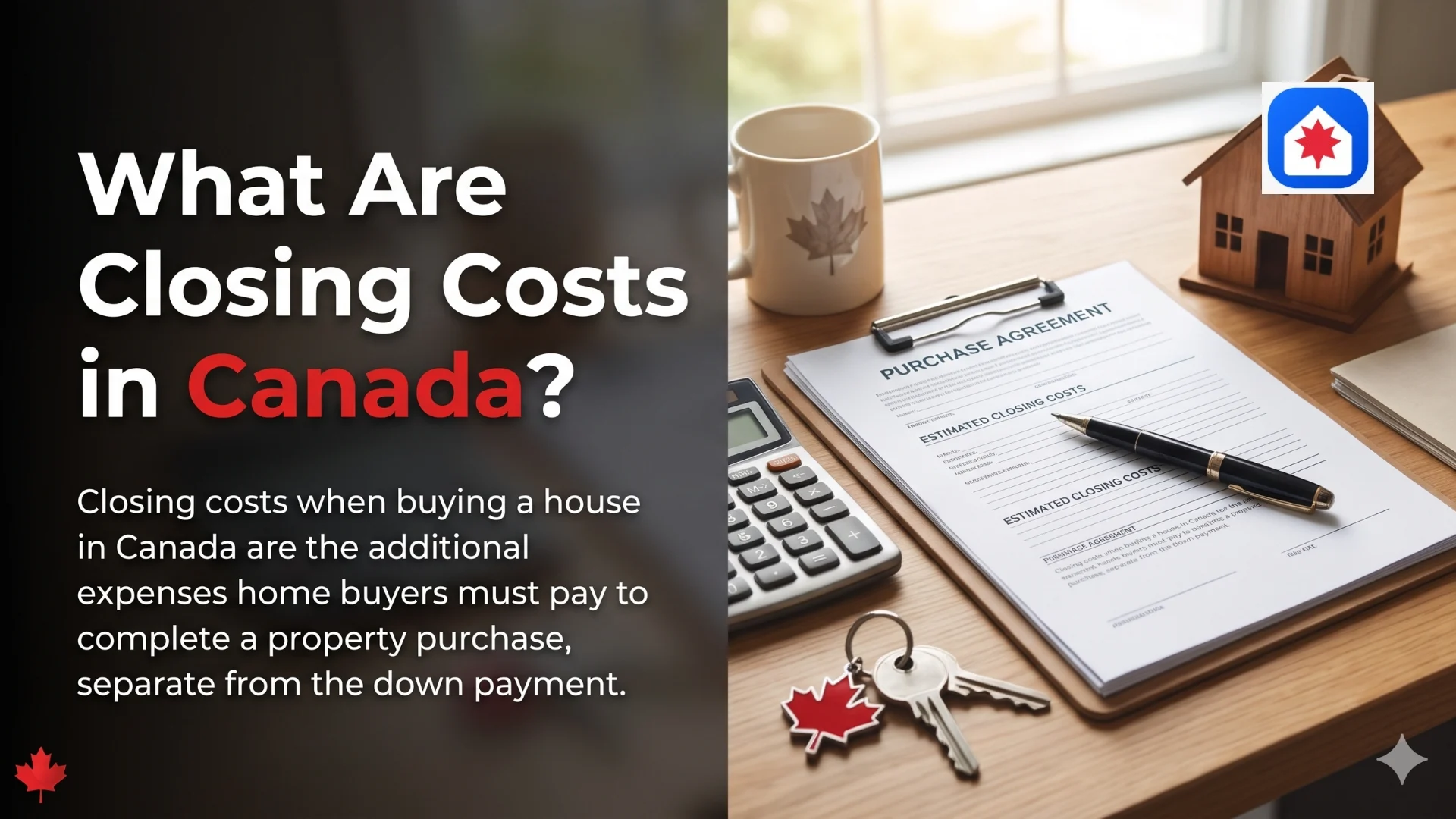
Closing costs when buying a house Canada are the additional expenses home buyers must pay to complete a property purchase, separate from the down payment. These costs cover various services, taxes, and administrative charges involved in transferring property ownership from the seller to the buyer.
In Canada, closing costs can include land transfer tax, lawyer fees, title insurance, home inspection fees, property tax adjustments, and other transaction-related expenses, depending on the province, property type, purchase price, and mortgage requirements.
Unlike a down payment, which contributes directly toward the property's purchase price, closing costs cover the expenses of finalizing the transaction. Buyers typically need to pay these costs before or on the closing date, so they should be included in the home-buying budget from the beginning.
2. Common Closing Costs When Buying a House in Canada
The following are the main closing costs Canada to consider when preparing for a property purchase.
2.1. Land Transfer Tax
Land transfer tax is often one of the largest closing expenses for home buyers. It is a provincial or municipal tax charged when ownership of a property is transferred. The tax is generally calculated based on the property's purchase price or fair market value, depending on the applicable provincial rules.
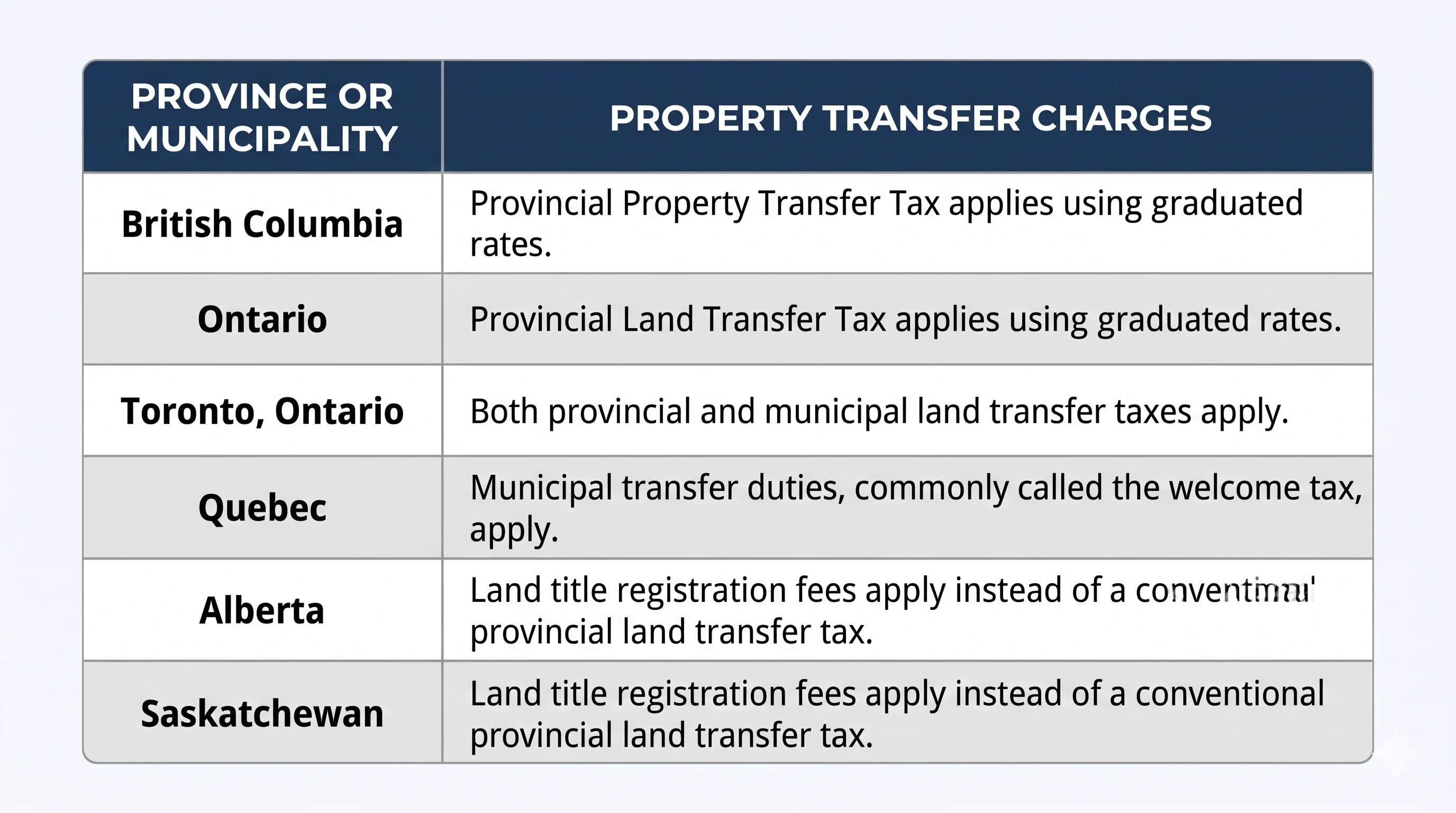
The terminology varies across Canada. For example, British Columbia calls it Property Transfer Tax (PTT), while Quebec uses the term welcome tax (taxe de bienvenue).
The amount you pay can vary significantly depending on the property value and location. Some provinces also offer rebates or exemptions for eligible first-time home buyers.
2.2. Lawyer Fees and Disbursements
A real estate lawyer or notary handles the legal work required to transfer property ownership and complete the transaction. Their responsibilities typically include reviewing the purchase agreement, conducting a title search, preparing legal documents, registering the transfer, and coordinating mortgage-related paperwork.
Lawyer fees for a home purchase in Canada vary depending on the province, transaction complexity, and the professional's pricing structure. For general budgeting, buyers may encounter professional fees of approximately 1,000-2,500, although actual quotes can fall outside this range.
In addition to professional fees, you may need to pay disbursements. These are expenses your lawyer pays to third parties while handling the transaction.
Common disbursements include:
- Land title search fees.
- Property registration fees.
- Document preparation and filing charges.
- Courier and administrative expenses.
- Costs associated with obtaining required certificates or records.
2.3. Title Insurance
Title insurance Canada protects homeowners and mortgage lenders against certain financial losses arising from problems with a property's legal ownership or title. It is important to understand that title insurance does not replace a home inspection. It protects against specified title-related risks, not every physical problem with the property.
Potential issues include:
- Undisclosed liens or debts registered against the property.
- Certain title defects or ownership disputes.
- Fraud or forgery affecting property ownership.
- Certain encroachments or violations that affect title, depending on the policy.
In Canada, title insurance is generally purchased through a lawyer or notary as part of the closing process. The premium is usually a one-time payment. For budgeting purposes, some buyers allow approximately $300-$500, although the actual premium depends on the property, insurer, and coverage.
2.4. Home Inspection Fees
A home inspection helps buyers understand the property's physical condition before completing the purchase. Although an inspection is not universally mandatory, it can help identify potential maintenance issues and expensive repairs before you commit to the purchase.
A qualified inspector typically examines visible and accessible areas, including:
- Roof and exterior structure.
- Foundation and basement.
- Plumbing and electrical systems.
- Heating and cooling equipment.
- Windows, doors, and insulation.
- Signs of water damage or moisture.
Professional home inspection fees commonly range from approximately $300 to $600 or more, depending on the property's size, location, and complexity.
2.5. Property Appraisal Fees
A property appraisal estimates a home's market value based on factors such as its location, size, condition, and comparable sales. Mortgage lenders may require an appraisal to determine whether the property provides sufficient security for the requested loan.
If an appraisal is required, buyers may need to pay approximately $300-$800 or more, depending on the property and location. However, the buyer does not necessarily pay this fee in every transaction. Some lenders cover the appraisal cost or include it in their mortgage arrangements.
An appraisal is also different from a home inspection. An appraisal focuses on property value, while an inspection examines its physical condition.
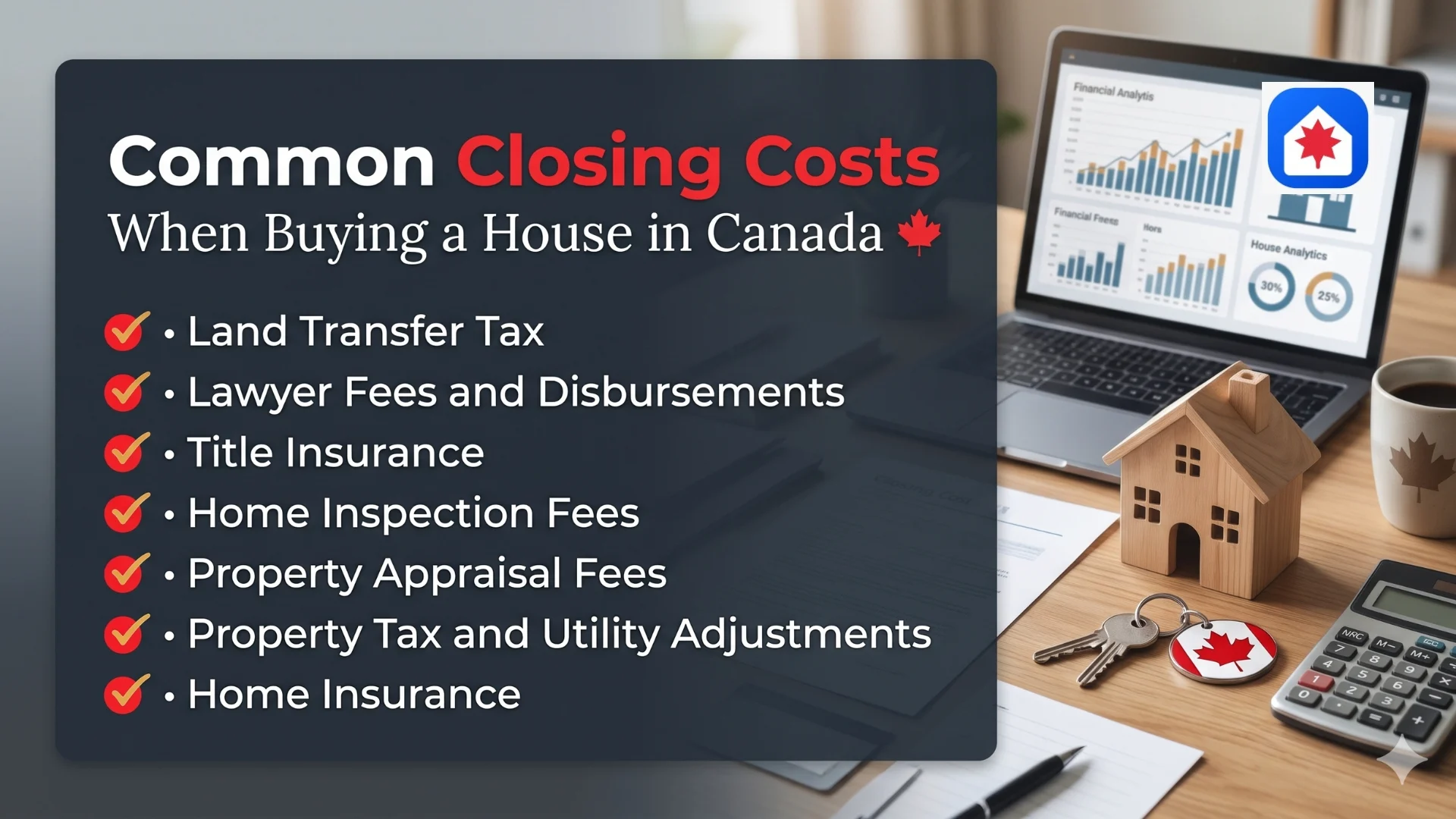
2.6. Property Tax and Utility Adjustments
Property tax and utility adjustments account for expenses that the seller has already paid or owes for the period surrounding the closing date.
For example, suppose the seller has paid the annual property tax in advance. If you take ownership halfway through the year, you may need to reimburse the seller for the portion covering the period after your purchase. The same principle can apply to certain prepaid utilities, condo fees, or other shared expenses.
Your lawyer calculates these amounts and includes them in the Statement of Adjustments, which outlines the financial adjustments between the buyer and seller. The final amount depends on the closing date, payment history, and applicable property expenses.
2.7. Home Insurance
Home insurance protects your property and belongings against covered risks such as fire, theft, and certain types of water damage. Although it is not a government-imposed property transfer tax, home insurance is generally required by mortgage lenders before they release mortgage funds. You should arrange coverage in advance so the policy is effective on the closing date.
Premiums vary according to:
- Property location and replacement value.
- Property type and age.
- Coverage limits and deductibles.
- Previous insurance claims.
- Additional coverage requirements.
Rather than using a nationwide average, obtain quotes based on the specific property you intend to purchase.
3. How Closing Costs Canada Vary by Province and Property Type
3.1. Provincial and Municipal Land Transfer Taxes
Land transfer tax is a major reason why closing costs differ between locations. The following table provides a general overview of how property transfer charges work in selected Canadian jurisdictions.
3.2. Closing Costs for New Construction vs. Resale Homes
The type of property you purchase can also change your total closing expenses. The most important difference is how GST/HST applies.
- Resale homes: Most previously occupied residential properties are exempt from GST/HST when sold, provided the transaction meets the applicable exemption conditions. As a result, buyers of typical resale homes generally do not pay GST/HST on the purchase price.
- New construction homes: Newly constructed or substantially renovated homes are generally subject to GST/HST. The applicable tax rate depends on the province and the tax rules in effect when the transaction becomes taxable.
3.3. Additional Costs for Condominiums and Unique Properties
Some properties involve additional closing expenses that buyers of standard detached houses may not encounter.
For example, condominium and strata purchases may involve:
- Estoppel certificate or status certificate fees.
- Document review fees.
- Outstanding condo fee adjustments.
- Special assessments or other amounts owing under the applicable agreement.
Rural properties may also require additional assessments, such as well-water testing, septic inspections, or updated surveys.
4. Can First-Time Home Buyers Reduce Closing Costs?
Buying a first home can involve significant upfront expenses, but eligible buyers may qualify for tax rebates or exemptions that reduce the amount they need to pay. The available programs depend on the province, property value, buyer eligibility, and whether the home is newly constructed or previously occupied.
4.1. First-Time Home Buyer Land Transfer Tax Rebates
Several provinces offer property transfer tax relief to eligible first-time home buyers.
For example, Ontario provides a first-time home buyer land transfer tax refund of up to $4,000. If your provincial land transfer tax is $4,475 and you qualify for the maximum $4,000 refund, your remaining tax would be $475.
Another instance is British Columbia. British Columbia offers a First-Time Home Buyers' Program that can reduce or eliminate Property Transfer Tax for eligible purchasers. Under the current rules, a qualifying buyer may receive a full exemption on an eligible property valued at $500,000 or less. Partial exemptions are available for properties valued above $500,000 but below $860,000, subject to the program's requirements.
These programs can make a meaningful difference to your upfront budget. However, do not assume that being a first-time buyer automatically qualifies you for every available exemption. Check the official provincial requirements before calculating your final amount.
4.2. GST/HST New Housing Rebates
Buyers purchasing newly constructed or substantially renovated homes may also qualify for a GST/HST new housing rebate. The traditional federal rebate is generally available to eligible individuals who purchase or build a home for use as their primary place of residence, subject to the applicable conditions and value limits.
In addition, a federal First-Time Home Buyers' GST/HST Rebate received Royal Assent in 2026. This is a separate program with its own eligibility requirements. Depending on the purchase and applicable provincial rules, buyers may also qualify for provincial housing rebates.
4.3. Other Ways to Manage Your Upfront Costs
Tax rebates are not the only way to make closing costs Canada more manageable. Buyers can also take practical steps to reduce unexpected expenses.
- Request legal fee estimates early: Compare itemized quotes from several real estate lawyers or notaries. Make sure the estimates include disbursements and applicable taxes.
- Arrange inspections before closing: A professional inspection can identify repair issues that may affect your purchasing decision. Where appropriate, inspection conditions in the purchase agreement can help protect your interests.
- Review the purchase agreement carefully: Confirm which costs are included in the purchase price, whether GST/HST applies, and whether the seller has agreed to cover any specific expenses.
- Keep a contingency fund: Do not allocate every available dollar to the down payment. Property tax adjustments, unexpected legal disbursements, and other charges may change the final amount required.
5. When Do You Pay Closing Costs?
Most closing costs are paid on or before the closing date, which is the date when the property transaction is completed and ownership is transferred. However, some expenses are payable earlier in the home-buying process.
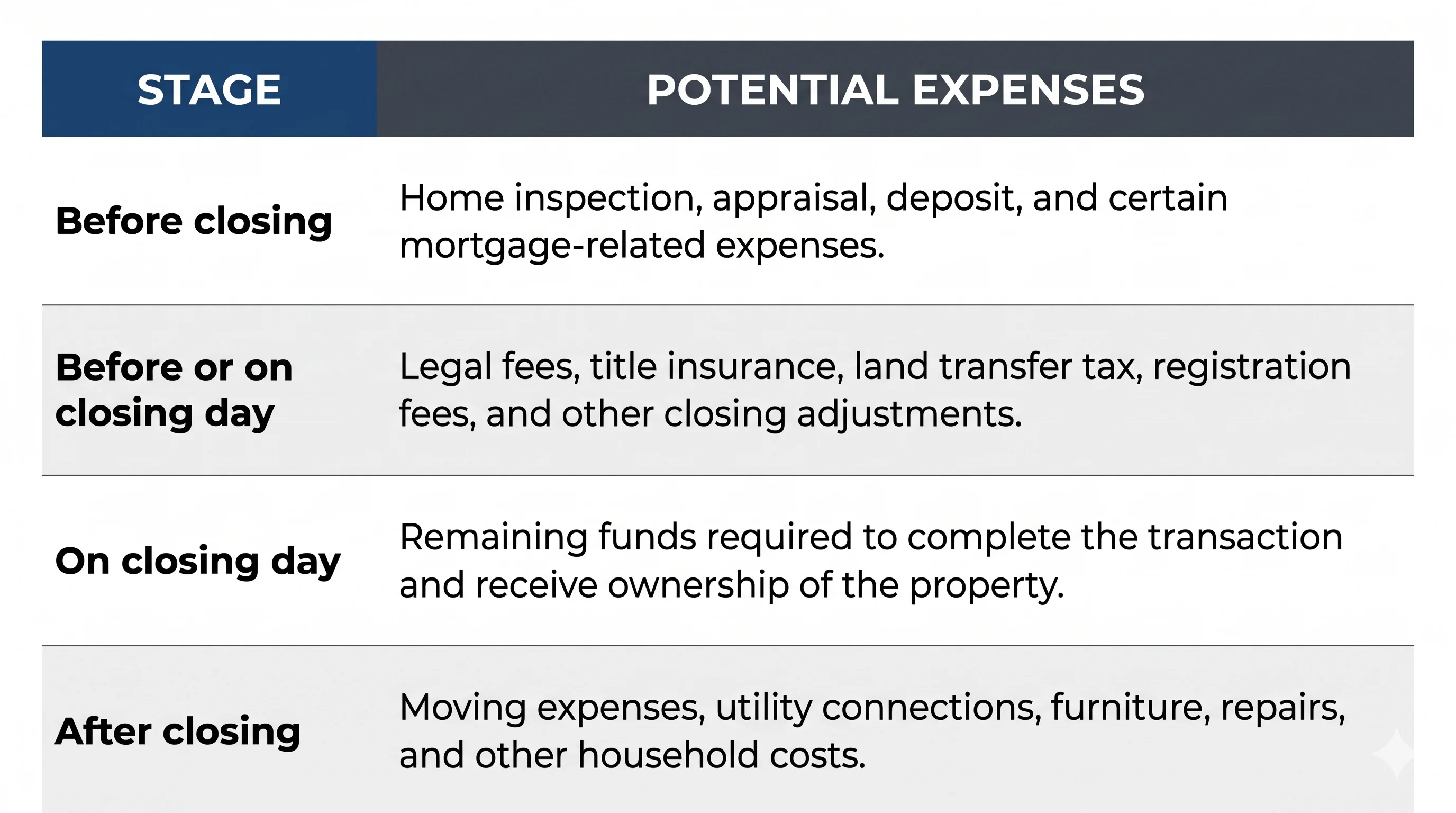
Your lawyer or notary will usually provide a statement showing the amount you must bring to closing. You should arrange your funds in advance and confirm the payment method and deadline with your legal representative. Large payments may need to be transferred through a bank draft or another accepted method. Do not wait until the closing date to organize your money. Delays in transferring funds can affect the completion of the transaction.
6. How to Estimate and Prepare for Closing Costs
Preparing a realistic budget requires more than applying a percentage to the property's purchase price. You should identify the expenses that apply to your specific transaction and calculate each one separately.
Follow these steps to make the process easier.
- Start with the purchase price: Use the agreed purchase price as the starting point for your calculations. Remember that some provincial taxes may use fair market value or other valuation rules instead.
- Calculate applicable property transfer taxes: Check your provincial government's official website to determine whether land transfer tax, property transfer tax, municipal transfer tax, or registration levies apply. If you are purchasing in Toronto, for example, calculate both provincial and municipal land transfer taxes.
- Request estimates from your lawyer: Ask for an itemized breakdown of lawyer fees, disbursements, registration charges, title insurance, and expected adjustments.
- Confirm lender requirements: Check whether your mortgage lender requires an appraisal, specific insurance coverage, or additional documentation before releasing the mortgage funds.
- Check your eligibility for rebates: Review available first-time home buyer programs and new housing rebates. Make sure you understand the eligibility requirements and when the benefits can be applied.
- Set aside additional funds: Keep a financial buffer for unexpected expenses and costs that arise immediately after moving in.
You can refer to CanadaHomeHub's closing cost calculator to estimate the cash expenses required to finalize your home purchase beyond the down payment, including land transfer taxes, legal fees, and inspections. It provides a useful starting point when planning your home purchase, although you should confirm the final amounts with your lawyer and the relevant provincial authorities.
Frequently Asked Questions
1. How much should I budget for closing costs in Canada?
Most buyers should budget approximately 1.5% to 4% of the property's purchase price for closing costs. For a $500,000 home, this represents approximately 7,500–20,000. However, the actual amount depends on the province, property type, applicable transfer taxes, and other transaction expenses.
2. Are closing costs included in the mortgage?
Generally, no. Closing costs are separate from your mortgage and are usually paid using your own available funds.
3. Who pays the closing costs when buying a house in Canada?
The buyer is generally responsible for their own purchase-related closing costs, including legal fees, applicable land transfer taxes, title insurance, and property adjustments. However, the purchase agreement may specify that one party covers certain expenses. Always review the agreement before assuming who is responsible for a particular charge.
4. Do first-time home buyers get a discount on closing costs?
Eligible first-time home buyers may qualify for provincial land transfer tax rebates or exemptions and certain federal or provincial GST/HST housing rebates.
5. Do I have to pay land transfer tax when buying a house?
It depends on where you purchase the property. Ontario and British Columbia charge land transfer taxes, while Quebec applies municipal transfer duties. Toronto also charges a municipal land transfer tax in addition to Ontario's provincial tax. Alberta and Saskatchewan do not impose a conventional provincial land transfer tax, but buyers still pay applicable land title registration fees.
6. Can I negotiate closing costs with the seller?
Some expenses may be negotiable through the purchase agreement, depending on the seller, market conditions, and the terms of the transaction. However, statutory taxes and government registration fees cannot simply be negotiated away.
7. What happens if I do not have enough money for closing costs?
If you cannot provide the required funds by the closing deadline, the transaction may be delayed or fail to complete. This can expose you to contractual consequences, including potential financial losses.
Understanding closing costs Canada is an essential part of preparing for a home purchase. In addition to your down payment, you should budget for expenses such as land transfer taxes, lawyer fees, title insurance, home inspections, and property tax adjustments. The total amount varies depending on your province, property type, and eligibility for available rebates. Planning for these costs early and setting aside sufficient funds can help you avoid unexpected financial pressure on closing day. For more guidance on the home-buying process, explore the resources available on CanadaHomeHub.
Thank you for taking the time to read this article.