
Buying a home in Canada is a major financial milestone, making property protection essential. Whether you own a condo in Toronto or a house in Vancouver, unexpected events like fires, winter storms, or leaks can cause severe financial loss. Securing reliable home insurance Canada coverage is a critical risk management step and almost always mandatory for bank mortgages. This guide will walk you through core coverage options, provincial costs, top providers, and tips to get the best homeowners insurance Canada quotes for your needs.
Understanding Home Insurance Coverage in Canada
To choose the right insurance policy for your household, you must first understand how a standard Canadian home insurance policy is structured. Most policies comprise four fundamental pillars of protection, designed to shield you from catastrophic financial loss in the event of an accident or natural disaster.
The Four Main Pillars of Coverage
Building / Dwelling Coverage
Dwelling coverage pays to repair or rebuild the physical structure of your house if it is damaged or destroyed by an insured peril, such as fire, windstorms, hail, or lightning. It is important to note that this coverage should reflect the replacement cost of your home - meaning the current market cost of construction materials, labor, and architectural fees required to rebuild the structure to its original condition - rather than its real estate market value or property purchase price.
Personal Property Coverage
Personal property coverage protects the contents inside your home, including furniture, electronics, clothing, appliances, and personal belongings, if they are stolen, damaged, or destroyed. Most standard policies calculate personal property coverage as a percentage (usually 50% to 70%) of your overall dwelling coverage.
Note on Special Limits: Standard policies place strict sub-limits on high-value specialty items such as fine jewelry, luxury watches, high-end bicycles, artwork, collectibles, and business property kept at home. If you own high-value items, you may need to purchase optional coverage extensions - known as "riders" or "endorsements" - to insure them for their full appraised value.
Personal Liability Coverage
Liability insurance protects you and your household members if you are legally held responsible for bodily injury caused to someone else while on your property, or if you accidentally cause property damage to a neighboring home (for example, if a pipe leaks in your condo and damages the unit directly below). Liability coverage covers expensive legal defense fees, court costs, and court-ordered settlements. Standard liability limits in Canada typically range from $1 million to $2 million CAD.
Additional Living Expenses (ALE)
If a covered loss renders your home temporarily uninhabitable due to structural damage or active restoration (for example, following a major kitchen fire), Additional Living Expenses coverage helps pay for the reasonable extra costs required to maintain your normal standard of living. ALE typically reimburses:
- Hotel stays or short-term apartment rentals
- Increased restaurant meal costs while you lack a functional kitchen
- Temporary storage fees for salvaged furniture and belongings
- Extra transportation or commuting costs incurred due to displacement
Types of Home Insurance Policies in Canada
When evaluating coverage levels, Canadian insurers generally offer three distinct tiers of policies:
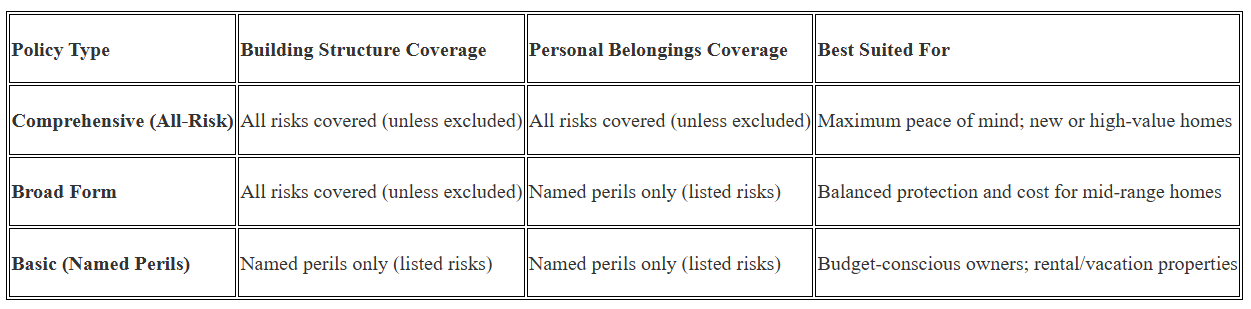
- Comprehensive Policy (All-Risk): This is the most extensive level of protection available. It covers both your physical building structure and your personal belongings against all risks, except those explicitly excluded in the written policy contract.
- Broad Form Policy: A balanced option that provides comprehensive, "all-risk" coverage for your building structure, but switches to a "named-perils" model for your personal property. This means your personal belongings are only covered against specifically listed events like fire or theft.
- Basic / Named Perils Policy: The most restrictive and budget-friendly option. It only covers losses explicitly named in the policy (such as fire, lightning, explosion, or smoke). Any event not specifically listed is excluded from coverage.
Key Exclusions: What Standard Policies Do NOT Cover
Standard policies do not cover every potential hazard. Understanding standard exclusions prevents costly surprises during a claim:
- Overland Flooding: Damage caused by freshwater overflow from lakes, rivers, or heavy surface rainfall accumulation entering through doors or basement windows is generally excluded. Coverage requires a separate Overland Water Endorsement.
- Sewer Backup: Damage caused by municipal sewer systems, septic tanks, or sump pumps backing up water into your basement requires a separate Sewer Backup Endorsement.
- Earthquakes: Ground shaking and seismic shock damage are excluded in standard policies. Homeowners in seismically active areas - particularly along British Columbia’s coast - must purchase dedicated Earthquake Coverage.
- General Wear and Tear & Lack of Maintenance: Insurance is designed for sudden, accidental events. Damage resulting from gradual deterioration, neglect, mold growth, or pest infestations (such as mice, termites, or carpenter ants) is the homeowner's responsibility.
- Vacant Properties: If your home remains unoccupied for more than 30 consecutive days without notifying your insurer, standard coverage typically lapses or becomes void due to increased risk of undetected leaks or vandalism.
Home Insurance Cost Canada: Average Rates & Influencing Factors
Understanding the market landscape helps you evaluate whether your quotes are competitive. When analyzing the average home insurance cost Canada homeowners pay, rates vary depending on geography, building characteristics, and personal claims history.
Average Annual Rates by Canadian Province (2026 Projections)
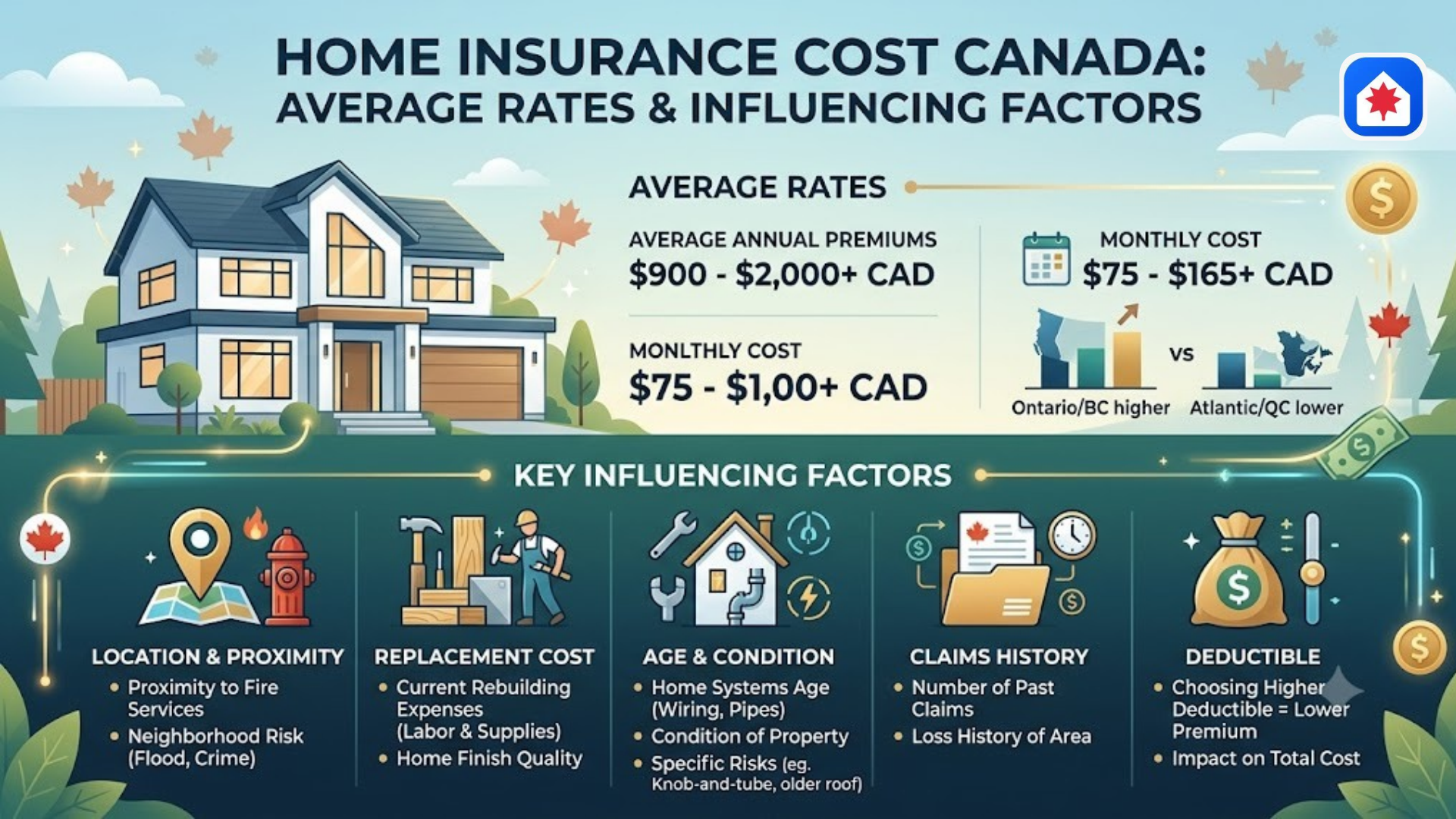
The national average home insurance premium in Canada ranges between $900 and $2,000 CAD per year (approximately $75 to $165 per month) for a standard single-family home. However, location plays a primary role in determining your final price tag:
- Ontario: Averages $1,200 to $2,000+ per year. Dense urban areas like Toronto and Mississauga face higher property repair costs, while localized weather events drive premiums upward.
- British Columbia: Averages $1,500 to $2,200+ per year. High rebuilding costs combined with elevated seismic risks and wildfire exposure make BC one of the more expensive provinces for home insurance.
- Alberta: Averages $1,300 to $1,800 per year. Alberta frequently experiences severe weather events - including severe hailstorms, flash floods, and wildfires - leading to higher historical claim payouts.
- Quebec & Atlantic Canada: Ranges from $900 to $1,400 per year. While Quebec generally enjoys lower average rates, coastal regions in Atlantic Canada are facing rising premiums due to severe Atlantic storms and winter nor'easters.
Primary Factors That Influence Your Premium
Insurers evaluate dozens of risk metrics when calculating individual premiums:
- Location and Proximity to Emergency Services: Properties situated near fire hydrants or local fire stations receive lower rates. Conversely, homes located far from emergency services or in high-risk flood plains face higher costs.
- Rebuilding Cost (Square Footage & Finish Quality): A major factor is the total cost to rebuild your structure using current labor rates and building supplies. Custom finishes, hard-wood floors, and stone countertops increase replacement expenses.
- Age and Condition of Major Home Systems:
- Plumbing: Outdated plumbing systems like galvanized steel or Polybutylene (Poly-B) piping carry a high risk of leaking, which increases rates compared to modern PEX or copper systems.
- Electrical: Knob-and-tube or aluminum wiring, along with 60-amp electrical service panels, are considered fire hazards by insurers and may require upgrades prior to policy approval.
- Roof Condition: Older asphalt roofs (over 15–20 years old) are susceptible to leak damage and hail, leading to higher premiums until replaced.
- Claims History: Insurers review your personal claim history over the last 3 to 5 years. A history of multiple property claims signals higher future risk and results in higher annual rates.
- Deductible Selection: The deductible is the out-of-pocket amount you agree to pay toward repairs before insurance coverage applies. Opting for a higher deductible reduces your annual premium cost.
Top Companies for the Best Home Insurance in Canada
Selecting the provider of the best home insurance Canada offers requires assessing financial stability, customer service reputation, claim payout efficiency, and available policy discounts.
Intact Insurance
As Canada’s largest provider of property and casualty insurance, Intact maintains a vast network of independent brokers nationwide. Intact is widely recognized for its diverse policy options, reliable 24/7 claims response service, and customizable endorsements tailored to unique property types.
Aviva Canada
Aviva is a major market player in Canada, notable for its innovative approach to climate risk. They offer comprehensive water damage protection packages - including combined coverage for overland flooding and sewer backup - making them a strong choice for homeowners in flood-prone regions.

Desjardins Insurance
Highly popular across Ontario and Quebec, Desjardins offers direct-to-consumer insurance policies. They provide competitive rates, digital policy management via intuitive mobile apps, and generous savings for bundling home and vehicle policies.
TD Insurance
TD Insurance operates a direct-writing model that appeals to budget-conscious homeowners. They offer exclusive group rate discounts to university alumni, professional association members, and corporate employees, making them a popular choice for eligible policyholders.
The Co-operators
A co-operative financial service organization deeply rooted in Canadian communities, The Co-operators is known for high customer satisfaction rankings, strong community involvement, and reliable personalized advisory services.
CAA Insurance
Offered by the Canadian Automobile Association, CAA property insurance delivers value through additional savings for CAA club members. They feature flexible coverage tiers, competitive rate structures, and reliable claims processing.
How to Get and Compare Home Insurance Quotes Canada
Shopping around and comparing options regularly ensures you are securing adequate coverage at a competitive market price. Relying on automatic annual renewals without reviewing alternatives often leads to overpaying over time.
Step-by-Step Guide to Gathering Quotes
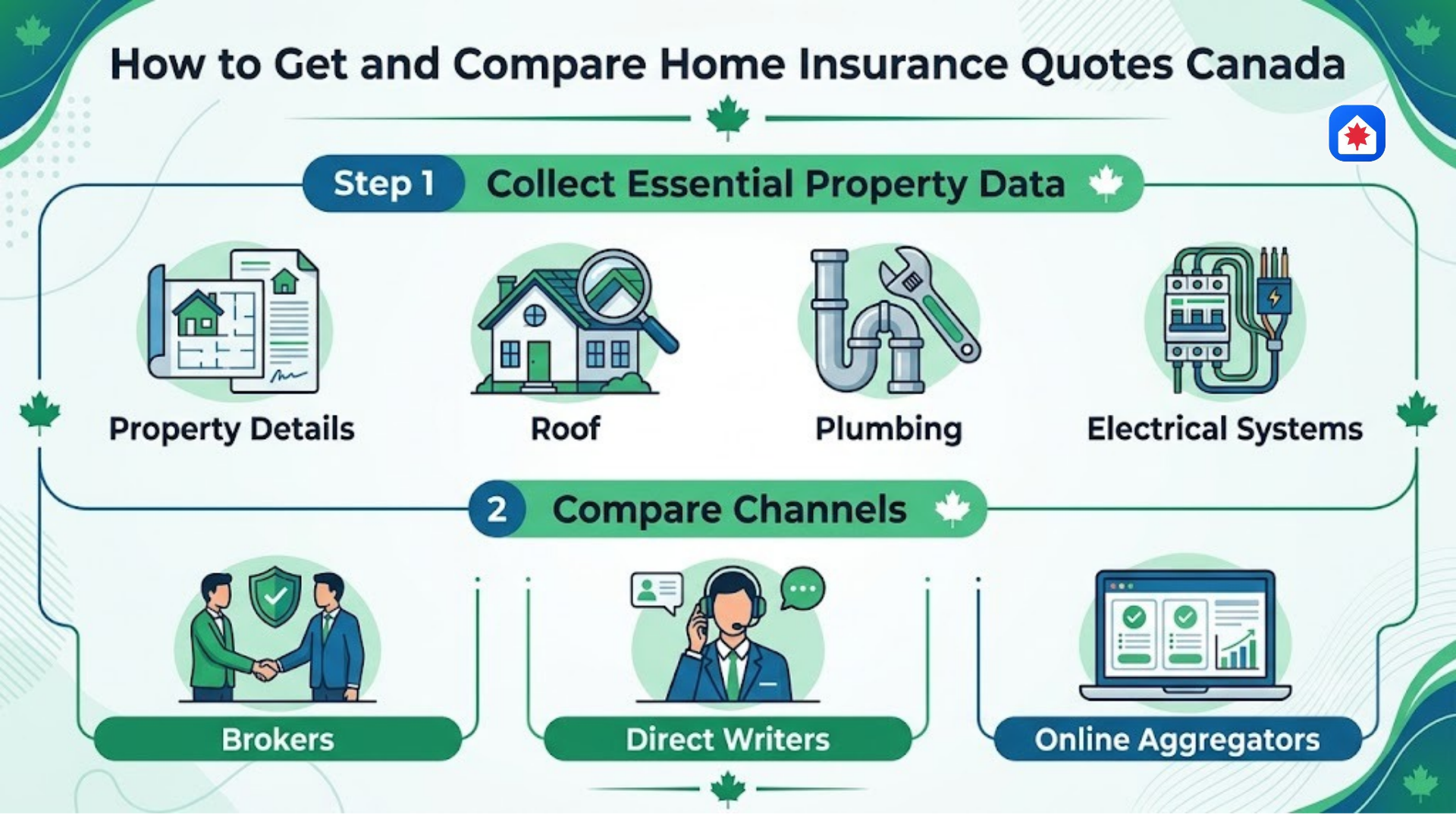
Step 1: Collect Essential Property Data
Before requesting home insurance quotes Canada providers will ask detailed technical questions about your property. Prepare the following details:
- Year of construction and total square footage
- Type and age of heating system (e.g., forced-air gas, electric baseboards, oil tank)
- Type and age of roofing materials (e.g., asphalt shingles, metal)
- Electrical system specifications (e.g., circuit breakers vs. fuses, amp capacity)
- Plumbing material types (e.g., copper, PEX, ABS, Poly-B)
- Proximity to the nearest fire hydrant and fire station
- Safety features (e.g., centrally monitored fire/burglar alarms, sump pumps, backwater valves)
Step 2: Compare Channels (Brokers vs. Direct Writers vs. Aggregators)
- Insurance Brokers: Independent brokers work on your behalf to shop quotes across multiple insurance carriers simultaneously, offering expert guidance at no direct cost to you.
- Direct Writers: Insurers like TD or Desjardins deal directly with consumers without intermediary brokers, which can lead to competitive direct pricing.
- Online Aggregators: Websites like Ratehub, MyChoice, or LowestRates allow you to input your parameters once to receive instant rate estimates across various Canadian providers.
Proven Strategies to Lower Your Home Insurance Rate
Implementing targeted risk-reduction strategies can lower your annual premiums:
- Bundle Home and Auto Policies: Combining your property and vehicle insurance under the same company is one of the easiest ways to earn a discount - typically saving you 10% to 25% across both policies.
- Install Monitored Security Systems: Equipping your home with a centrally monitored fire alarm, burglar system, or automatic water shut-off system (such as Flo by Moen) mitigates risk and yields policy discounts.
- Increase Your Deductible: Raising your policy deductible from $500 to $1,000 or $2,500 reduces your monthly or annual premiums. Ensure you maintain an emergency reserve to cover the higher deductible if you need to file a claim.
- Maintain a Clean Claim Record: Avoid filing minor claims for low-cost repairs that fall close to your deductible amount. Maintaining a claim-free status over 3 to 5 years earns you claim-free discount incentives.
- Upgrade Outdated Infrastructure: Replacing an aging roof, updating outdated electrical wiring, or replacing old plumbing systems lowers risk factors and reduces premium charges.
- Pay Annually Instead of Monthly: Monthly payment options often incur small administrative fees or interest charges. Paying your annual premium up front avoids these extra processing fees.
Frequently Asked Questions (FAQ)
Is home insurance legally mandatory in Canada?
Unlike auto insurance, home insurance is not legally mandated by Canadian federal or provincial governments. However, if you apply for a mortgage, virtually all banks and mortgage lenders require proof of active home insurance coverage before approving your loan. If you own your home outright without a mortgage, insurance is optional but strongly recommended to safeguard your financial stability.
What is the difference between market value and replacement cost?
Market value is the estimated price your home and land would sell for on the real estate market, which is heavily influenced by location and land value. Replacement cost is the expense required to rebuild the physical house structure from the ground up using current materials and labor rates, excluding the value of the underlying land.
What should I do immediately after my home suffers damage?
First, ensure your safety and contact emergency services if necessary. Take reasonable steps to prevent further damage (such as shutting off the main water valve during a leak) without putting yourself at risk. Document all damage with photographs and videos, keep receipts for temporary emergency repairs, and contact your insurance company's 24/7 claims department as soon as possible.
Conclusion
Securing the right property insurance policy is an essential step in protecting your home, personal belongings, and long-term financial wellbeing. By understanding core coverage components, evaluating local geographical risk factors, comparing competitive home insurance quotes Canada providers offer, and implementing practical savings strategies, you can secure comprehensive protection suited to your household budget.
Take time to review your policy details annually, reassess your home's replacement value, and consult with a licensed insurance professional or broker to ensure your asset remains fully protected against unexpected events.
Thank you for reading our article!