Moving to a new country is an exciting experience, but getting settled can feel overwhelming when everything is unfamiliar. For a newcomer to Canada, knowing what to do first can make the transition much easier. From finding a place to live to accessing essential services, taking the right steps early can help you avoid common problems, manage your expenses, and feel more at home. This guide covers the key things to do after arriving in Canada, helping you start your new life with greater confidence and peace of mind.
1. Find Accommodation in Canada
Finding suitable accommodation is one of the first priorities after arriving in Canada. A convenient place to live makes settling in Canada easier and helps you establish a daily routine while looking for work, arranging your children’s schooling, and completing essential tasks.
When searching for a rental property, consider three main factors:
- Budget: In addition to monthly rent, account for electricity, heating, water, internet, and other utilities that may not be included.
- Location: Look for convenient access to public transportation, your workplace, schools, and essential services. If you do not have a car, check nearby bus routes and other transit options.
- Rental terms: Read the lease carefully, confirm all applicable fees, and understand your responsibilities and those of the landlord before signing.
To reduce the risk of rental scams:
- View the property in person or verify it through a reliable method before sending money.
- Check the landlord’s identity and their authority to rent out the property, where possible.
- Do not transfer money simply because a landlord pressures you to pay a deposit immediately.
- Keep a copy of your lease, payment receipts, and relevant communications.
If you cannot secure long-term accommodation before arriving, consider temporary housing while you explore different neighbourhoods and compare rental prices. However, plan your temporary accommodation budget carefully to avoid paying high rates for an extended period.
Do not choose a property based on rent alone. Calculate your total monthly housing and transportation costs to determine what fits your budget.
2. Get a Canadian Phone Number
As part of your newcomer guide Canada, getting a Canadian phone number early can make it easier to contact landlords, apply for jobs, book appointments, and sign up for essential services.
You can visit mobile carrier stores such as Rogers, Bell, TELUS, or Freedom Mobile to sign up for a plan. Bring your passport and any other documents required for identity verification. When comparing plans, consider local network coverage, data allowances, calling minutes, and the total cost after tax. For a newcomer to Canada without a local credit history or who prefers not to commit to a long-term contract, a prepaid plan may be a practical starting point.
Before paying, check whether your phone is unlocked and compatible with the carrier’s SIM or eSIM. Also, confirm activation fees, promotional conditions, and international calling rates if you regularly contact family abroad.
If you do not yet have a permanent address, consider a flexible monthly plan that you can change as your living arrangements or phone needs evolve.
3. Apply for a Social Insurance Number (SIN)
A Social Insurance Number (SIN) is a 9-digit number required to work in Canada and access certain government programs and benefits. If you are eligible and plan to work, applying for a SIN should be a priority.
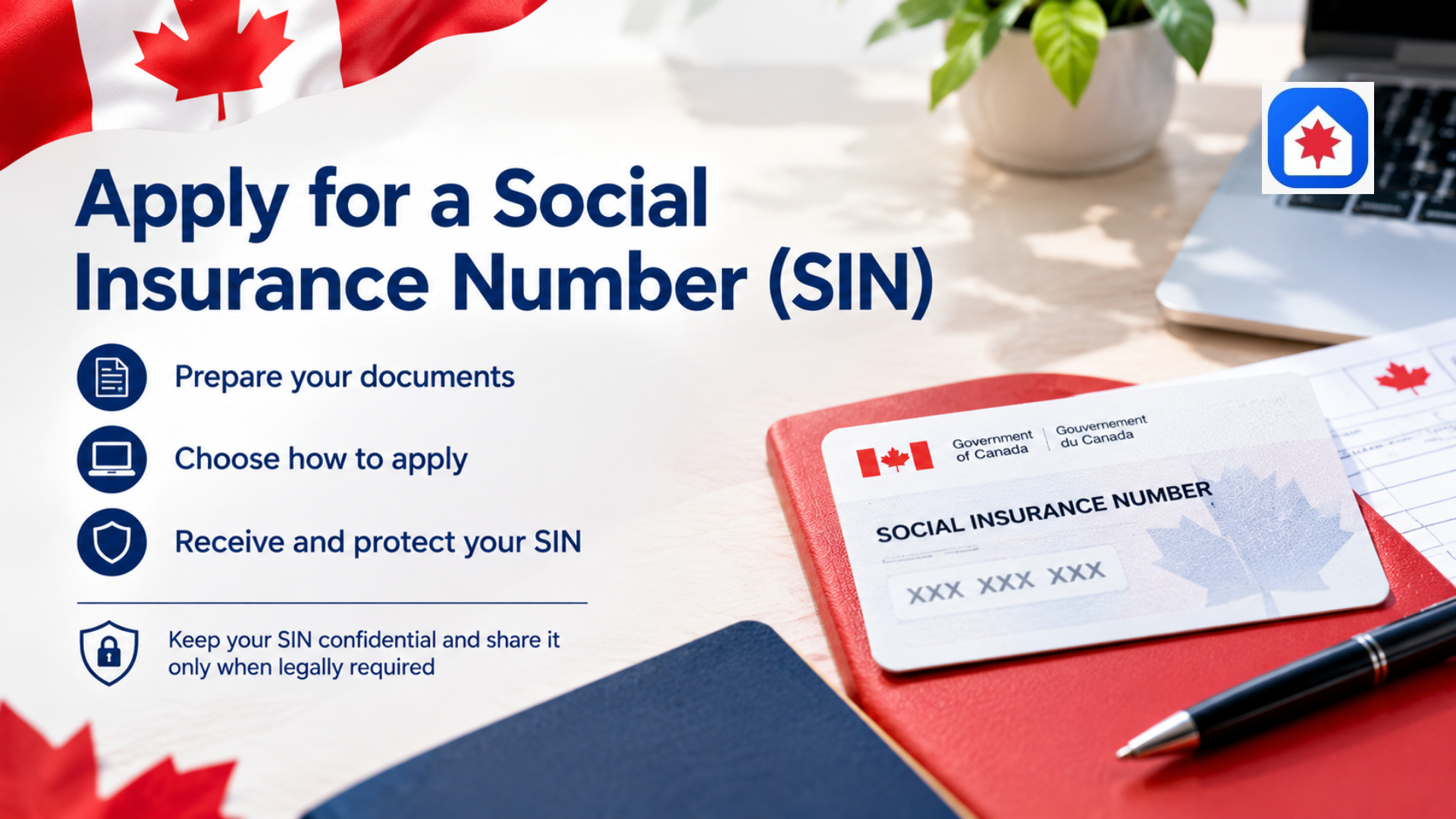
How to Apply for a SIN:
Step 1: Prepare your documents
- Permanent residents: A Permanent Resident Card (PR Card) or a Confirmation of Permanent Residence (COPR) document that meets the current requirements.
- Temporary residents: A valid work permit or study permit that includes authorization to work in Canada.
- Additional identification: You may need a passport or another accepted document to verify your identity.
Your documents must be valid and meet Service Canada’s requirements. Check the official document list for your specific situation before applying.
Step 2: Choose how to apply
You can apply for a SIN in one of three ways:
- In person: Visit a Service Canada Centre with your original, valid documents. If your application is complete, you will generally receive your SIN during the visit.
- Online: Submit your application through the official SIN application portal. Processing typically takes around five business days.
- By mail: Complete the application and send the required documents according to Service Canada’s instructions. Processing typically takes around 20 business days.
Step 3: Receive and protect your SIN
After an online application is processed, you may be able to view your SIN through your My Service Canada Account (MSCA) or receive confirmation by mail, depending on your circumstances and the available options. If you need your SIN urgently for an upcoming job, applying in person may be more convenient.
Applying for a SIN is free. Keep your SIN confidential and share it only when legally required, such as with your employer or relevant government agencies.
4. Open a Bank Account
Opening a bank account helps you receive your salary, pay rent and bills, and manage everyday expenses. A new immigrant Canada can explore account options early, even without a job or an established Canadian credit history.
How to Open a Bank Account:
You can apply online or visit a branch of a bank such as RBC, TD, Scotiabank, BMO, or CIBC. You will generally need:
- A valid passport.
- Immigration documents or other documents confirming your status in Canada.
- A Canadian contact address and any personal information required by the bank.
Before opening an account, compare monthly fees, the number of included transactions, international transfer charges, and the conditions attached to promotional offers. You should also ask about debit cards, online banking, and automatic bill payments.
If you do not yet have a permanent address, ask the bank which address documents it accepts and how you can receive your bank card. Check the regular fees after any introductory offer ends rather than choosing an account based only on its initial promotion.
5. Apply for MSP in British Columbia
If you live in British Columbia (BC), you should apply for the Medical Services Plan (MSP) to access eligible publicly funded healthcare services. MSP generally covers medically necessary services such as visits to a physician and certain hospital services. Without appropriate coverage, an emergency medical visit can cost hundreds or even thousands of dollars.
How to Apply for MSP:
- Prepare your documents: Gather your passport, valid immigration documents, and address information for BC.
- Submit your application: Visit the official MSP application page, complete the required information, and submit your application as instructed.
- Wait for confirmation: Check letters or notifications from the relevant authority for updates on your application and the date your coverage becomes effective.
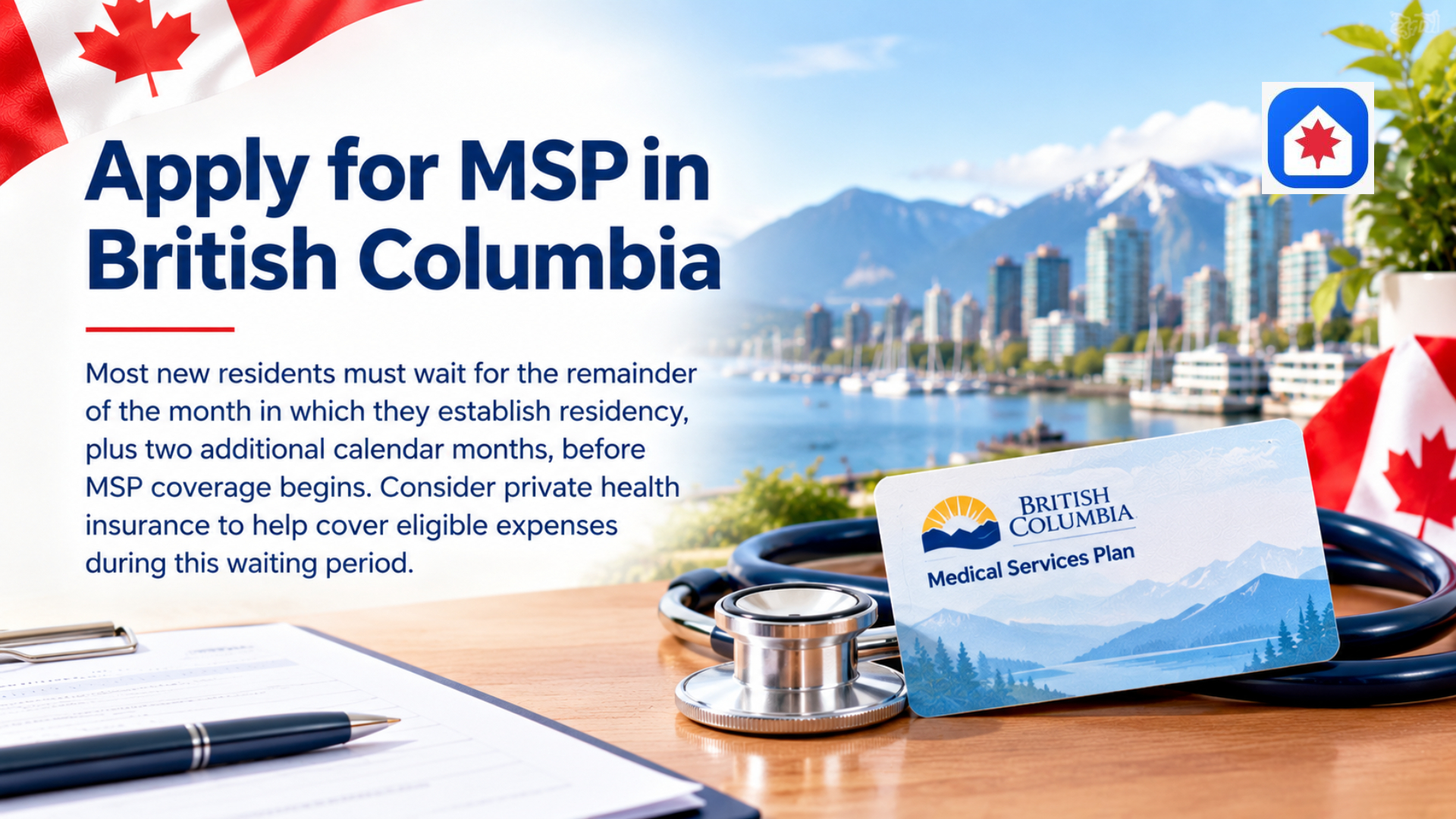
Most new residents must wait for the remainder of the month in which they establish residency, plus two additional calendar months, before MSP coverage begins. Consider private health insurance to help cover eligible expenses during this waiting period.
6. Get Familiar with Public Transit
Public transportation helps a newcomer to Canada commute to work, attend school, and run errands without buying a car. Learning how local transit works can make life in Canada for newcomers more convenient, especially during the first few weeks when you are still getting familiar with your new surroundings.
What you should do to learn to use public transportation in Canada:
- Plan your route: Use Google Maps or the local transit authority’s trip planner to check routes, stops, travel times, and transfers.
- Learn how to pay: In Toronto and many parts of Ontario, you can use a PRESTO card or accepted contactless payment methods. In Metro Vancouver, options include a Compass Card, paper tickets, and contactless bank cards on eligible services.
- Choose the right fare: A single fare may be enough if you travel occasionally. If you commute daily, compare the cost of a monthly pass with the total cost of individual trips.
- Check schedules: Look up the first and last departures and check for service disruptions, especially on weekends and holidays.
On many buses, you need to pull a cord or press a STOP button to request the next stop. Check the local system’s instructions, carry a valid payment method, and learn the transfer rules for your city.
7. Register Your Children for School in Canada
Public education from kindergarten to Grade 12 is generally tuition-free for eligible children. However, eligibility for tuition-free public education depends on local rules and the family’s immigration status.
To enrol your child, contact the local school board in your area. Public schools generally serve students based on residential catchment areas, so your home address may determine which school your child can attend.
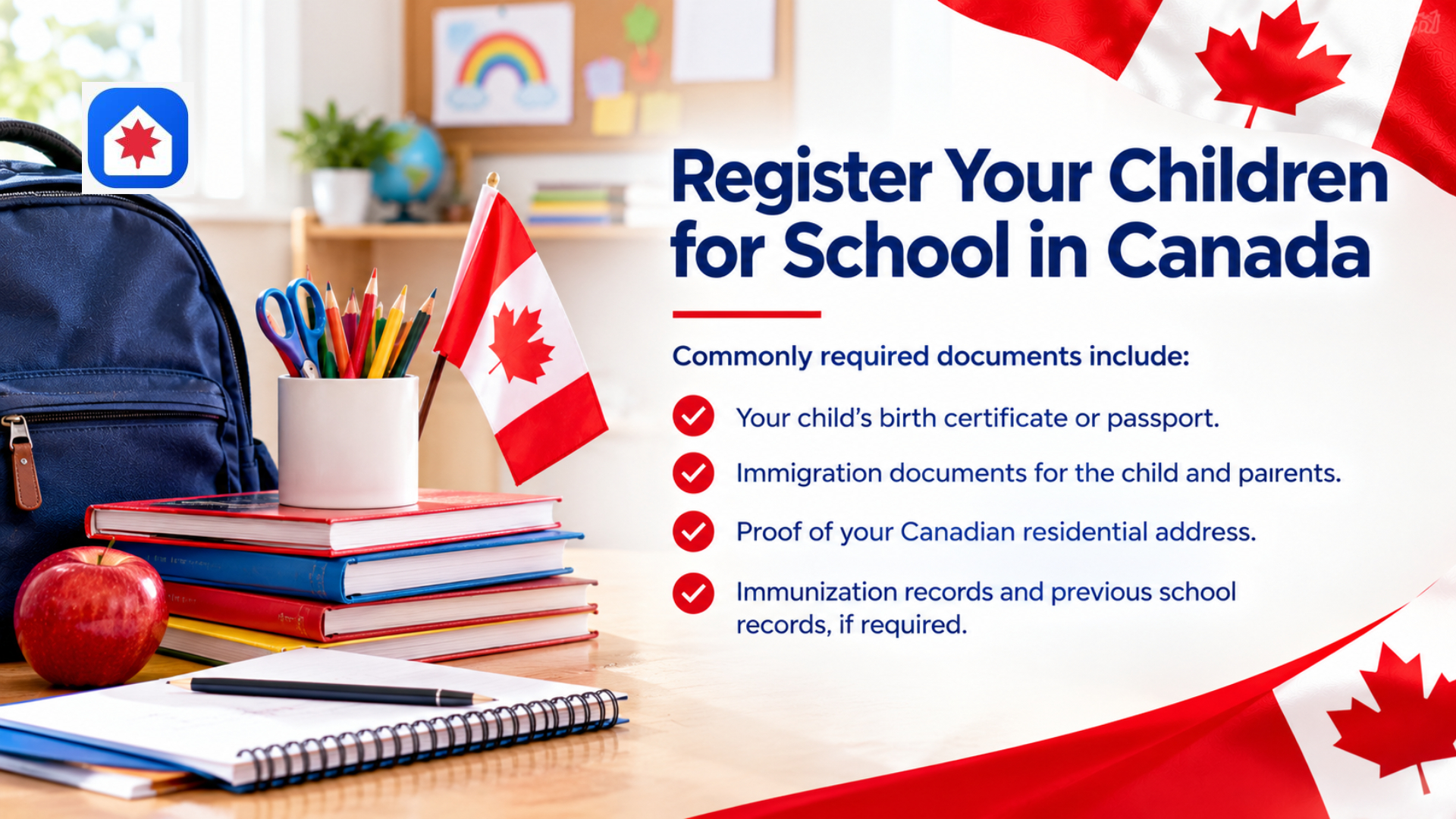
Commonly required documents include:
- Your child’s birth certificate or passport.
- Immigration documents for the child and parents.
- Proof of your Canadian residential address.
- Immunization records and previous school records, if required.
After reviewing the application, the school may assess your child’s academic level and English or French proficiency to determine appropriate grade placement and support.
The school year usually begins in late August or early September. Contact the local school board early to confirm tuition eligibility, required documents, and registration deadlines. Not every child who has recently arrived in Canada automatically qualifies for tuition-free public education.
8. Apply for Canadian Government Benefits
A newcomer to Canada may qualify for federal or provincial benefits depending on income, residency status, and family circumstances. Some programs help families cover the cost of raising children, while others provide financial support to individuals and households with low or moderate incomes.
Benefits Worth Exploring:
- Canada Child Benefit (CCB): A tax-free monthly payment for eligible families raising children under 18. The amount depends on family income, the number of children, and their ages.
- Canada Groceries and Essentials Benefit (CGEB): A tax-free quarterly benefit for eligible individuals and families with low or moderate incomes. This program replaces the GST/HST credit starting in July 2026.
- Provincial benefits: Depending on where you live, you may qualify for additional benefits or tax credits related to living expenses, housing, and essential needs.
For the CCB, eligible applicants may need to complete form RC66 (Canada Child Benefit Application) and form RC66SCH (Status in Canada and Income Information). For the CGEB, individuals who became residents of Canada may need form RC151 (Canada Groceries and Essentials Benefit Application for Individuals Who Became Residents of Canada). The appropriate forms depend on your circumstances.
Prepare your SIN, immigration documents, income information, and your child’s birth details if applicable. File your tax returns on time and update the CRA when your family or residency circumstances change to help prevent interruptions to eligible benefits.
9. Get a Driver’s Licence in British Columbia (BC)
If you plan to drive in British Columbia, you need a valid licence that meets the province’s requirements.
If you already have a foreign driver’s licence:
- Eligible for an exchange: Some countries and regions have licence-exchange agreements with BC. Eligible drivers may exchange their licences without taking knowledge or road tests.
- Tests required: If your licence was issued in a jurisdiction that is not covered by an exchange agreement, you will generally need to pass a knowledge test and a road test.
- Prepare your documents: You will need identification accepted by the Insurance Corporation of British Columbia (ICBC), your current driver’s licence, applicable fees, and documents proving your driving experience. If your documents are not in English, ICBC may require an approved translation.
If you do not have a driver’s licence, you will need to follow BC’s licensing process for new drivers. If you cannot demonstrate at least two years of experience driving with a full licence, you may need to enter the Graduated Licensing Program.
New residents of BC generally have up to 90 days to use a foreign driver’s licence. Check the rules that apply to your situation and start the process early.
Adjusting to a new country becomes easier when you know which tasks to prioritize after arrival. From securing accommodation and applying for a SIN to opening a bank account and accessing healthcare and government benefits, each step helps you adapt to your new surroundings. If you are a newcomer to Canada, focus on the tasks that match your immediate needs, check the requirements in your province, and rely on official sources to avoid unnecessary delays. Preparing your documents and seeking assistance when needed can help you manage expenses, save time, and build a more stable future.
Thank you for taking the time to read this guide.
For more information, please contact us at CANADAHOMEHUB.