
Owning a rental property can provide a steady income, but landlords in Canada also have tax obligations to consider. Whether you rent out a condominium, a detached house, a basement suite, or a room in your home, the money you earn may be subject to income tax. Understanding rental income tax Canada rules can help you calculate your taxable income, identify eligible deductions, and avoid mistakes when filing your annual tax return. This guide explains how rental income is taxed in Canada, how to report it, which expenses you can deduct, and what special situations landlords should understand before filing their taxes.
1. Understanding Rental Income Tax in Canada
Before calculating your tax obligations, it is necessary to understand what the CRA considers rental income and how it differs from other types of income.
1.1. What Counts as Rental Income?
Rental income is money you earn from renting out property that you own or have the right to use. It can come from different types of real estate, including:
- Detached houses and townhouses.
- Condominiums and apartments.
- Basement suites and individual rooms.
- Commercial buildings and office spaces.
- Other real or movable property.
Rental income generally includes more than the monthly rent paid by tenants. It may also include certain payments tenants make on your behalf, such as property-related expenses that form part of the rental arrangement, and amounts received for services or other rental-related charges.
For example, if a tenant pays you $2,000 per month in rent, your annual gross rental income is $24,000. If the tenant also pays an amount that the CRA considers additional rental income, that amount must be included in your calculation. The important distinction is that gross rental income represents the total income earned before eligible expenses are deducted.
1.2. Rental Income vs. Business Income
Not all rental activities receive the same tax treatment. The CRA distinguishes between income from property and income from carrying on a business.
Most traditional landlords earn income from property because they simply provide tenants with accommodation and basic services, such as heating and electricity, parking, laundry facilities, and basic property maintenance.
However, if you provide additional services, such as meals, regular cleaning, or security services, your rental operation may be considered a business.
The number and type of services you provide are important factors in this classification. If your activity qualifies as a business, you may need to report the income using Form T2125 rather than Form T776. This distinction matters because the reporting requirements and applicable tax rules can differ depending on the nature of your rental operation.
2. How Is Rental Income Taxed in Canada?
Rental income earned by Canadian residents is generally included in their annual taxable income. Unlike employment income, which is often subject to payroll deductions throughout the year, rental income may not have tax withheld when tenants pay their rent. As a result, landlords should plan for their potential tax liability.
2.1. Rental Income Is Added to Your Total Taxable Income
For individual landlords, net rental income is generally combined with other sources of income, such as employment income, self-employment income, investment income, and other taxable income.
Canada uses a progressive income tax system. This means different portions of your taxable income are taxed at different rates rather than applying one rate to your entire income. Both federal and provincial or territorial income taxes apply. Your province or territory of residence on December 31 generally determines which provincial or territorial tax rates apply. Therefore, two landlords earning the same rental income may have different tax liabilities depending on their other income and where they live.
2.2. How Your Marginal Tax Rate Affects Rental Income
Your marginal tax rate is the rate applied to your next dollar of taxable income. Because net rental income is generally added to your existing taxable income, it may push part of your income into a higher tax bracket.
For example, consider a landlord who earns $75,000 in employment income and receives another $15,000 in net rental income. Their combined income before other applicable adjustments would be $90,000. The additional $15,000 is not automatically taxed at the highest marginal rate applicable to the combined income. Instead, each portion is taxed according to the applicable federal and provincial or territorial brackets. This is why landlords should consider their total annual income rather than estimating rental property taxes using a single flat percentage.
3. How to Report Rental Income to the CRA
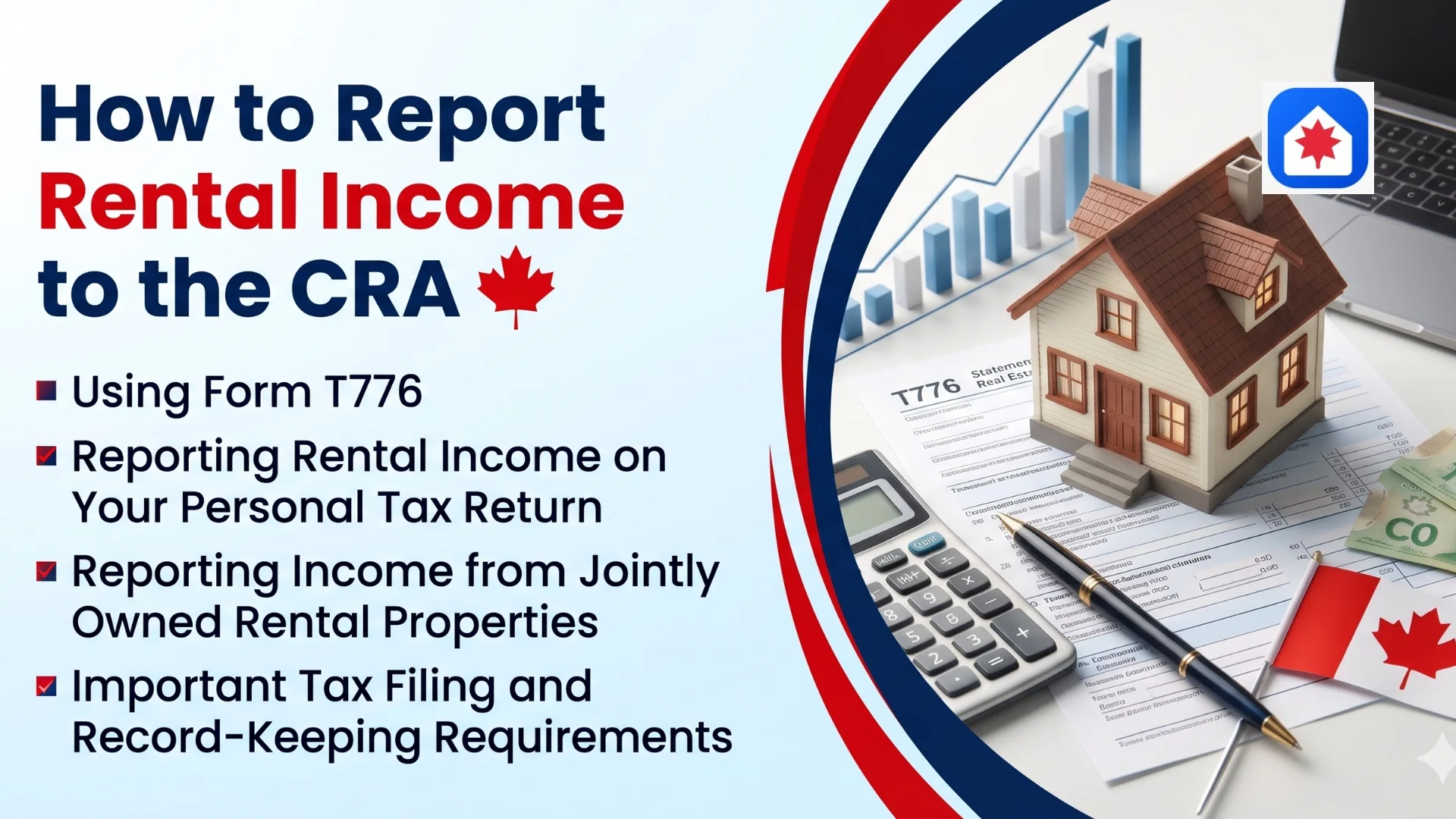
Reporting rental income accurately is an important part of meeting your Canadian tax obligations. Most individual landlords who earn income from property use Form T776 to calculate their rental income and expenses.
3.1. Using Form T776 - Statement of Real Estate Rentals
Form T776 is the CRA form used to report rental income, eligible expenses, and capital cost allowance. The form helps landlords organize their financial information and calculate their annual rental income or loss.
You generally need to provide information such as:
- Property address and ownership details.
- Gross rental income.
- Rental expenses.
- Capital cost allowance claims.
- Your share of income and expenses if you have co-owners.
3.2. Reporting Rental Income on Your Personal Tax Return
If you are an individual landlord reporting rental income from property, the amount calculated on Form T776 is generally transferred to your personal income tax return.
The relevant lines are:
- Line 12599: Gross rental income.
- Line 12600: Net rental income or loss.
The net amount is calculated after accounting for eligible expenses and any allowable CCA claim. You should report your rental income even if you have already paid.
3.3. Reporting Income from Jointly Owned Rental Properties
If you own a rental property with another person, you generally report your share of the rental income and eligible expenses according to your ownership interest.
For example, if two people own a rental property equally, each may generally report 50% of the rental income and applicable expenses. However, the actual reporting arrangement should reflect the legal ownership and applicable tax rules. Simply transferring rental income between spouses or family members does not automatically change who must report it. Co-owners should maintain clear records of their respective ownership interests and financial contributions.
3.4. Important Tax Filing and Record-Keeping Requirements
Keeping accurate records makes it easier to prepare your tax return and support your deductions if the CRA requests additional information.
Landlords should retain:
- Rental agreements and tenant payment records.
- Bank statements showing rental income.
- Mortgage rate statements.
- Property tax bills.
- Insurance documents.
- Repair and maintenance invoices.
- Receipts for professional services.
- Records of major renovations and property improvements.
The CRA generally requires taxpayers to keep supporting tax documents and records for at least six years.
4. Rental Income Deductions Canada: What Expenses Can Landlords Claim?
One of the most important aspects of managing rental property tax Canada obligations is identifying which expenses qualify for deductions. The CRA generally allows landlords to deduct reasonable expenses incurred to earn rental income. These deductions reduce net rental income and may lower the amount of rental income tax Canada payable. Common deductible expenses include the following.
4.1. Mortgage Interest and Bank Charges
If you borrow money to purchase or maintain a rental property, the interest paid on the loan may be deductible when the borrowed funds are used to earn rental income.
Eligible expenses may include:
- Mortgage interest.
- Interest on qualifying loans used for rental property expenses.
- Certain bank service charges related to the rental operation.
However, mortgage principal repayments are not deductible. Only the eligible interest portion can generally be claimed.
For example, if your annual mortgage payments total $20,000, consisting of $7,000 in interest and $13,000 in principal, you generally claim the eligible $7,000 interest rather than the full $20,000.
4.2. Property Taxes and Insurance
Property taxes and insurance premiums are common operating expenses for landlords. Depending on the circumstances, you may deduct eligible amounts paid for:
- Municipal property taxes.
- Home or building insurance.
- Rental property liability insurance.
- Other qualifying insurance coverage related to the rental operation.
If you rent out only part of your personal residence, you must allocate shared expenses appropriately rather than deducting the full amount.
4.3. Repairs and Maintenance
Landlords can generally deduct reasonable costs for repairs and maintenance that keep a rental property in its existing condition.
Examples include:
- Fixing leaking faucets or pipes.
- Repairing damaged flooring.
- Repainting walls.
- Replacing broken locks.
- Servicing heating and cooling systems.
- Routine landscaping and snow removal.
However, not every repair-related expense qualifies as a current deduction. Work that significantly improves the property or extends its useful life may be classified as a capital expense instead.
4.4. Utilities and Property Management Fees
If you are responsible for paying utilities under your rental agreement, eligible costs may be deductible.
These can include:
- Electricity.
- Natural gas.
- Water and sewer services.
- Heating expenses.
- Internet services, where applicable to the rental operation.
If you hire a property manager, eligible management and administration fees can also be deducted.
4.5. Advertising, Legal and Accounting Fees
Expenses related to finding tenants and managing rental operations may also qualify.
Examples include:
- Online rental advertisements.
- Tenant screening expenses.
- Eligible legal fees related to rental operations.
- Accounting and tax preparation fees.
- Professional property management services.
These expenses should be directly related to earning rental income and supported by appropriate documentation.
4.6. Other Eligible Rental Expenses
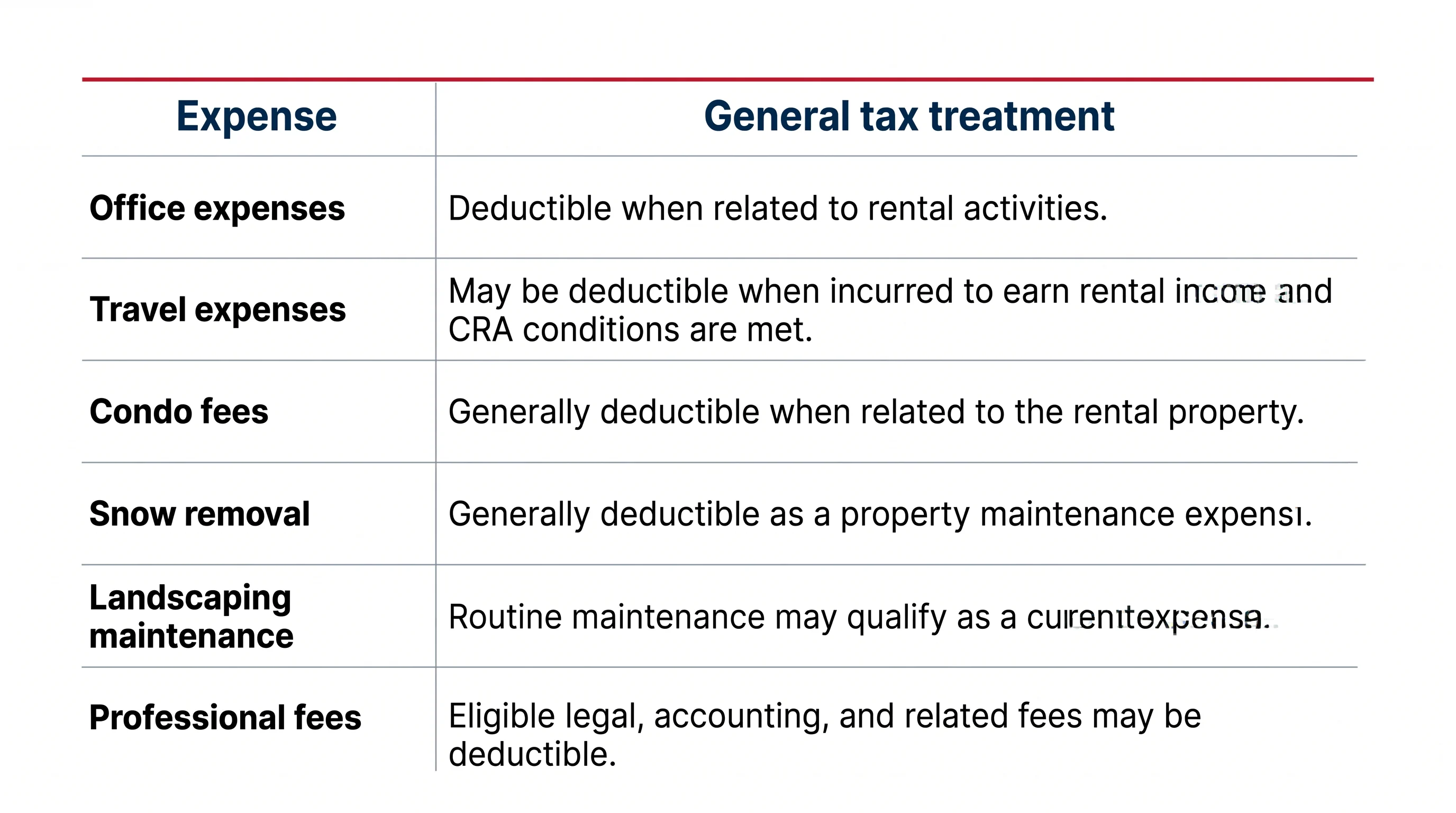
Depending on your rental arrangement, other deductible expenses may include:
5. Special Rental Property Tax Situations
Not every rental property follows the same tax rules. Some situations require additional planning and reporting.
5.1. Renting Out Part of Your Principal Residence
If you rent out a basement suite, spare bedroom, or another portion of your home, you may be able to deduct the portion of eligible expenses related to the rented area.
For example, if 25% of your home is used for rental purposes, you may generally deduct 25% of shared expenses such as:
- Property taxes.
- Utilities.
- Home insurance.
- Eligible maintenance costs.
Expenses that relate exclusively to the rental area may be claimed in full, provided they qualify.
5.2. Renting Out Your Entire Home
If you move out and convert your entire principal residence into a rental property, the tax implications may be more significant. Under the general change-in-use rules, you may be considered to have disposed of the property at its fair market value and immediately reacquired it at the same value when its use changes. This may trigger a capital gain that needs to be considered for tax purposes.
However, you may be able to elect under subsection 45(2) in certain situations. It can let you defer the deemed disposition and potentially keep designating the property as your principal residence for up to four years, subject to eligibility requirements. One important condition is that you cannot claim CCA on the property while relying on this election.
5.3. Short-Term Rentals and Tax Obligations
If you rent out a property through platforms such as Airbnb or other short-term accommodation services, you must consider both income tax and GST/HST requirements.
For income tax purposes, a short-term rental generally refers to a residential property rented or offered for rent for periods of less than 90 consecutive days. Since 2024, the CRA has denied deductions for expenses and CCA related to non-compliant short-term rentals.
A short-term rental may be considered non-compliant if:
- Its location does not permit short-term rental operations.
- It fails to meet applicable provincial or municipal registration requirements.
- It does not comply with required licences or permits.
This means that simply reporting rental income is not enough. Landlords must also ensure their short-term rental operations comply with applicable local regulations.
Long-term residential rentals of one month or more are generally exempt from GST/HST. Short-term accommodation of less than one month may be taxable, depending on the circumstances. The GST/HST registration requirements and small supplier rules must also be considered. Therefore, landlords operating short-term rentals should review the CRA's specific accommodation and registration rules rather than assuming the same treatment applies to traditional residential leases.
5.4. Rental Properties Owned by Non-Residents
If you live outside Canada but earn rental income from Canadian real estate, different withholding and filing requirements apply.
Generally, Canadian-source rental income paid or credited to a non-resident is subject to 25% withholding tax on gross rental income. However, non-resident landlords may elect under Section 216 of the Income Tax Act to pay tax based on net rental income instead.
To have withholding tax calculated on net rental income during the year, the landlord and their Canadian agent generally need to submit Form NR6 and obtain CRA approval. Afterward, the non-resident must file the appropriate Section 216 income tax return. This arrangement may reduce the overall withholding burden because eligible rental expenses can be considered when calculating net income.
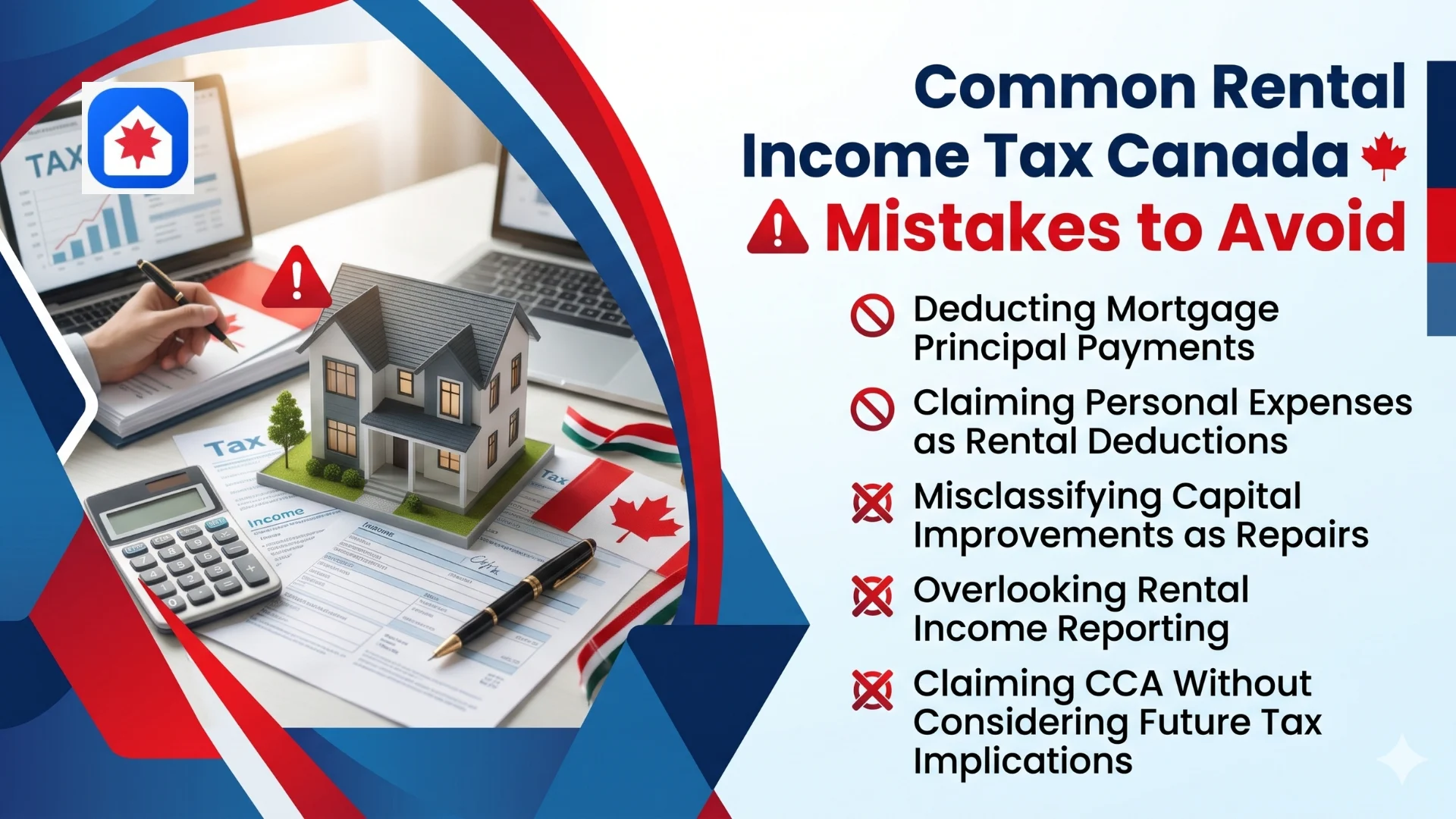
6. Common Rental Income Tax Canada Mistakes to Avoid
Even experienced landlords can make mistakes when preparing their tax returns. Understanding common issues can help you manage your rental income tax Canada obligations more accurately.
6.1. Deducting Mortgage Principal Payments
One common mistake is claiming the entire mortgage payment as a rental expense. Only the eligible interest portion is generally deductible. Principal repayments are not deductible.
6.2. Claiming Personal Expenses as Rental Deductions
If you rent out only part of your home, you cannot automatically claim all household expenses. Shared costs must be divided using a reasonable allocation method based on factors such as the rented area and the period of rental use. Claiming personal expenses as rental deductions can lead to incorrect reporting.
6.3. Misclassifying Capital Improvements as Repairs
A major renovation should not automatically be treated as a regular maintenance expense. If the work improves the property or provides a lasting benefit, it may be a capital expense rather than a current expense. Incorrect classification can result in claiming deductions in the wrong tax year.
6.4. Overlooking Rental Income Reporting
Some landlords assume they do not need to report rental income if their expenses are high or their property generates a loss. However, rental income and expenses must still be reported accurately. A legitimate rental loss may be deductible against other income, subject to the applicable rules.
6.5. Claiming CCA Without Considering Future Tax Implications
CCA can reduce taxable income in the current year, but it may result in recapture when you sell the property. Before claiming it, consider your ownership plans, expected property value, and potential future tax consequences.
Frequently Asked Questions
1. How much tax do you pay on rental income in Canada?
There is no single flat tax rate for rental income in Canada. For individual landlords, net rental income is generally added to their other taxable income and taxed using applicable federal and provincial or territorial marginal tax rates. Your total income, eligible deductions, and province or territory of residence determine how much tax you pay.
2. Is rental income considered employment income?
No. Traditional rental income is generally classified as income from property rather than employment income.
3. Can I deduct my entire mortgage payment from rental income?
No. You can generally deduct the eligible interest portion of your mortgage payment if the borrowed money is used to earn rental income. The principal repayment portion is not deductible.
4. What expenses can landlords deduct in Canada?
Common deductible expenses include mortgage interest, property taxes, insurance, utilities, repairs, maintenance, advertising, management fees, and eligible professional fees.
5. Do I have to report rental income if I make a loss?
Yes. You generally still need to report your rental income and expenses, even if the property generates a loss. A legitimate rental loss may be deducted against other sources of income if the expenses were incurred to earn rental income and the applicable CRA conditions are satisfied.
6. What happens when I sell a rental property?
Selling a rental property may trigger capital gains tax. If you previously claimed CCA, you may also have to report CCA recapture. The final tax treatment depends on the property's adjusted cost base, selling proceeds, eligible selling expenses, previous CCA claims, and any applicable exemptions or special rules.
Understanding rental income tax Canada requirements is essential for anyone earning money from residential or commercial rental properties. Landlords need to report their rental income accurately, identify eligible expenses, distinguish current expenses from capital improvements, and understand how CCA affects their taxable income. Good record-keeping and tax planning can make the annual filing process easier while helping you avoid unnecessary reporting mistakes.
If you are also managing a property purchase, mortgage, or other housing-related financial decisions, CanadaHomeHub offers Canadian-focused resources, financial calculators, and practical guides to help you make more informed decisions about property ownership.
Thank you for taking the time to read this article.