Income tax is an important part of Canada's tax system, directly affecting personal income and financial planning. Understanding the rules, tax rates, and filing requirements can help you manage your finances more effectively when living, studying, or working in Canada. This guide covers the essentials of income tax Canada in 2026, helping you understand your tax obligations and prepare for filing your annual tax return. Let’s dive in.
1. What Is Income Tax?
Income tax is money you pay based on your earnings to the federal and provincial or territorial governments each year. It helps fund public services such as healthcare, education, and infrastructure. The Canadian income tax system has two main levels: federal income tax and provincial or territorial income tax.
Federal income tax Canada is the tax you pay to the federal government based on your income. It is applied nationwide. The system uses progressive tax brackets, meaning different portions of your taxable income may be taxed at different rates. As your income increases, the portion that falls into a higher tax bracket may be subject to a higher rate.
In addition to federal tax, individuals may owe provincial or territorial income tax based on their province or territory of residence for tax purposes. Each jurisdiction has its own tax brackets and rules. As a result, two people earning the same income may pay different amounts of tax if they live in different provinces.
2. Who is Liable to Pay Tax in Canada?
Not everyone who lives or works in Canada has the same tax obligations. Whether you must pay income tax Canada and which rules apply depend on your tax residency status, income sources, and circumstances. Canada generally distinguishes between tax residents and non-residents. Understanding your status helps determine which income you must report and what tax obligations you need to meet.
2.1. Canadian Tax Residents
Individuals considered Canadian tax residents generally need to report their worldwide income, including income earned in Canada and income from other countries, for the period during which they are tax residents.
The Canada Revenue Agency (CRA) considers several factors when determining tax residency, including:
- Residential ties: Whether you have a home or other significant residential ties in Canada.
- Family ties: Whether your spouse, common-law partner, or dependants live in Canada.
- Other residential connections: These may include bank accounts, personal property, and economic or social ties.
- Time spent in Canada: The number of days you spend in the country may affect your residency status in certain circumstances.
Being physically present in Canada for 183 days or more during a year can be an important factor under certain residency rules, but it is not the only criterion.
2.2. Non-Residents of Canada
Non-residents generally do not report worldwide income in the same way as Canadian tax residents. However, they may still have to pay tax on certain types of income earned from Canadian sources.
Common examples include:
- Employment income in Canada: Wages earned from working in Canada may be taxable under the applicable rules.
- Business income in Canada: Tax obligations depend on the nature of the business and the relevant tax provisions.
- Rental income from Canadian property: Rental income may be subject to withholding tax on gross rent or, if the requirements are met and the appropriate procedures are followed, tax based on net rental income.
- Certain investment or pension income: These payments may be subject to Canadian withholding tax, depending on the income type and any applicable tax treaty.
2.3. Newcomers, International Students, and Temporary Workers
If you have recently arrived in Canada, do not assume that your tax obligations begin only when you obtain permanent resident (PR) status or a work permit. Tax residency is determined under tax rules and does not depend solely on your immigration status.
- Newcomers: If you become a Canadian tax resident during the year, you generally need to report the income required under Canadian tax rules for your residency period, including applicable foreign income. Certain foreign assets or income may also trigger separate reporting requirements.
- International students: Studying in Canada does not automatically make you either a tax resident or a non-resident. The CRA considers your residential ties and individual circumstances. If you are required to file a return, you must report income according to the applicable rules.
- Temporary workers: People with work permits may become Canadian tax residents if they meet the relevant criteria. Even if they are non-residents, they may still owe tax on certain types of Canadian-source income.
3. Canadian Income Tax Filing Deadlines
Individuals generally file an annual tax return for income earned during the previous calendar year. For example, income earned from January 1 to December 31, 2026, is generally reported in 2027. It is important to distinguish between the deadline for filing a return and the deadline for paying any outstanding tax.
3.1. Deadline to File Your Tax Return
Under the CRA's usual schedule, the filing deadlines are:
- April 30: The deadline for most individuals, including employed individuals.
- June 15: The filing deadline for self-employed individuals and their spouses or common-law partners, where the extended deadline applies.
3.2. Deadline to Pay Your Taxes
For most individuals, the filing and payment deadlines are both April 30. Self-employed individuals may have until June 15 to file their returns, but any outstanding tax is generally still due by April 30.
For example, a self-employed person filing a return for the 2026 tax year would generally have until June 15, 2027, to file. However, any balance owing would normally need to be paid by April 30, 2027, to avoid interest on late payment.
3.3. What Happens If You File or Pay Late?
If you file late and owe tax, the CRA may charge a late-filing penalty. Interest may also apply to unpaid balances after the payment deadline. The applicable penalties and interest depend on the rules and circumstances of your tax account. Even if you have no income or do not expect to owe additional tax, filing a return may still be necessary to establish eligibility for certain benefits and credits. Check your filing obligations and prepare your documents early rather than waiting until the deadline.
4. Income Tax Rates in Canada
Your tax liability depends on your taxable income, federal and provincial or territorial tax brackets, and the deductions and tax credits you qualify for. Understanding income tax rates Canada uses can help you estimate your tax obligations more accurately.
4.1. Federal Income Tax Brackets
The federal income tax system has five tax brackets. Each rate applies only to the portion of taxable income within the corresponding bracket.
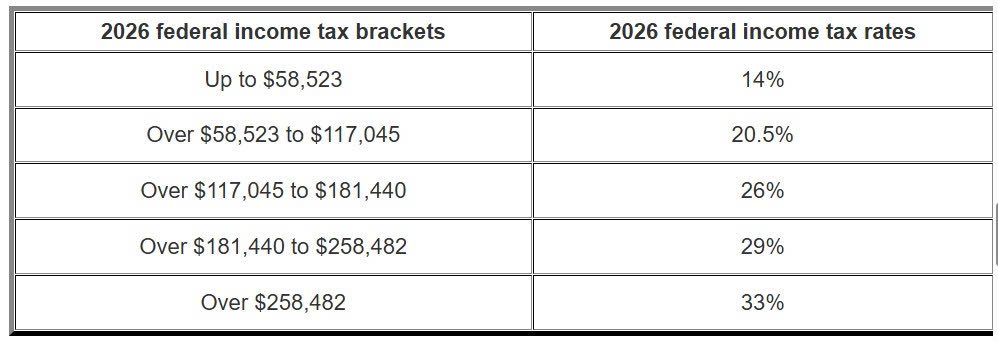
For example, if your taxable income is $70,000 per year, your federal tax before tax credits is calculated using two brackets:
- First $58,523 × 14% = $8,193.2
- Remaining $11,477 × 20.5% = $2,352.79
- Your total federal tax before tax credits would be $10,546.01.
This means your marginal tax rate is 20.5%, but not all your income is taxed at that rate. Only the portion above $58,523 falls into the 20.5% bracket.
4.2. Provincial and Territorial Income Tax Rates
In addition to federal tax, taxpayers generally pay provincial or territorial income tax. Each jurisdiction has its own income thresholds and tax rates, so people earning the same income may owe different amounts depending on where they live.
For example, the provincial tax rates in 2026 range as follows:
- Ontario: 5.05% to 13.16%.
- Alberta: 8% to 15%.
- British Columbia: 5.6% to 20.5%.
- Manitoba: 10.8% to 17.4%.
These figures represent the lowest and highest rates, not the percentage applied to all your income. To calculate your actual tax, you must use the individual brackets for your province or territory.
For example, a person with $70,000 in taxable income who is a resident of Ontario on December 31, 2026, would calculate provincial tax using the first two brackets:
- First $53,891 × 5.05% = $2,721.50
- Remaining $16,109 × 9.15% = $1,474.98
- The basic provincial tax calculation would total approximately $4,196.48, before applicable tax credits and adjustments.
5. Income Tax Canada Deductions
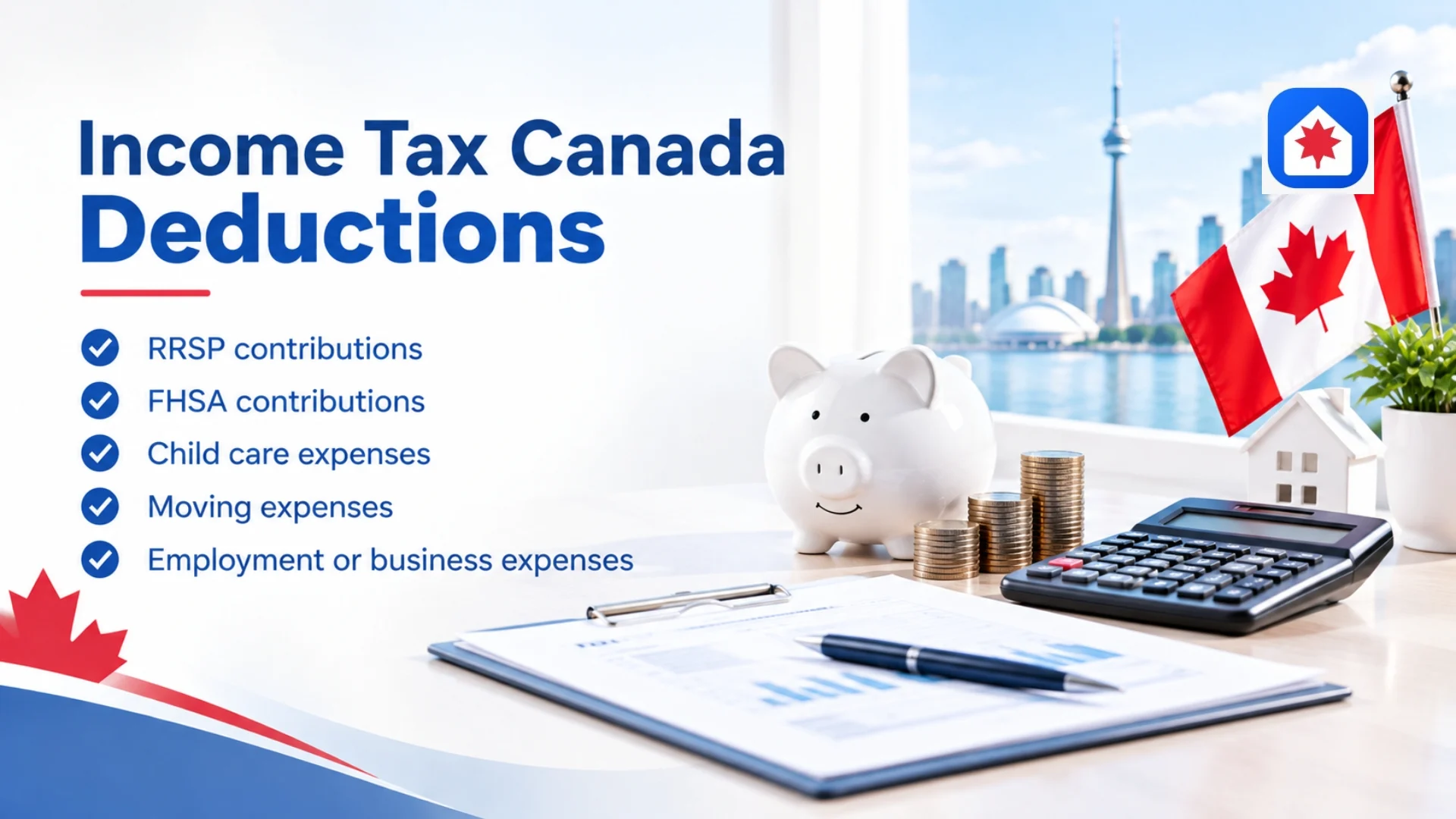
Certain eligible deductions can reduce your taxable income and, in turn, lower the amount of tax you owe. Common examples include:
- RRSP contributions: Eligible contributions to a Registered Retirement Savings Plan may be deducted within the applicable limits.
- FHSA contributions: Eligible contributions to a First Home Savings Account may be deductible.
- Child care expenses: Eligible expenses may be deductible if the applicable requirements are met.
- Moving expenses: Certain costs may qualify when you move for work or full-time post-secondary education and meet the CRA's conditions.
- Employment or business expenses: Some expenses incurred to earn income may be deductible, depending on your employment status and the applicable rules.
For example, if you earn $70,000 and claim a $5,000 deduction for eligible RRSP contributions, your taxable income may be reduced to $65,000.
Remember that a deduction reduces taxable income; it does not directly reduce your tax bill by the same amount. The actual tax savings depend on the tax rates that apply to you.
6. Tax Credits That Can Reduce Your Tax Bill
In addition to deductions, Canada offers tax credits that can directly reduce the amount of tax you owe. Common examples include:
- Basic Personal Amount: A non-refundable tax credit available to eligible individuals that reduces federal income tax.
- Canada Employment Amount: A credit for eligible employment income, calculated according to the annual limits.
- Medical Expense Tax Credit: May apply to eligible medical expenses that exceed the applicable threshold.
- Tuition Tax Credit: May be available for eligible tuition fees paid to qualifying educational institutions.
- Canada Caregiver Credit: May apply to individuals supporting certain eligible family members with physical or mental impairments.
Provinces and territories may also offer their own tax credits. Eligibility requirements and credit amounts vary depending on the program and your circumstances.
7. Steps to Complete Your Canadian Tax Obligations
Understanding how income tax works Canada can help you prepare your return and meet your tax obligations. Follow these steps to organize your documents, calculate your taxes, and complete the filing process.
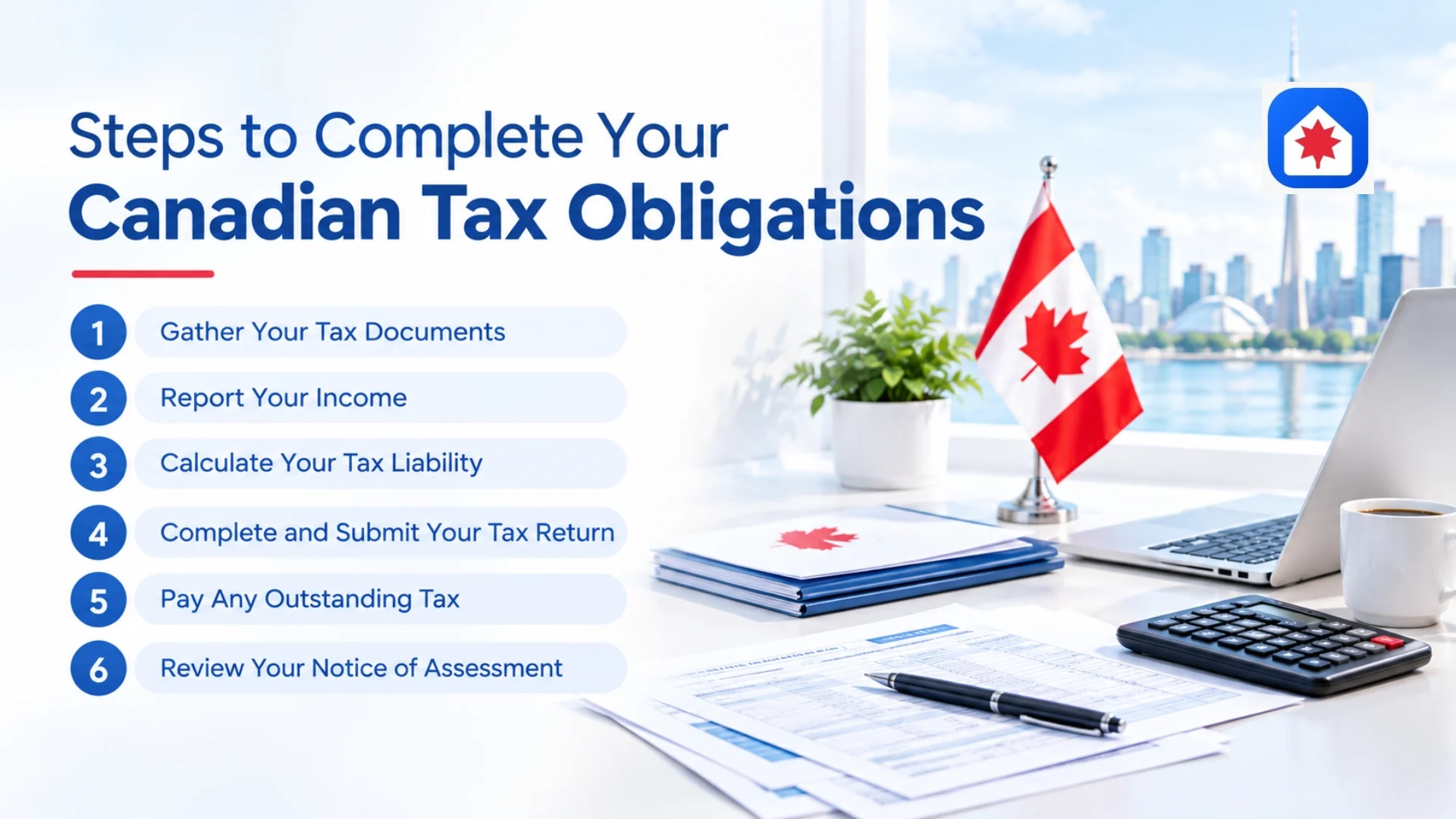
- Step 1: Gather Your Tax Documents: Prepare your Social Insurance Number (SIN), T4 slips, other income documents such as T5 or T4A slips if applicable, and receipts for RRSP or FHSA contributions. You should also collect supporting documents for any deductions or tax credits you plan to claim.
- Step 2: Report Your Income: Report all income that must be declared for the year, including employment income, business income, investment income, and rental income where applicable. Then identify the deductions and tax credits you qualify for. Do not rely solely on your T4 if you have other income sources. CRA data-import services may help, but you remain responsible for checking the information and reporting any missing income.
- Step 3: Calculate Your Tax Liability: Use your taxable income to calculate federal and provincial tax based on the applicable brackets. Then apply eligible tax credits and compare the resulting amount with the tax already withheld from your pay or paid through instalments. This calculation will show whether you may owe additional tax or receive a refund. CRA-approved tax software can help with the calculations.
- Step 4: Complete and Submit Your Tax Return: Enter your information into the tax return, review your income, deductions, and credits, and submit it to the CRA using approved tax software or another filing method available for your situation.
- Step 5: Pay Any Outstanding Tax: If your final tax liability is greater than the amount already paid or withheld, pay the remaining balance by the deadline. For most individuals, the payment deadline is April 30 of the following year, even when a later filing deadline applies to certain taxpayers.
- Step 6: Review Your Notice of Assessment: After processing your return, the CRA will issue a Notice of Assessment (NOA). Review the final tax calculation, any refund, and any outstanding balance. If you discover missing or incorrect information, you can request an adjustment according to the CRA's procedures.
Understanding income tax Canada rules can help you manage your finances, prepare your annual return, and meet your tax obligations. Your final tax liability depends on your taxable income, federal and provincial tax brackets, and the deductions and credits you qualify for. To avoid errors, check the latest CRA guidance and the tax rules that apply to your province or territory.
Thank you for taking the time to read this article.
For more information, please contact us at CANADAHOMEHUB.