Buying a home in Canada involves more than finding a property you like. Before starting your search, you need to understand how much you can borrow, what monthly payments you can manage, and whether your finances meet a lender's requirements. This is where mortgage pre-approval Canada becomes an important first step. A mortgage pre-approval gives you an estimate of how much a lender may be willing to lend based on your financial situation. It can also help you secure an interest rate for a limited period, making it easier to plan your home purchase. This guide explains the mortgage pre-approval requirements Canada, the documents you need, and how to complete the application process. Let's dive in.
1. What Is a Mortgage Pre-Approval in Canada?
A mortgage pre-approval is a preliminary assessment that helps determine how much money a lender may be willing to lend you to purchase a home. During this process, the lender or mortgage broker reviews your income, assets, debts, and credit history to estimate your borrowing capacity. Depending on the lender, a pre-approval may also include an interest rate hold, which protects you against certain rate increases during a specified period.
When you apply for pre-approval, a lender evaluates your financial information to estimate whether you can afford a mortgage and how much you may qualify to borrow. The assessment generally involves three main areas:
- Income and employment: The lender reviews your earnings, employment status, and income stability to determine whether you can manage regular mortgage payments.
- Assets and debts: Your savings, investments, existing loans, credit card balances, and other financial obligations help the lender assess your overall financial position.
- Credit history: Your credit report provides information about your borrowing and repayment history, helping the lender evaluate your creditworthiness.
After reviewing the information, the lender may provide a pre-approval letter outlining the estimated mortgage amount, interest rate, and applicable conditions. Keep in mind that a mortgage pre-approval Canada is not a final lending commitment. Even if a lender initially agrees you may qualify for a certain amount, the final decision can change after they review your complete financial documents and the property. So, think of pre-approval as a starting point for your home search, not confirmation that the money is guaranteed.
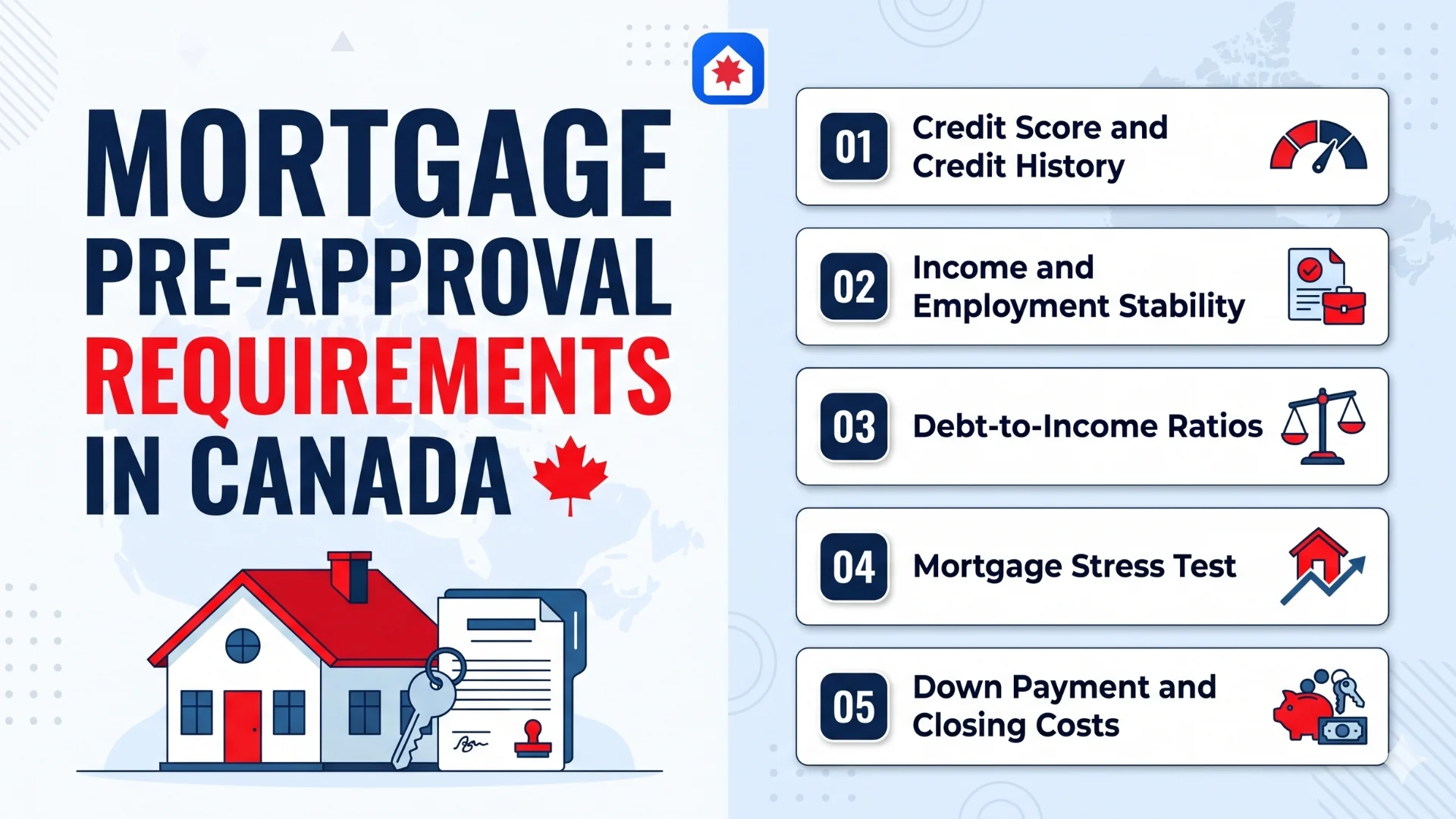
2. Mortgage Pre-Approval Requirements in Canada
To qualify for a mortgage pre-approval, you need to demonstrate that you can manage the financial responsibilities of homeownership. Lenders generally assess your credit history, income, existing debt, and available down payment. The specific requirements vary depending on the financial institution, mortgage type, and your personal circumstances.
2.1. Credit Score and Credit History
Your credit history helps lenders understand how you manage borrowed money. They may review your payment records, outstanding balances, credit utilization, and history of missed or late payments. A stronger credit profile can improve your chances of qualifying for a mortgage with favourable terms. However, there is no single credit score that guarantees mortgage pre-approval across all Canadian lenders. Some lenders may work with borrowers who have limited or less-than-perfect credit histories, although they may impose additional conditions, request a larger down payment, or offer different interest rates.
2.2. Income and Employment Stability
Your income determines how much you can reasonably allocate toward mortgage payments and other housing expenses. Lenders typically assess both the amount and reliability of your income. They may consider your employment type, length of employment, payment structure, and other sources of earnings.
If you are a salaried employee, lenders may review:
- Your current salary.
- Recent pay stubs.
- Employment confirmation from your employer.
- T4 slips or Notices of Assessment (NOAs), when required.
If you are self-employed, the assessment may involve additional documentation because your earnings can fluctuate from year to year. You may need to provide:
- T1 General income tax returns.
- Notices of Assessment for the previous two years.
- T2125 Statement of Business or Professional Activities, where applicable.
- Business financial statements.
- Bank statements or other evidence of business income.
- Lenders may also assess how long your business has operated and whether your earnings are consistent enough to support regular mortgage payments.
- If you receive commission, bonuses, rental income, or other variable earnings, the lender may ask for additional records to determine how much of that income can be included in the assessment.
2.3. Debt-to-Income Ratios
Your income alone does not determine how much mortgage you can afford. Lenders also consider your existing financial obligations and the cost of owning the property. Two important measurements used in Canadian mortgage qualification are Gross Debt Service (GDS) and Total Debt Service (TDS).
Gross Debt Service (GDS) measures the percentage of your gross household income required to cover monthly housing expenses, including:
- Mortgage principal and interest.
- Property taxes.
- Heating costs.
- A portion of condominium fees, if applicable.
Total Debt Service (TDS) measures the percentage of your gross household income needed to cover housing expenses and other debt obligations, such as car loans, credit cards, and personal loans.
As general qualification guidelines for insured mortgages, CMHC uses maximum ratios of 39% for GDS and 44% for TDS. These figures are guidelines, not a guarantee that every borrower meeting them will qualify. Lenders may also apply their own requirements.
2.4. Mortgage Stress Test
The mortgage stress test checks whether you can still afford mortgage payments if interest rates rise. Under the minimum qualifying rate for uninsured mortgages set by OSFI, federally regulated lenders generally assess borrowers at the higher of:
- The mortgage contract rate plus 2 percentage points.
- The minimum qualifying rate of 5.25%.
For example, if your lender offers a mortgage rate of 4.5%, your qualifying rate would be 6.5%, because this is higher than 5.25%.
Your actual mortgage payments would be based on your contract rate, but your borrowing capacity is assessed using the higher qualifying rate. This distinction matters because the stress test can reduce the mortgage amount you qualify for, even when your current income appears sufficient to cover the proposed payments.
2.5. Down Payment and Closing Costs
Your down payment is the amount you contribute toward the purchase price of a home. You generally finance the remaining balance through a mortgage. In Canada, the minimum down payment depends on the property's purchase price:
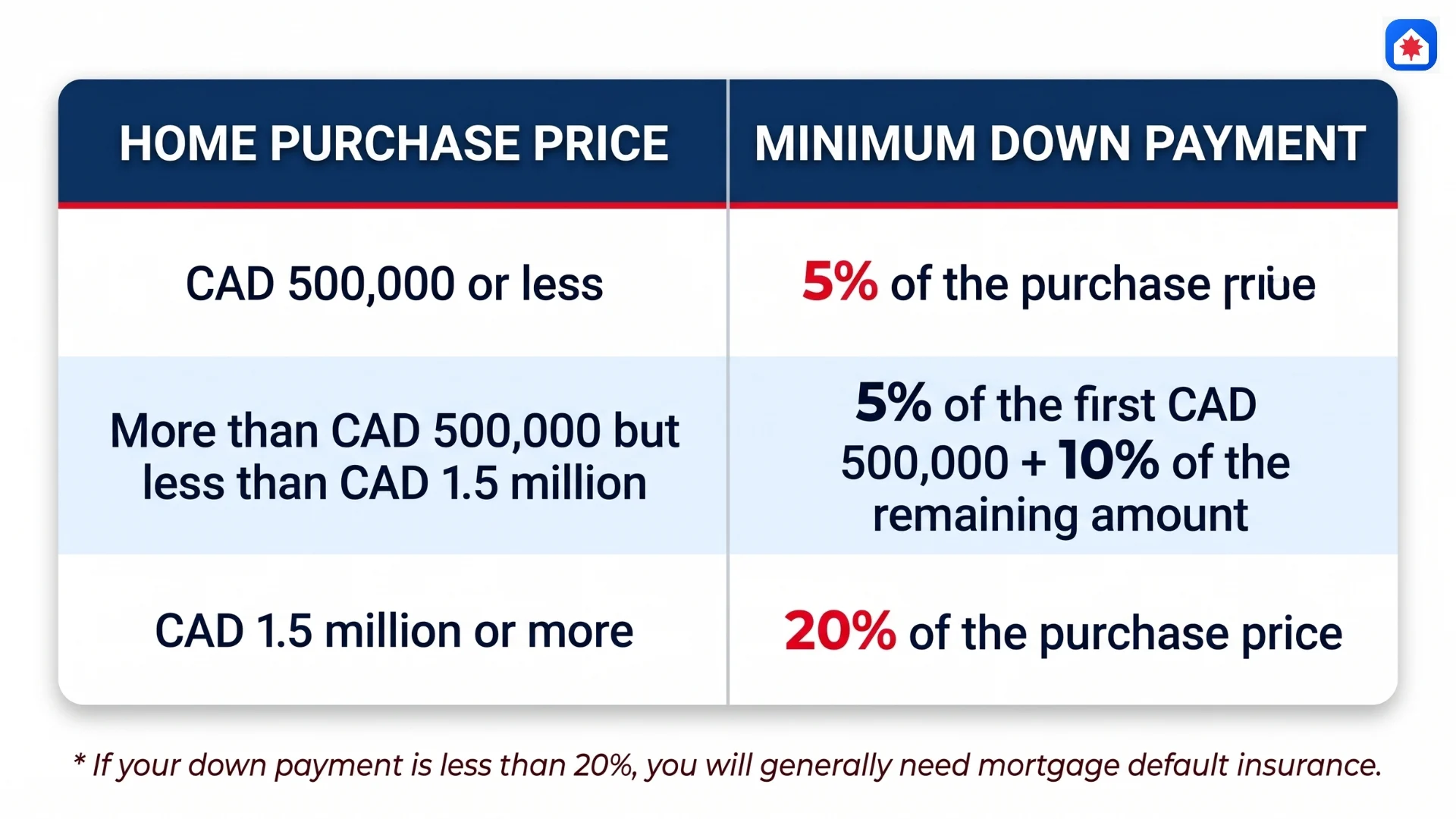
If your down payment is less than 20%, you will generally need mortgage default insurance, provided the mortgage meets the applicable insurance requirements. This insurance protects the lender against borrower default, not the homeowner against personal financial losses.
Besides your down payment, you should prepare enough money for closing costs. These may include legal fees, land transfer taxes, title insurance, home inspection fees, and other transaction-related expenses. CMHC suggests budgeting approximately 1.5% to 4% of the purchase price for closing costs. The actual amount depends on the property and its location.
3. Documents for Mortgage Pre-Approval
Preparing your documents before contacting a lender can make the application process more efficient. Although the exact requirements vary, most lenders need information that verifies your identity, income, assets, and financial obligations. Here are the main documents for mortgage pre-approval Canada that you should prepare.
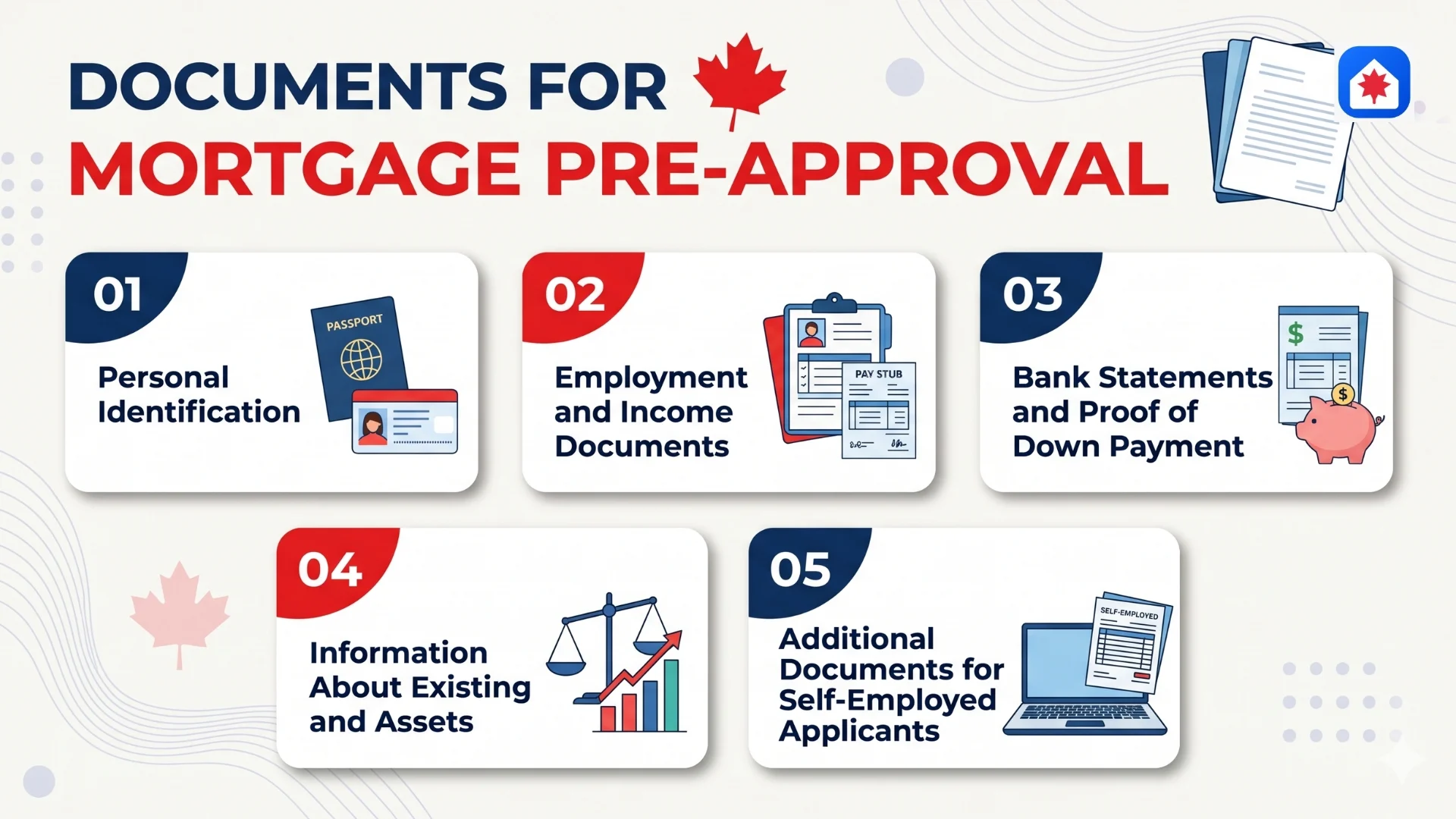
3.1. Personal Identification
Lenders need to verify your identity and personal information before assessing your mortgage application.
Commonly requested documents include:
- A valid government-issued photo ID, such as a passport or driver's licence.
- Your current residential address.
- Previous residential addresses, if requested.
- Contact information and other personal details.
If you are applying with a spouse or co-borrower, the lender may request identification and financial information from each applicant.
3.2. Employment and Income Documents
Your income documents help the lender verify how much you earn and whether your earnings are sufficiently stable.
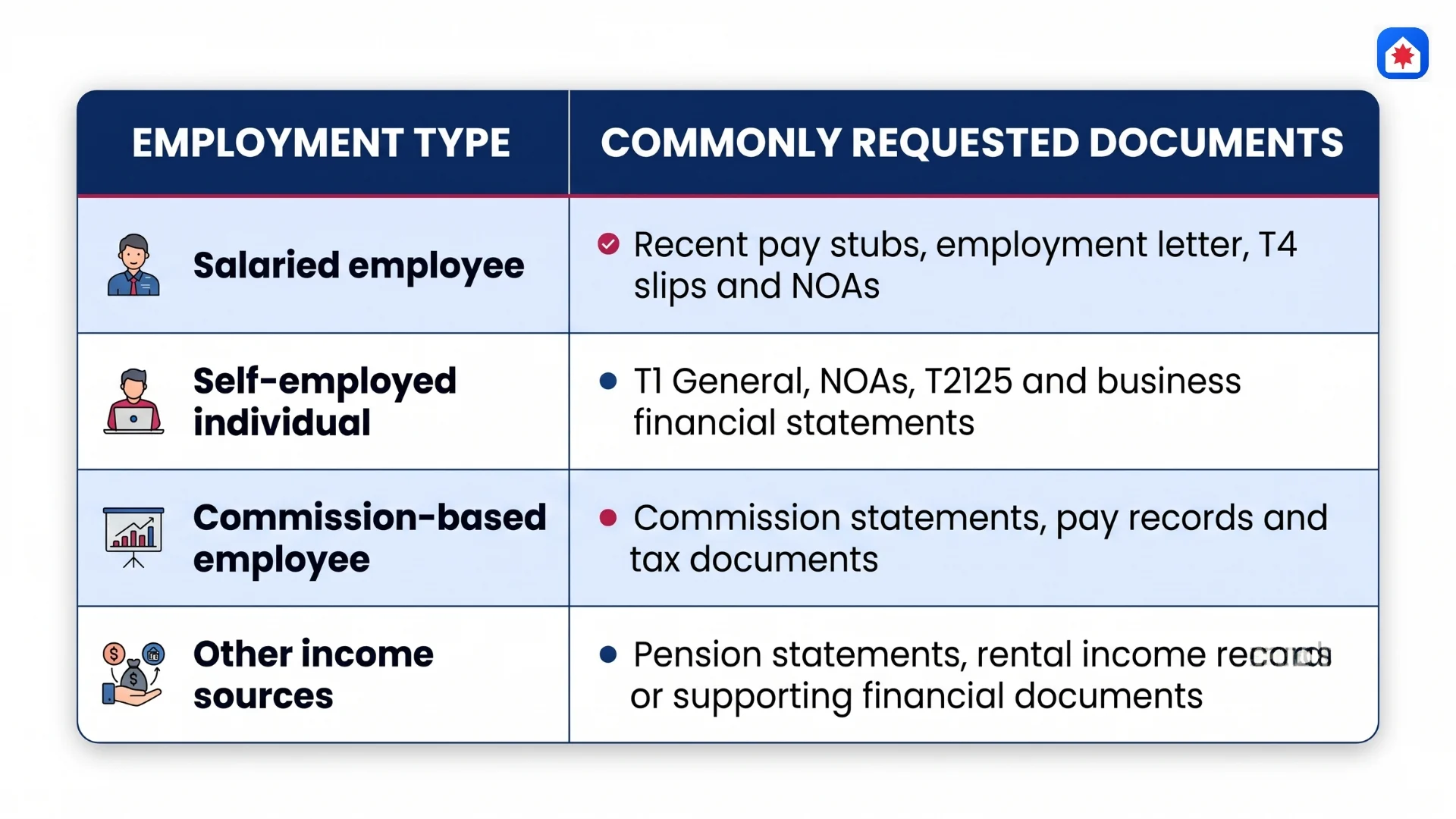
You may not need to submit every document listed above. The lender will determine which records are necessary based on your income structure and financial circumstances.
3.3. Bank Statements and Proof of Down Payment
You must demonstrate that you have enough funds for your down payment and that the money comes from an acceptable source.
Depending on your circumstances, the lender may request:
- Recent bank account statements.
- Savings or investment account statements.
- RRSP or FHSA statements, if applicable.
- Documents showing proceeds from the sale of another property.
- A signed gift letter if a family member provides a non-repayable financial gift.
If your down payment comes from several sources, prepare supporting records for each one. This helps the lender understand
3.4. Information About Existing Debts and Assets
Lenders also need a complete picture of your financial obligations and available assets.
Prepare details of:
- Credit card balances and limits.
- Car loans or leases.
- Student loans.
- Personal loans and lines of credit.
- Other mortgage payments.
- Investment accounts and savings.
- Other significant assets or financial obligations.
Providing accurate information is important. Missing debts or inconsistent financial details can delay the assessment or affect the mortgage amount offered.
3.5. Additional Documents for Self-Employed Applicants
If you run a business or work as an independent contractor, your lender may need more information to verify your earnings and business stability. In addition to personal income tax documents, you may be asked to provide business bank statements, GST returns, business registration documents, signed contracts, or financial statements.
The exact requirements depend on how your business operates and how the lender calculates qualifying income. Preparing these records early can help prevent unnecessary delays.
4. How to Get Mortgage Pre-Approval in Canada: Step-by-Step
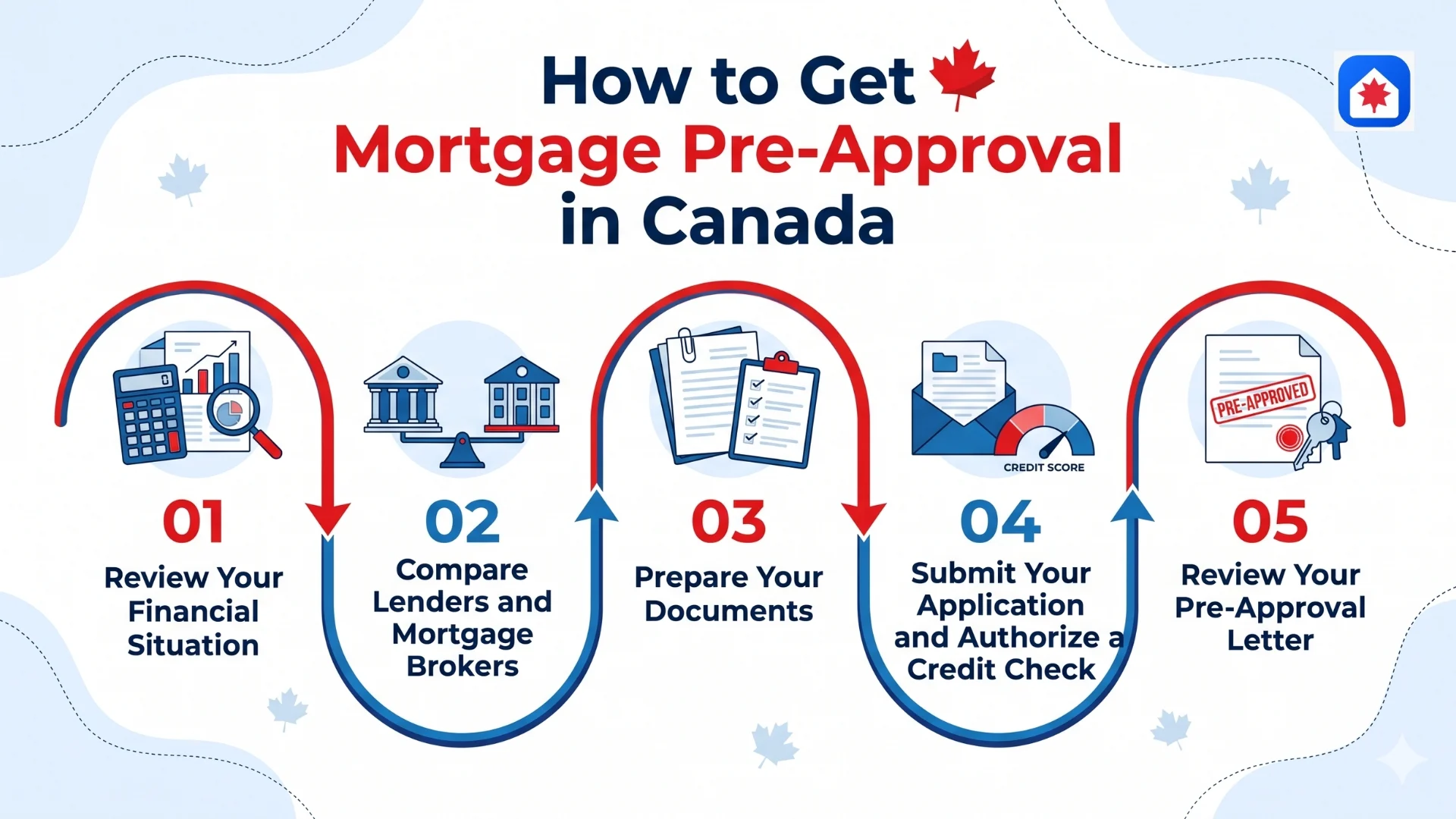
Once you understand the requirements and have gathered the necessary documents, you can begin applying for pre-approval. The process generally involves five steps.
4.1. Step 1: Review Your Financial Situation
Before contacting a lender, assess your current financial position. Start by calculating your gross household income, listing your monthly debt payments, and checking how much you have saved for a down payment. You should also estimate additional homeownership expenses, including property taxes, utilities, insurance, maintenance, and condominium fees, if applicable. The goal is to establish a realistic budget rather than focus only on the maximum mortgage amount a lender may offer.
You can use the CanadaHomeHub financial and housing calculators to estimate mortgage payments, assess affordability, calculate minimum down payments, and prepare for closing costs.
4.2. Step 2: Compare Lenders and Mortgage Brokers
You can apply for mortgage pre-approval Canada through banks, credit unions, other mortgage lenders, or mortgage brokers. Each option may offer different interest rates, mortgage products, eligibility requirements, and application processes.
When comparing lenders, consider:
- The interest rate and rate hold period.
- Available fixed and variable mortgage options.
- Prepayment privileges.
- Mortgage terms and amortization periods.
- Additional fees and conditions.
- Whether the lender can accommodate your income and employment situation.
A mortgage broker may help you compare products from multiple lenders, while approaching a bank directly allows you to explore its own mortgage offerings. Do not choose a lender based on the advertised interest rate alone. Review the complete mortgage terms and ask about conditions that may affect your final borrowing costs.
4.3. Step 3: Prepare Your Documents
Once you have selected a lender or mortgage broker, organize the documents required for your application. Make sure your income records, bank statements, identification, and debt information are current and consistent. If you are self-employed or have multiple income sources, allow additional time to collect supporting financial records.
Providing complete and accurate information from the beginning can reduce back-and-forth requests and help the lender assess your application more efficiently.
4.4. Step 4: Submit Your Application and Authorize a Credit Check
Complete the lender's pre-approval application with your personal and financial information.
You may be asked to provide details about:
- Your employment and annual income.
- Your savings and available down payment.
- Your existing loans and monthly debt payments.
- Your intended purchase price.
- Your preferred mortgage type and repayment period.
The lender may then request permission to review your credit report.
Before proceeding, confirm whether the inquiry will be hard or soft and whether additional documentation is required. If you are applying with another person, both applicants may need to provide financial information and authorize the relevant checks.
4.5. Step 5: Review Your Pre-Approval Letter
If the lender is satisfied with your preliminary application, you may receive a mortgage pre-approval letter or confirmation.
Review the details carefully, including:
- Maximum estimated mortgage amount.
- Applicable interest rate.
- Rate hold expiration date.
- Mortgage term and other quoted conditions.
- Any outstanding documentation or requirements.
Do not assume that the maximum amount is the right amount for your budget. Consider your monthly living expenses and financial goals before deciding how much you want to spend on a property. If any terms are unclear, ask the lender or mortgage broker to explain them before moving forward.
5. How Long Does a Mortgage Pre-Approval Last?
In Canada, mortgage pre-approval rate holds commonly last between 60 and 130 days, depending on the lender and mortgage product.
For example:
- National Bank advertises a rate guarantee of up to 120 days for its pre-approval.
- TD offers a 120-day rate hold.
- BMO advertises a 130-day rate guarantee.
If you do not find a suitable property before your pre-approval expires, contact your lender or mortgage broker. Depending on the lender's policies, you may be able to request an extension or submit a new application. The lender may need to review your income, credit history, debts, and other financial details again. The interest rate may also change based on current market conditions. To avoid unexpected issues, ask about the expiry date and extension options when you first receive your pre-approval.
6. Common Mortgage Pre-Approval Mistakes to Avoid
Getting pre-approved can make the homebuying process easier, but certain mistakes may affect your borrowing capacity or create problems later.
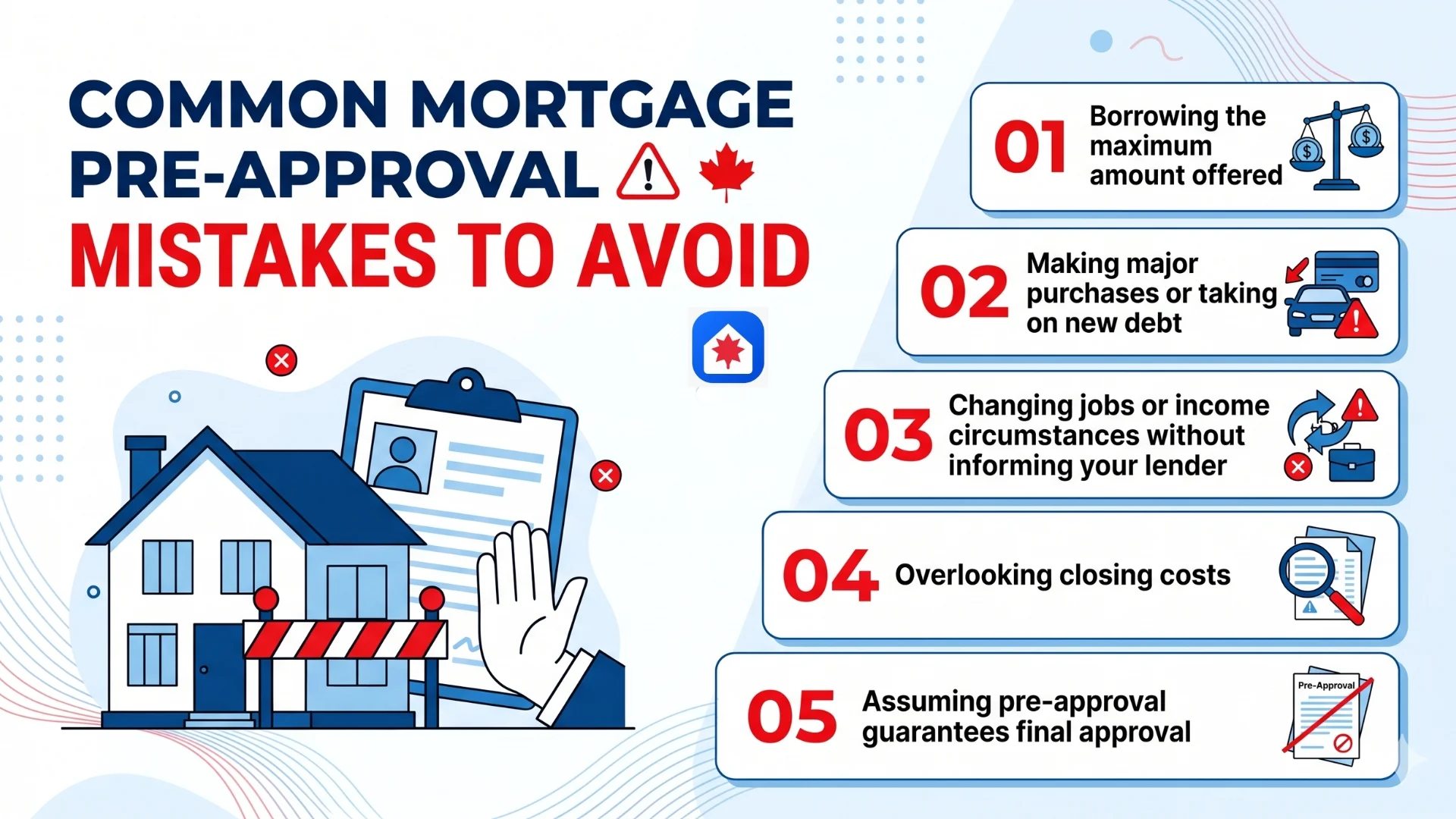
6.1. Borrowing the maximum amount offered
Just because a lender indicates that you may qualify for a certain mortgage amount does not mean you should borrow the full amount. Consider your household expenses, emergency savings, and long-term financial goals before setting your purchase budget.
6.2. Making major purchases or taking on new debt
Financing a vehicle, increasing credit card balances, or applying for new loans can change your debt-service ratios. These changes may reduce the amount you qualify for when the lender reviews your full application.
6.3. Changing jobs or income circumstances without informing your lender
A change in employment, reduced working hours, or a shift from salaried employment to self-employment can affect how lenders assess your income. Keep your lender informed about significant changes.
6.4. Overlooking closing costs
Your down payment is not the only upfront expense when buying a home. Legal fees, land transfer taxes, inspection costs, and other closing expenses can add up. Keep enough savings available to cover these costs.
6.5. Assuming pre-approval guarantees final approval
A pre-approval is based on preliminary information and remains subject to the lender's conditions. Do not treat it as a guarantee that your mortgage will be approved once you make an offer on a property.
Frequently Asked Questions
1. Is Mortgage Pre-Approval Free in Canada?
Many Canadian banks and mortgage lenders offer mortgage pre-approval without charging an application fee. However, the terms vary by institution, so confirm whether any fees or additional charges apply before proceeding.
2. Can I Get Mortgage Pre-Approval With a Low Credit Score?
Possibly. Some lenders consider applicants with lower credit scores or limited credit histories, but the conditions may be stricter. You may need a larger down payment, additional financial documentation, or a different mortgage product. Approval depends on the lender's assessment of your overall financial situation.
3. Can Newcomers to Canada Get Mortgage Pre-Approval?
Yes. Newcomers may qualify for mortgage financing depending on their residency or work authorization status, income, down payment, and credit history. Some lenders offer newcomer mortgage programs that consider alternative evidence of financial reliability when Canadian credit history is limited. However, eligibility requirements vary between lenders and mortgage insurance programs.
4. Can I Get Pre-Approved by Multiple Lenders?
Yes. You can approach multiple lenders or mortgage brokers to compare mortgage options and interest rates.
5. How Long Does Mortgage Pre-Approval Last in Canada?
Mortgage pre-approval rate holds commonly last between 60 and 130 days, depending on the lender and mortgage product. Check your pre-approval letter for the exact expiry date and conditions.
6. What Happens if I Don't Find a Home Before My Pre-Approval Expires?
Contact your lender or mortgage broker to discuss an extension or a new application. You may need to provide updated financial documents, and the interest rate may be different from the original offer.
7. Can I Be Denied a Mortgage After Getting Pre-Approved?
Yes. A lender can decline your full mortgage application even after issuing a pre-approval. This may happen if your financial circumstances change, your documents cannot be verified, or the property does not meet the lender's requirements.
Getting a mortgage pre-approval Canada helps you understand your borrowing capacity before committing to a home purchase. By reviewing your credit history, income, existing debts, and down payment, lenders can estimate how much financing you may qualify for and whether an interest rate hold is available. To make the process smoother, prepare your financial documents, compare lenders, and review the conditions in your pre-approval letter carefully. Most importantly, use the estimated mortgage amount to establish a realistic budget rather than treating it as a spending target.
Ready to take the next step toward homeownership? Explore CanadaHomeHub for practical guides, helpful tools, and resources to make informed homebuying and mortgage decisions in Canada.
Thank you for taking the time to read this article.