Buying a car in Canada involves more than choosing a vehicle and arranging financing. You also need the right insurance before driving on public roads. Whether you are a first-time car owner, an experienced driver moving to Canada, or someone renewing an existing policy, understanding car insurance Canada can help you avoid unexpected expenses and make informed decisions. This guide explains how auto insurance in Canada works, what coverage you may need, how much it costs, and how to compare policies. It also covers practical considerations for newcomers who have limited Canadian driving or insurance history.
1. What Is Car Insurance?
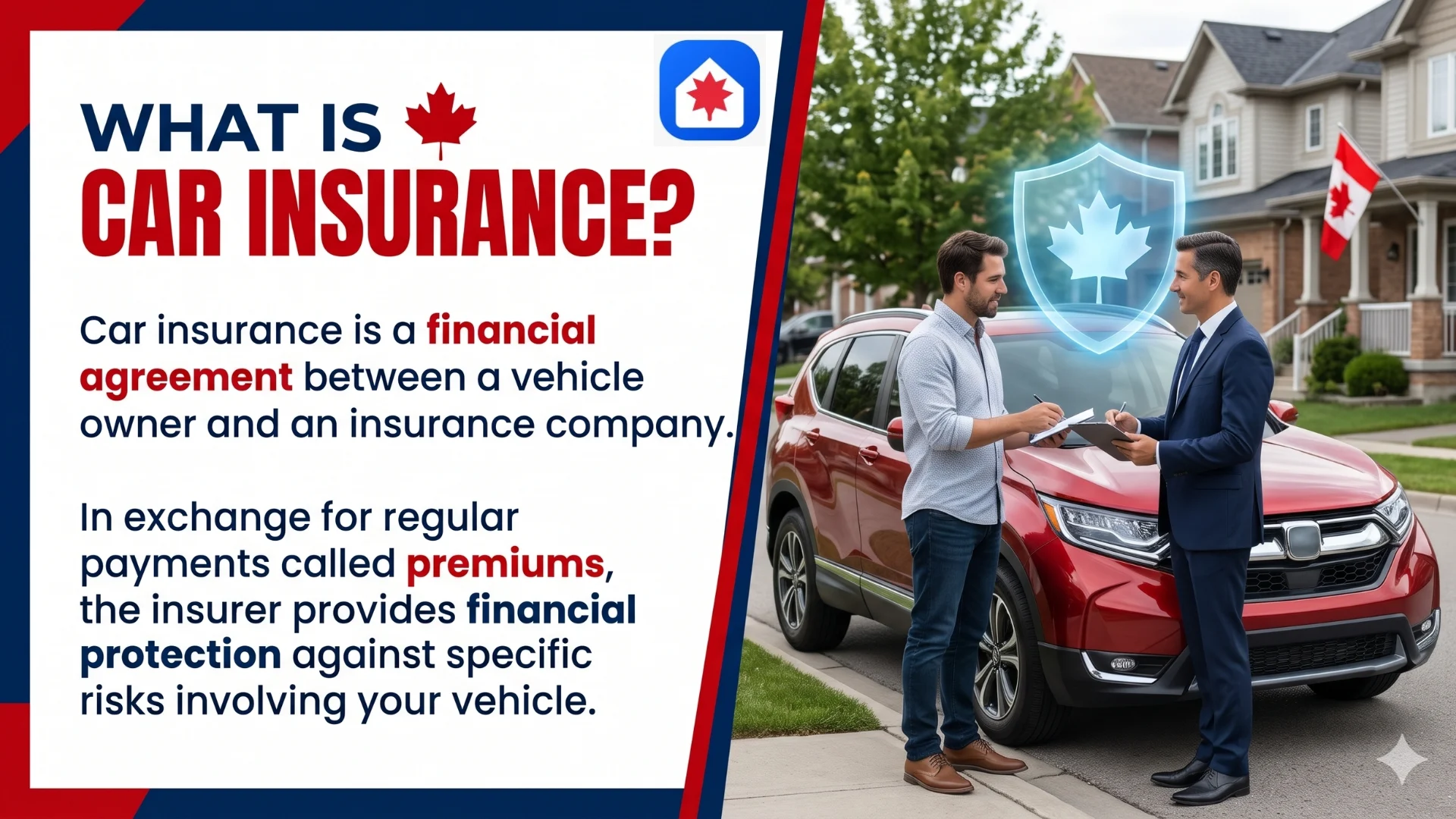
Car insurance is a financial agreement between a vehicle owner and an insurance company. In exchange for regular payments called premiums, the insurer provides financial protection against specific risks involving your vehicle.
Depending on your policy, car insurance Canada may cover:
- Injuries or property damage you cause to other people in an accident.
- Medical and rehabilitation expenses following a collision.
- Damage to your own vehicle caused by an accident, theft, or other covered events.
- Certain additional expenses, such as temporary transportation while your vehicle is being repaired.
Your policy determines exactly what is covered, the maximum amount the insurer will pay, and how much you must contribute toward a claim.
2. Is Car Insurance Mandatory in Canada?
Yes. Every Canadian province and territory requires vehicle owners to carry the applicable mandatory auto insurance before operating a vehicle on public roads. However, there is no single nationwide minimum coverage amount. Each province and territory establishes its own insurance requirements, including liability limits and accident benefit provisions.
For example:
- Ontario: Drivers must carry at least $200,000 in third-party liability coverage under the standard policy.
- Quebec: Vehicle owners must purchase at least $50,000 in civil liability coverage from a private insurer. Bodily injury protection is provided through the provincial public insurance plan.
- British Columbia: Basic Autoplan insurance through the Insurance Corporation of British Columbia (ICBC) provides mandatory coverage.
- Manitoba: Mandatory basic coverage is provided through Manitoba Public Insurance (MPI).
- Saskatchewan: Drivers obtain mandatory basic coverage through Saskatchewan Government Insurance (SGI).
Driving without valid insurance can result in serious penalties, including fines, licence suspension, and vehicle impoundment, depending on the jurisdiction.
3. Types of Car Insurance Coverage in Canada
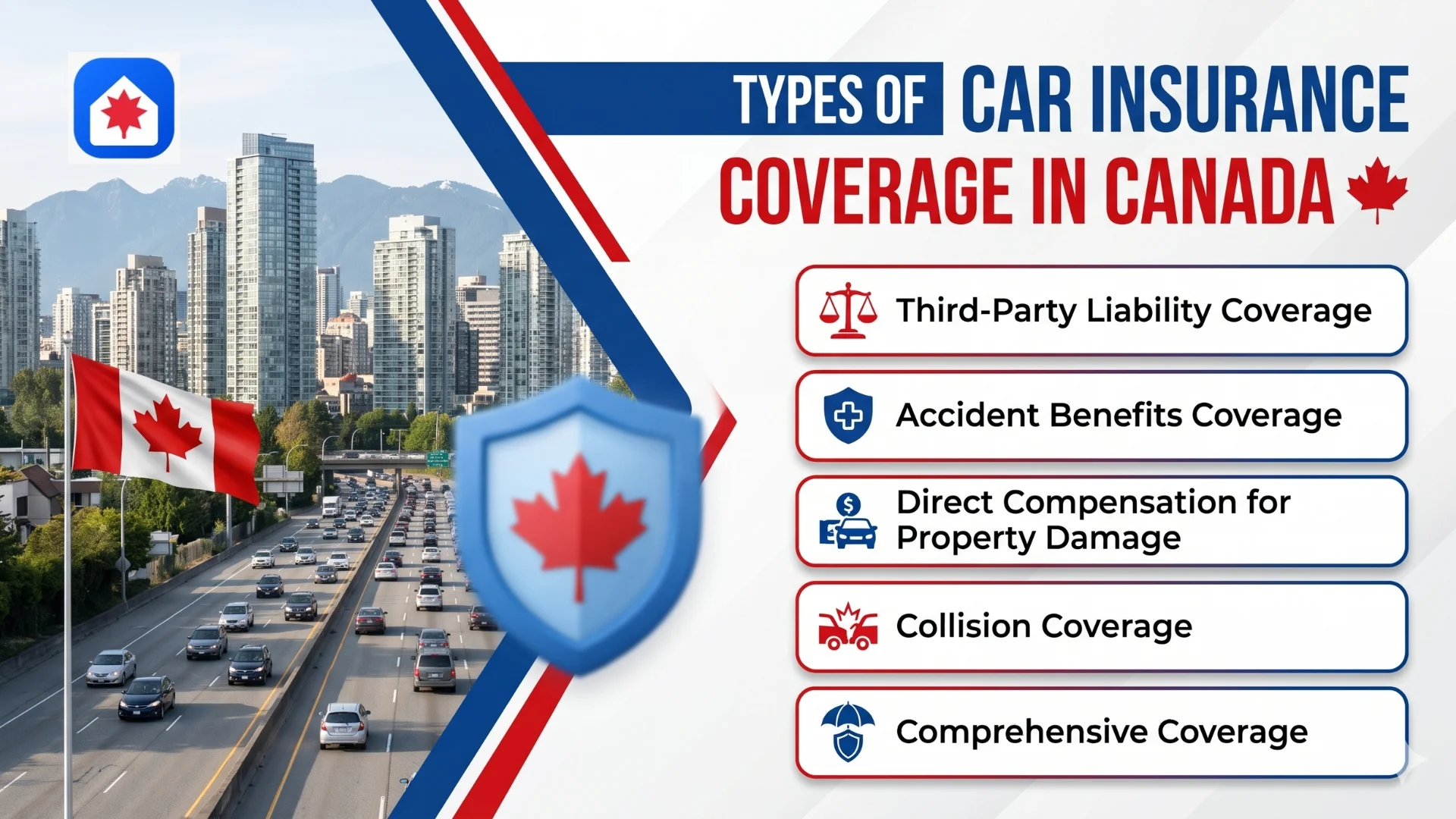
Understanding the different types of coverage is essential when choosing a policy. Some protection is legally required, while other options help cover expenses that basic insurance may not pay.
3.1. Third-Party Liability Coverage
Third-party liability insurance protects you financially if you are legally responsible for injuring another person or damaging their property in a vehicle accident.
Depending on the circumstances, it may cover:
- Medical and related costs for injured third parties.
- Damage to another person's vehicle.
- Damage to buildings, fences or other property.
- Legal expenses associated with covered liability claims.
- It does not generally pay to repair your own vehicle.
Each province sets its own minimum liability requirements. However, drivers can often purchase higher limits for additional financial protection.
3.2. Accident Benefits Coverage
Accident benefits help pay certain expenses when you or eligible passengers are injured in a car accident.
Depending on provincial rules and your policy, benefits may include:
- Medical and rehabilitation expenses.
- Attendant care.
- Income replacement.
- Certain caregiver or other assistance expenses.
These benefits may be available regardless of who caused the accident, although eligibility requirements and benefit limits vary.
3.3. Direct Compensation for Property Damage (DCPD)
Direct Compensation–Property Damage (DCPD) allows you to claim vehicle damage directly from your own insurer when another insured driver is responsible for an accident, subject to the applicable provincial rules.
In Ontario, DCPD applies when specific conditions are met, including that the accident occurs in Ontario and another involved vehicle has qualifying insurance. However, DCPD rules are not identical across Canada. Ontario drivers can also elect not to claim this coverage, subject to the applicable policy rules. Consider the financial implications carefully before making that decision.
3.4. Collision Coverage
Collision insurance helps pay to repair or replace your vehicle if it is damaged in a collision with another vehicle or object.
For example, collision coverage may apply if you:
- Hit another vehicle while changing lanes.
- Strike a tree or pole.
- Lose control of your car and roll over.
- Cause an accident that damages your own vehicle.
Unlike third-party liability insurance, collision coverage protects your vehicle rather than the property of other people. It is generally optional for vehicle owners, but a lender or leasing company may require it as a condition of financing or leasing.
3.5. Comprehensive Coverage
Comprehensive insurance protects your vehicle against certain types of damage or loss that do not result from a collision.
Depending on your policy, covered events may include:
- Vehicle theft.
- Vandalism.
- Fire.
- Falling objects.
- Certain weather-related damage.
- Broken windows or windshield damage.
For example, if someone breaks into your parked vehicle and damages the windows, comprehensive coverage may help pay for repairs.
4. How Much Does Car Insurance Cost in Canada?
The car insurance cost in Canada varies considerably depending on your province, driving experience, vehicle type, and selected coverage. There is no single premium that accurately represents every Canadian driver, as insurance rates are influenced by individual risk factors and provincial insurance systems.
According to the National Joint Council's 2026 Corporate Fleet Services report, estimated annual car insurance premiums range from $1,375 to $2,575 across Canadian provinces and territories.
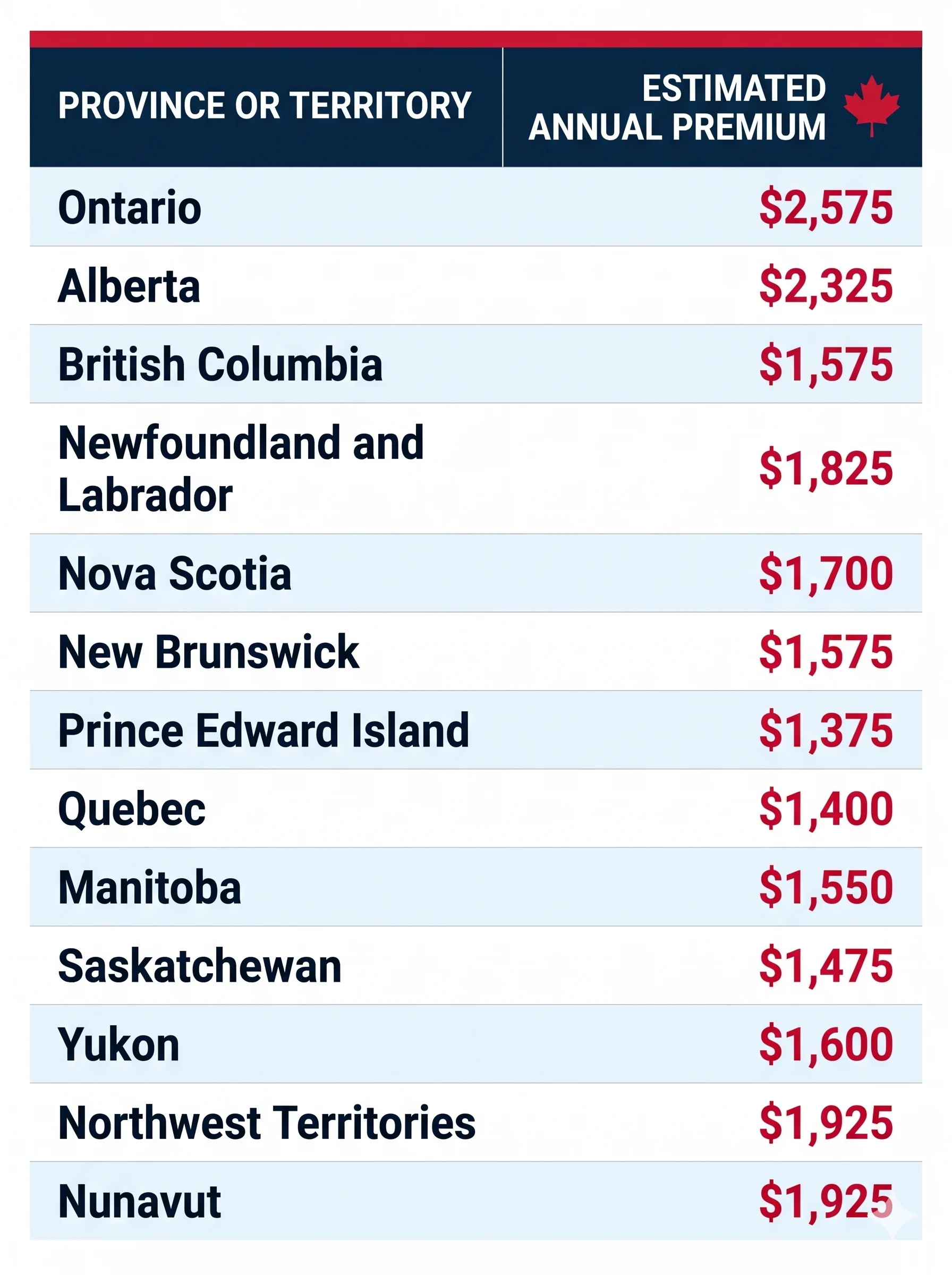
Ontario has the highest estimated premium in this comparison, followed by Alberta. Prince Edward Island has the lowest. However, these figures should be used as general reference points rather than personalized quotes. Your actual auto insurance Canada premium may be higher or lower depending on your location, driving record, vehicle, and coverage choices.
Car insurance is just one of the many expenses to consider when living in Canada. For more useful information and practical advice on managing everyday life in the country, explore the guides and resources available on CanadaHomeHub.
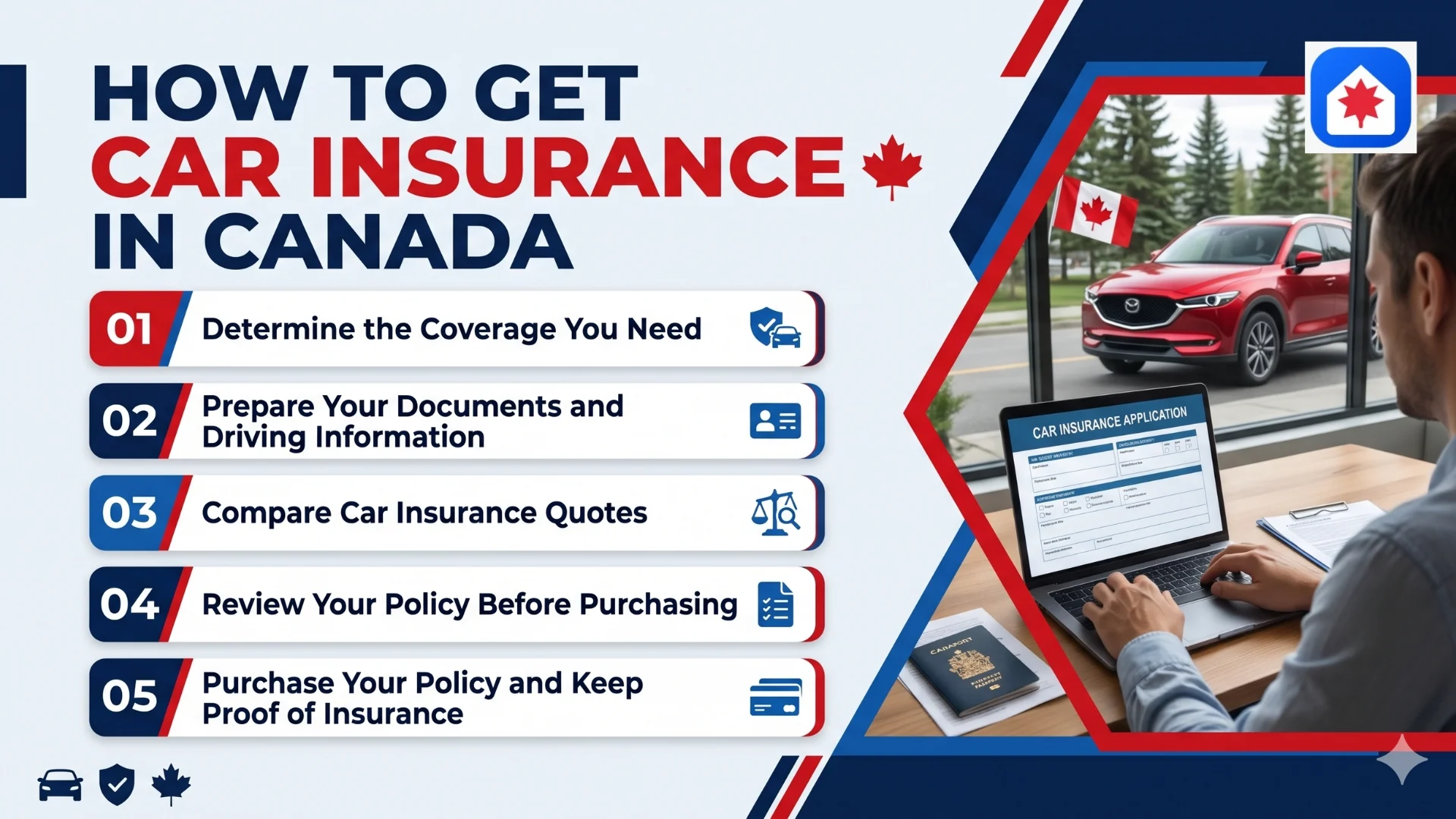
5. How to Get Car Insurance in Canada
Getting insured is relatively straightforward when you prepare the necessary information and understand your coverage requirements.
5.1. Determine the Coverage You Need
Start by identifying the minimum insurance requirements in your province. Then consider whether you need additional protection, such as:
- Higher third-party liability limits.
- Collision coverage.
- Comprehensive coverage.
- Rental vehicle or loss-of-use coverage.
- Roadside assistance.
Your decision should reflect the vehicle's value, your financial situation, driving habits, and any financing or leasing requirements.
5.2. Prepare Your Documents and Driving Information
Before requesting car insurance quotes Canada, gather the information insurers may need.
This commonly includes:
- Your driver's licence and licensing history.
- Vehicle identification number (VIN).
- Vehicle make, model and year.
- Vehicle registration information, where available.
- Your residential address.
- Estimated annual kilometres.
- Information about previous insurance and claims.
- Details of other household drivers who regularly use the vehicle.
Requirements differ between insurers and provinces, so you may need additional documents.
5.3. Compare Car Insurance Quotes
Contact several insurance companies, agents, or brokers to obtain quotes. When comparing car insurance quotes Canada, make sure each quote uses similar coverage limits, deductibles, and optional benefits. Otherwise, a cheaper quote may simply provide less protection.
5.4. Review Your Policy Before Purchasing
Before accepting an offer, read the policy documents carefully.
Pay particular attention to:
- Coverage limits and exclusions.
- Deductibles for different types of claims.
- Listed drivers.
- Vehicle usage and annual mileage.
- Optional benefits.
- Payment schedules.
- Cancellation conditions.
Make sure the information you provide is accurate. Incorrect details about the primary driver, vehicle use, or address can create problems when you make a claim.
5.5. Purchase Your Policy and Keep Proof of Insurance
Once you have selected a suitable policy, complete the application and arrange payment. Your insurer will provide confirmation and proof of insurance according to the applicable provincial requirements. Keep this documentation accessible in your vehicle or through an accepted digital format. Do not drive until the required insurance is active.
6. How to Save Money on Car Insurance Canada
Finding affordable insurance does not necessarily mean choosing the cheapest policy. The goal is to reduce your premium without leaving yourself exposed to significant financial risks. Here are several practical ways to manage your insurance expenses.
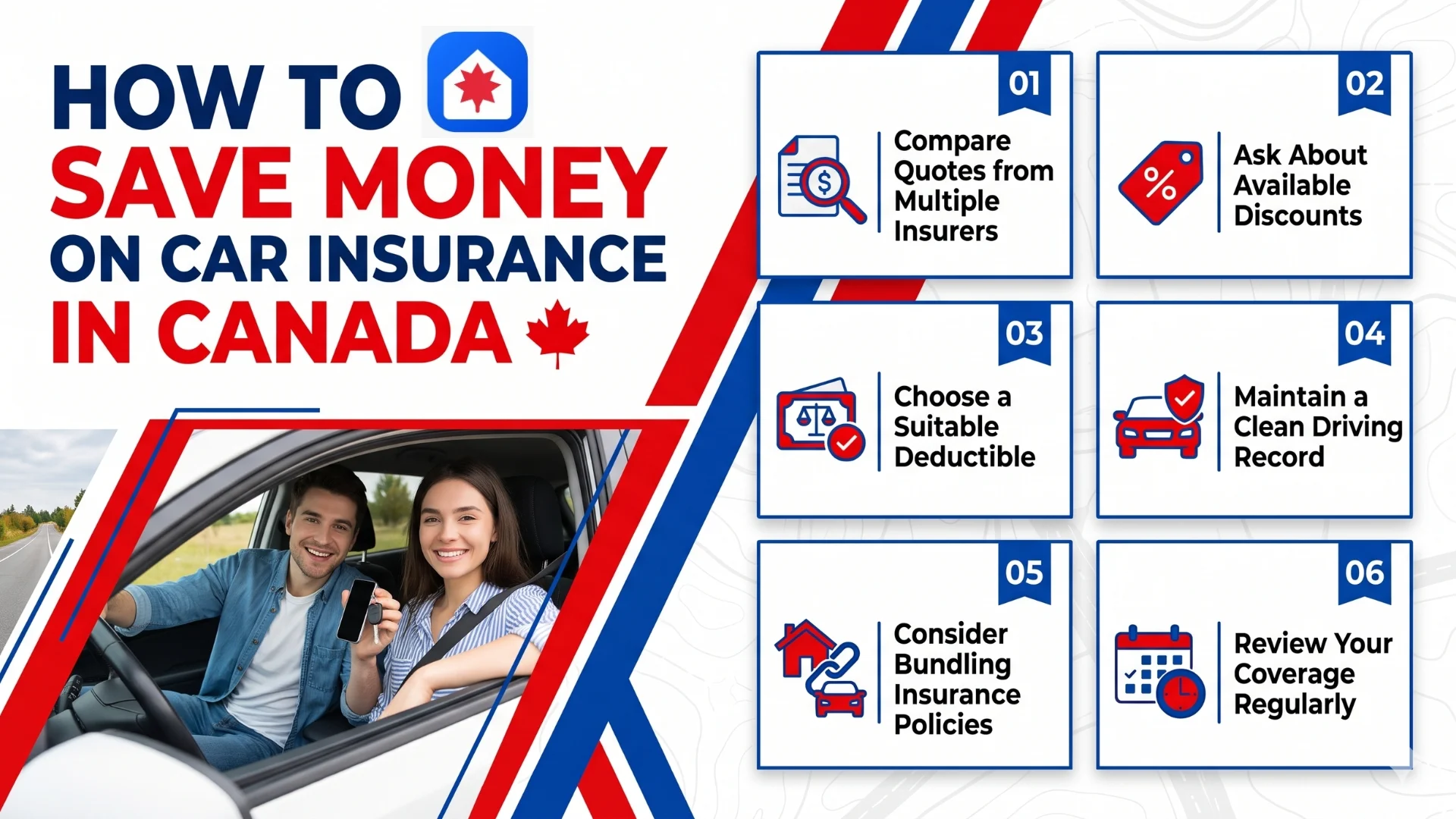
6.1. Compare Quotes from Multiple Insurers
Different companies may calculate premiums differently, even when offering similar coverage. Request quotes from several providers before purchasing a policy or renewing an existing one. Compare the total cost and policy conditions rather than focusing only on the advertised monthly payment. FSRA recommends shopping around because the insurer offering the best price for your circumstances last year may not offer the best value today.
6.2. Ask About Available Discounts
Many insurers offer discounts to eligible drivers.
Depending on the provider, these may include:
- Multi-vehicle discounts.
- Home and auto insurance bundling.
- Safe driving discounts.
- Driver education discounts.
- Low-mileage discounts.
- Winter tire discounts.
- Group or professional association rates.
Discount availability and eligibility vary, so ask your insurer which options apply to your situation.
6.3. Choose a Suitable Deductible
A higher deductible may reduce your premium, but it also means you will pay more if you make a covered claim. Before choosing this option, consider whether you have enough savings to cover the deductible without disrupting your finances.
6.4. Maintain a Clean Driving Record
Avoiding at-fault accidents and driving convictions can help you maintain more favourable insurance rates. Safe driving also reduces the likelihood of unexpected repair costs and insurance claims.
6.5. Consider Bundling Insurance Policies
Some insurers offer discounts when you purchase multiple policies from the same company. For example, combining home and auto insurance may reduce your total premium. However, bundling is not automatically the cheapest option. Compare the combined price with separate quotes from other providers.
6.6. Review Your Coverage Regularly
Your insurance needs may change over time.
For example:
- You may drive fewer kilometres after switching to remote work.
- Your vehicle may lose value as it gets older.
- You may move to an area with different insurance rates.
- Another household member may start or stop driving your vehicle.
Review your policy at renewal and update your insurer when relevant circumstances change. For an older vehicle with a low market value, collision or comprehensive coverage may no longer be cost-effective. However, consider the cost of replacing the vehicle yourself before removing protection.
7. How to Choose the Best Car Insurance in Canada
There is no single provider that offers the best car insurance Canada drivers can choose in every situation. The right insurer depends on your location, driving history, vehicle, budget, and coverage requirements. Instead of selecting a company based solely on price, evaluate several factors.
- Coverage options: Check whether the insurer offers the protection you need, including suitable liability limits, accident benefits, and optional vehicle damage coverage.
- Competitive premiums: Compare quotes from different insurers using equivalent coverage. A low premium is only valuable if the policy provides sufficient protection.
- Deductibles and exclusions: Review the amount you must pay when making a claim and identify situations that are not covered.
- Claims handling: Research how the insurer manages claims, communicates with customers, and assists in an accident.
- Licensing and regulatory compliance: Make sure the insurer, agent, or broker is authorized to operate in your province. For Ontario residents, FSRA provides resources for checking insurance licensing and comparing available options.
- Customer support and convenience: Consider whether you can access policy documents, update your information, make payments, and report claims through convenient online or phone services.
Ultimately, the best policy balances affordability, appropriate coverage, and reliable claims support.
Frequently Asked Questions
1. Is car insurance mandatory in every Canadian province?
Yes. All Canadian provinces and territories require mandatory auto insurance for vehicles operated on public roads. However, minimum coverage limits and purchasing arrangements differ by jurisdiction.
2. What is the minimum car insurance coverage in Canada?
There is no single nationwide minimum. Each province and territory establishes its own requirements.
3. Can newcomers get car insurance without a Canadian driving history?
Yes. Newcomers to Canada can apply for auto insurance even without previous Canadian insurance records. Some insurers may recognize foreign driving experience if applicants provide acceptable documentation. The rules and available discounts depend on the province and insurance provider.
4. Does car insurance cover damage to my own vehicle?
Not necessarily. Third-party liability insurance generally covers damage or injuries you cause to others, not repairs to your own vehicle. Collision and comprehensive coverage may provide additional protection, depending on the circumstances and policy terms.
5. Can I drive someone else's car in Canada?
In many situations, you may drive another person's vehicle with the owner's permission and subject to the applicable insurance policy and provincial rules. However, coverage restrictions may apply, particularly if you are a regular driver or are excluded from the policy.
Understanding car insurance Canada is an important part of responsible vehicle ownership. Although mandatory coverage applies across the country, insurance requirements, providers, and premiums vary by province and territory. Before purchasing a policy, identify the coverage required where you live, compare quotes from different providers, and review deductibles, exclusions, and optional benefits. The right insurance policy is not necessarily the cheapest one. It is the policy that provides appropriate financial protection at a cost that fits your budget.
For more practical information about navigating life in Canada, explore CanadaHomeHub.
Thank you for taking the time to read this article.