Starting a new life in a foreign country is one of the most thrilling decisions you will ever make, but it can also feel overwhelming without a clear roadmap. Known for its exceptional quality of life, diverse multicultural society, robust publicly funded healthcare, and strong economy, Canada remains a top destination for foreign professionals, students, and families worldwide. However, successfully relocating to Canada involves much more than just securing a visa and booking a flight. From choosing the optimal immigration pathway to navigating taxes, securing housing, and building a professional network, every step requires a well-structured strategy. This comprehensive moving to Canada guide provides an in-depth, step-by-step masterplan to help you transition smoothly into your new life in the Great White North.
Popular Immigration Pathways to Canada
Before packing your bags, you must establish a legal right to reside in Canada. With over 100 economic immigration streams available, understanding which pathway fits your credentials is critical.
Express Entry (EE) System
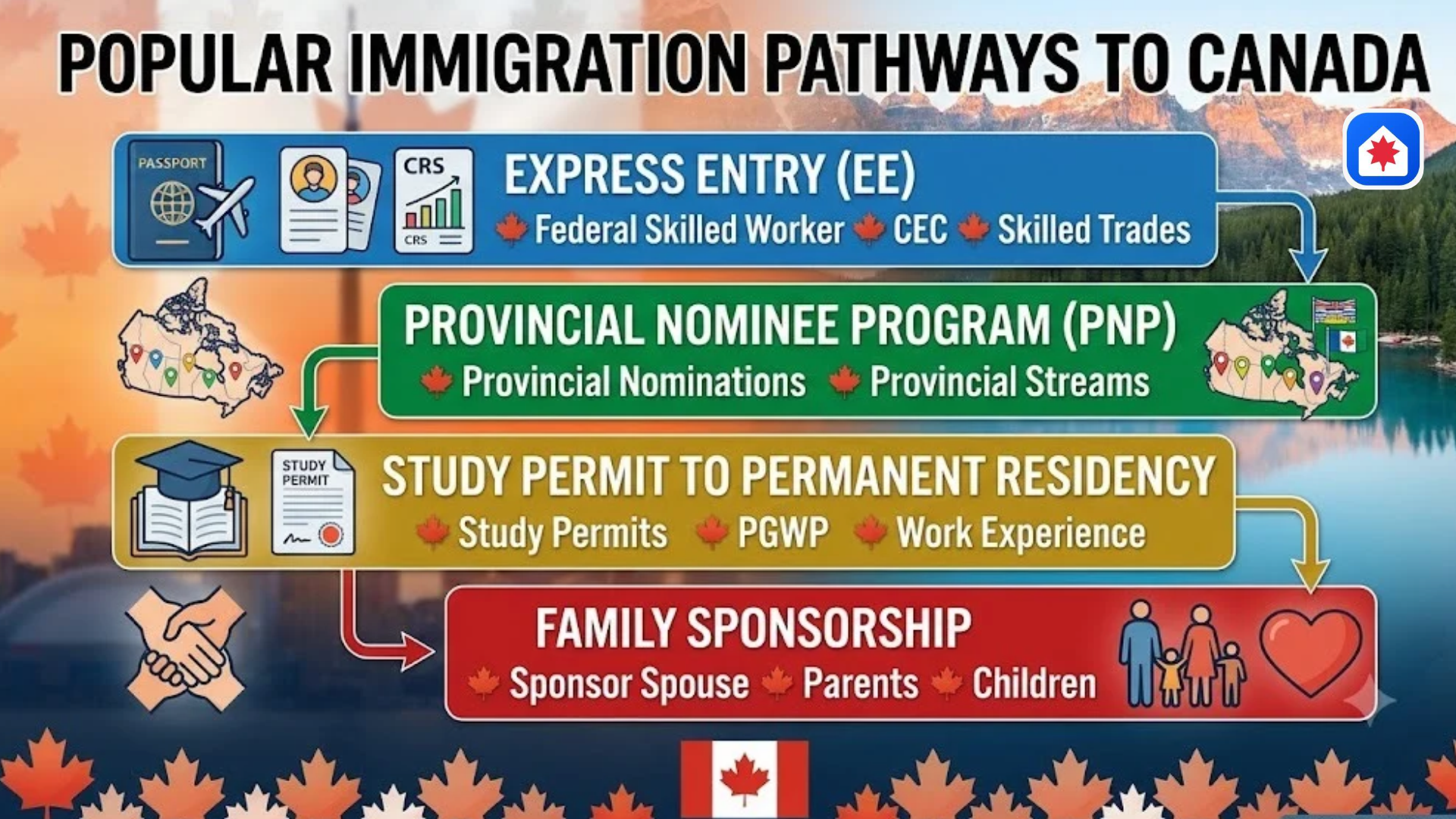
Express Entry is Canada’s primary point-based application management system for foreign skilled workers. Candidates are ranked based on age, education, language proficiency (English or French), and work experience using the Comprehensive Ranking System (CRS). Express Entry oversees three main federal economic streams:
- Federal Skilled Worker Program (FSWP): Designed for university-educated foreign professionals with skilled work experience abroad.
- Canadian Experience Class (CEC): Tailored for temporary workers who have already acquired at least one year of skilled Canadian work experience.
- Federal Skilled Trades Program (FSTP): Tailored for qualified tradespeople (electricians, plumbers, carpenters) with job offers or certifications.
Provincial Nominee Program (PNP)
Canadian provinces and territories run their own immigration programs targeted at fulfilling local labor market shortages. If a province nominates your application through an Express Entry-aligned PNP stream, you automatically receive 600 additional CRS points, effectively guaranteeing an Invitation to Apply (ITA) for Permanent Residency (PR).
Study Permit to Permanent Residency
International education is one of the most reliable pathways to permanent residency. By graduating from an eligible program at a Designated Learning Institution (DLI), you become eligible for a Post-Graduation Work Permit (PGWP). Gaining valuable Canadian employment through a PGWP significantly elevates your CRS score for Express Entry and unlocks specialized PNP employer-driven streams.
Family Sponsorship
If you have a spouse, common-law partner, parent, grandparent, or dependent child who is a Canadian citizen or Permanent Resident, they can sponsor your immigration, bypassing point-based evaluation systems entirely.
Realistic Cost of Moving to Canada
Understanding financial requirements is essential to prevent unexpected budget shortages. The total cost of moving to Canada spans application processing fees, mandatory liquid savings, and initial settlement setup costs.
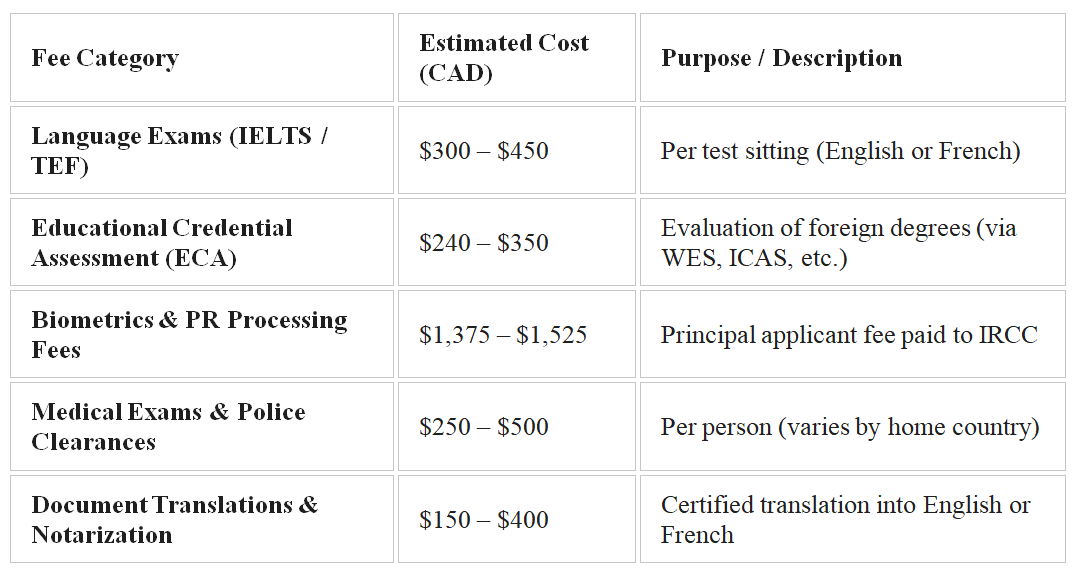
Upfront Legal & Administrative Costs
Before arriving in Canada, you must pay for mandatory administrative steps:
 Official Proof of Funds (IRCC Settlement Requirement)
For most Express Entry applicants without a valid job offer in Canada, Immigration, Refugees and Citizenship Canada (IRCC) legally mandates that you prove you have unencumbered, liquid cash reserves.
- Single Applicant: ~$13,757 CAD
- Couple (2 people): ~$17,127 CAD
- Family of 3: ~$21,055 CAD
- Family of 4: ~$25,564 CAD
(Note: Settlement fund requirements are updated annually by IRCC, so always check official guidelines prior to submission).
Initial Setup & Living Expenses (First 3 Months)
After landing, you will need cash reserves to cover living expenses while searching for permanent work and housing:
- Temporary Accommodation (1st Month): $2,000 – $3,800 CAD (Airbnb, extended stay hotel, or furnished rental).
- Long-Term Rental Deposit: First and last month’s rent ($3,200 – $5,500 CAD, depending on city).
- Furnishings & Household Essentials: $1,500 – $3,000 CAD.
- Monthly Food & Groceries: $450 – $800 CAD per person.
Top Cities for Newcomers: Where Should You Settle?
Choosing the right city influences your job prospects, cost of living, and cultural integration. Here is a breakdown of Canada’s major urban centers for newcomers:
Toronto, Ontario
- Pros: Economic powerhouse, global financial hub, unmatched diversity, abundant job opportunities across tech, finance, and healthcare.
- Cons: Highest cost of living in Canada, steep housing prices, heavy traffic congestion.
Vancouver, British Columbia
- Pros: Mild winter weather, stunning natural scenery (mountains and ocean), strong tech and creative media sectors.
- Cons: Extremely expensive real estate, lower average wages relative to living expenses.
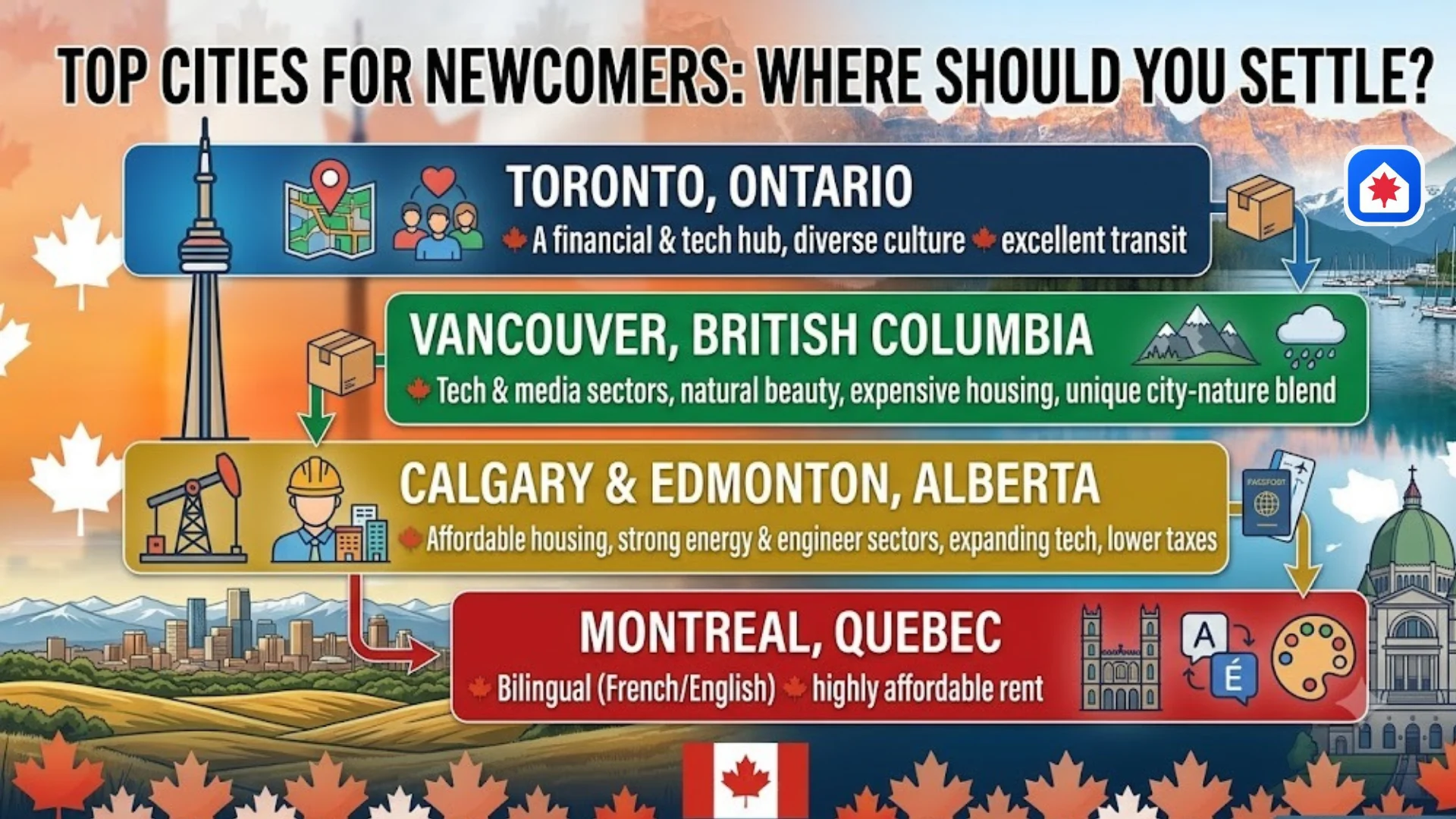
Calgary & Edmonton, Alberta
- Pros: No provincial sales tax (GST only at 5%), highly affordable housing, strong energy, engineering, and expanding tech industries.
- Cons: Cold, long winters; economic cycles tied to natural resources.
Montreal, Quebec
- Pros: Rich cultural heritage, vibrant arts scene, highly affordable rent compared to Toronto and Vancouver, world-class universities.
- Cons: Fluency in French is essential for most jobs and daily integration due to provincial language regulations (Bill 96).
The Ultimate Moving to Canada Checklist
To prevent last-minute complications, organize your preparations chronologically. This moving to Canada checklist breaks your journey into actionable steps.
6 to 12 Months Before Departure
- Passport Audit: Ensure all family passports have at least 24 months of remaining validity.
- Complete Educational Credential Assessment (ECA): Submit university diplomas and transcripts to credentialing agencies.
- Take Language Tests: Achieve target CLB (Canadian Language Benchmark) scores in IELTS General Training or CELPIP.
- Audit Liquid Assets: Ensure required settlement funds are kept in unencumbered, accessible bank accounts for at least 6 months.
1 to 3 Months Before Departure
- Book Travel & Temporary Lodging: Lock in flights and reserve 3 to 4 weeks of temporary accommodation.
- Gather Vital Documents: Collect birth certificates, marriage licenses, custody records, vaccination histories, and medical records. Ensure official translations are certified.
- Request Employment Reference Letters: Obtain detailed reference letters from previous employers stating job titles, hours worked, and specific duties (useful for immigration and Canadian hiring managers).
- Request Driving Records: Secure an official driving history letter from your local licensing authority to help reduce auto insurance premiums in Canada.
The Final Week Before Takeoff
- Open Pre-Arrival Bank Account: Major Canadian banks allow foreign nationals to set up accounts and transfer money before landing.
- Organize Flight Binder: Keep your Confirmation of Permanent Residence (COPR), passports, proof of funds statements, and address details in hand luggage.
- Draft Customs Inventory Lists: Prepare two itemized lists (with serial numbers and estimated values): "Goods Accompanied" (items on your flight) and "Goods to Follow" (items shipped later).
Essential Steps After Arriving in Canada
Your first two weeks of relocating to Canada will be busy. Focus on completing these core administrative tasks immediately upon arrival:
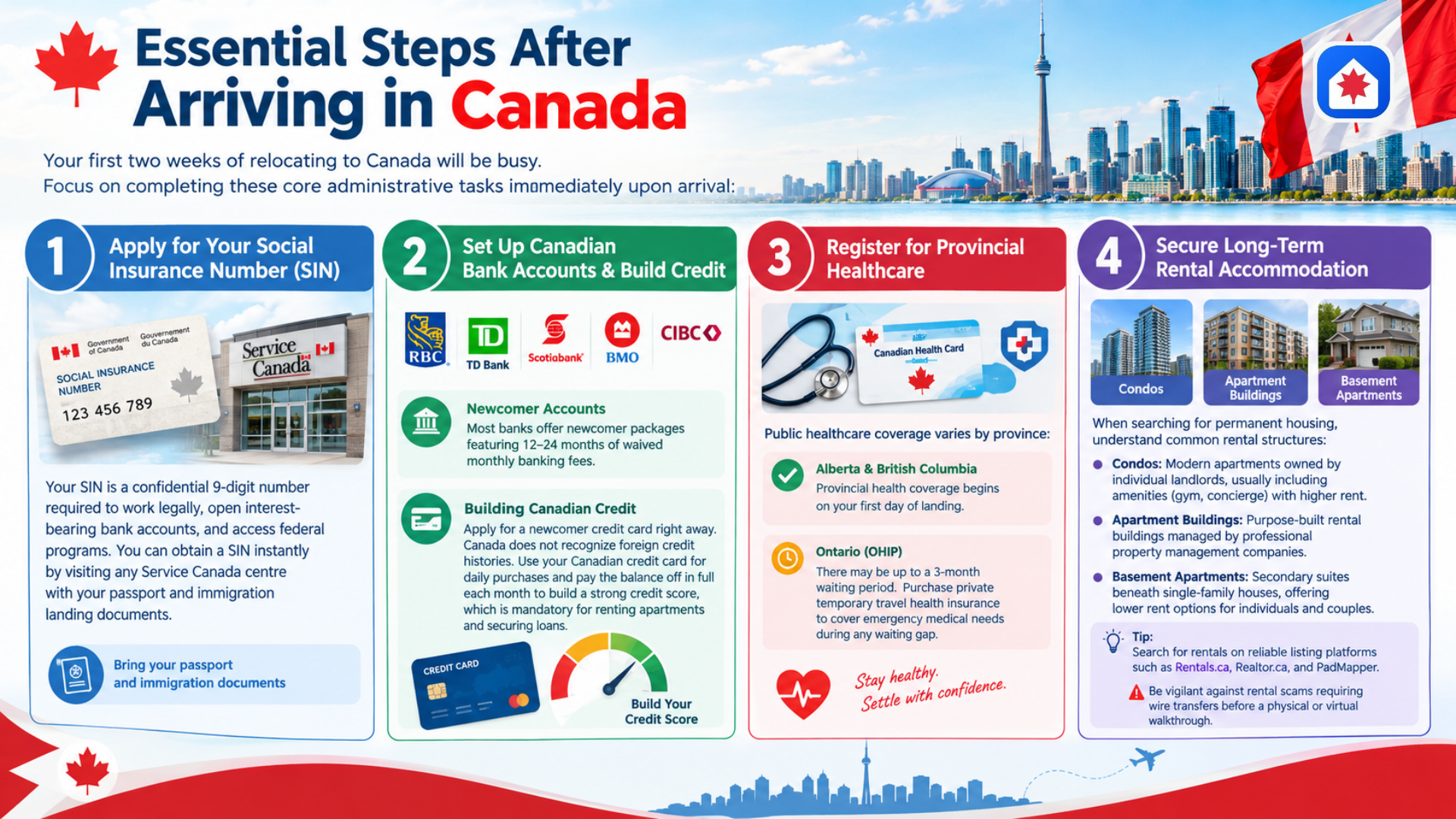
1. Apply for Your Social Insurance Number (SIN)
Your SIN is a confidential 9-digit number required to work legally, open interest-bearing bank accounts, and access federal programs. You can obtain a SIN instantly by visiting any Service Canada centre with your passport and immigration landing documents.
2. Set Up Canadian Bank Accounts & Build Credit
Canada’s financial market is dominated by the "Big Five" banks: RBC, TD Bank, Scotiabank, BMO, and CIBC.
- Newcomer Accounts: Most banks offer newcomer packages featuring 12–24 months of waived monthly banking fees.
- Building Canadian Credit: Apply for a newcomer credit card right away. Canada does not recognize foreign credit histories. Use your Canadian credit card for daily purchases and pay the balance off in full each month to build a strong credit score, which is mandatory for renting apartments and securing loans.
3. Register for Provincial Healthcare
Public healthcare coverage varies by province:
- In Alberta and British Columbia, provincial health coverage begins on your first day of landing.
- In Ontario (OHIP), there may be up to a 3-month waiting period. Purchase private temporary travel health insurance to cover emergency medical needs during any waiting gap.
4. Secure Long-Term Rental Accommodation
When searching for permanent housing, understand common rental structures:
- Condos: Modern apartments owned by individual landlords, usually including amenities (gym, concierge) with higher rent.
- Apartment Buildings: Purpose-built rental buildings managed by professional property management companies.
- Basement Apartments: Secondary suites beneath single-family houses, offering lower rent options for individuals and couples.
Tip: Search for rentals on reliable listing platforms such as Rentals.ca, Realtor.ca, and PadMapper. Be vigilant against rental scams requiring wire transfers before a physical or virtual walkthrough.
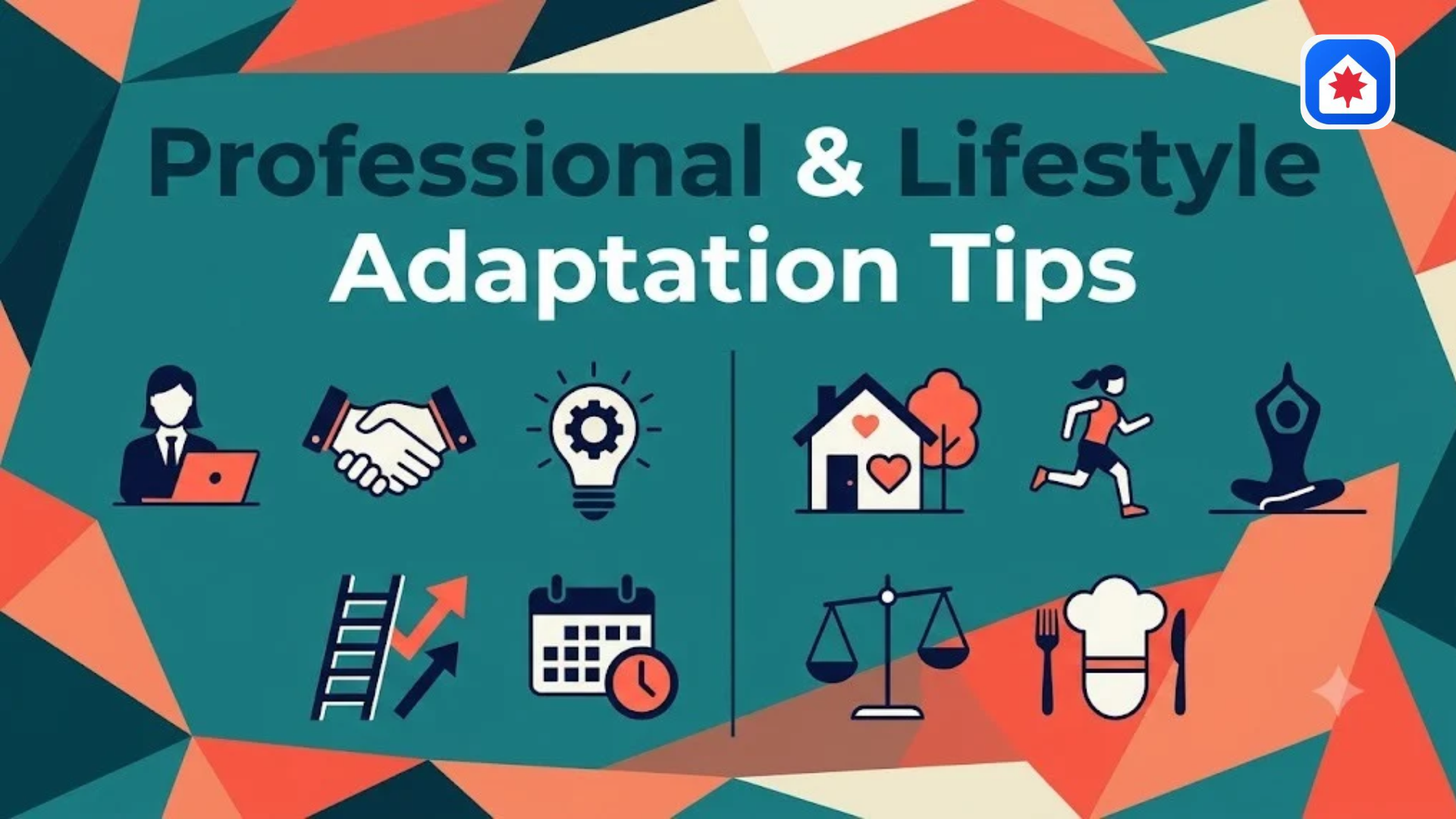
Professional & Lifestyle Adaptation Tips - Moving to Canada
Successful relocation extends beyond paperwork; adapting professionally and socially ensures long-term stability.
Navigating the Canadian Job Market
The Canadian job search process relies heavily on networking and tailored applications:
- Format a Canadian-Style Resume: Limit your resume to 1 or 2 pages. Omit personal details such as photos, birth dates, marital status, or full street addresses. Focus on quantified achievements and relevant skills.
- Capitalize on Informational Interviews: Connect with industry peers on LinkedIn. Request short, 15-minute phone calls to learn about market trends without explicitly asking for a job.
- Utilize Free Settlement Agencies: Government-funded non-profit organizations (such as YMCA Immigrant Services, ACCES Employment, and COSTI) offer free resume workshops, job mentorship, and language training (LINC).
Preparing for Canadian Winters
Except for coastal British Columbia, Canadian winters feature freezing temperatures and snowfall from November through March:
- Mastering the Layering System: Wear a moisture-wicking base layer, an insulating middle layer (fleece or down), and a windproof, waterproof outer jacket.
- Investing in Proper Footwear: Purchase winter boots rated for negative temperatures (-20°C or colder) with rubber, slip-resistant soles to navigate icy sidewalks.
Understanding Canadian Taxes & Finances - Moving to Canada
As a resident of Canada, you are subject to worldwide income taxation. Understanding basic financial structures helps you manage money efficiently:
- Goods and Services Tax (GST/HST): Added at checkout on most goods and services, ranging from 5% to 15% depending on the province.
- Tax-Free Savings Account (TFSA): A registered account allowing you to invest money tax-free up to an annual contribution limit.
- Registered Retirement Savings Plan (RRSP): An investment account where contributions are tax-deductible, reducing your annual taxable income while helping you save for retirement.
Conclusion
Moving to Canada is a transformative journey filled with immense opportunity for personal and professional growth. While navigating immigration requirements, financial preparation, and settlement tasks demands patience, breaking down your move into structured milestones makes the process entirely manageable.
By taking action early, securing your settlement funds, following a systematic moving to Canada checklist, and actively engaging with local communities, you lay a solid foundation for a successful transition to life in Canada.
Ready to start your Canadian adventure? Save this moving to Canada guide, share it with family members preparing for the move, and subscribe to our newsletter for up-to-date immigration news, policy changes, and settlement tips!
Thank you for reading our article!