Getting a driver's license in Canada is an important step toward greater independence, especially if you recently moved to the country. Whether you are a newcomer, an international student, or someone learning to drive for the first time, understanding the licensing process can help you prepare for the required tests and avoid unnecessary delays. The process of getting a driver's license Canada depends on where you live because each province and territory has its own licensing authority, eligibility requirements, and testing procedures. This guide explains Canada's main driver's license requirements, how to apply, what newcomers should know about foreign licences, and how to prepare for driving tests.
1. Understanding the Driver's Licensing System in Canada
Unlike some countries with a centralized national licensing system, Canada allows each province and territory to manage its own driver's licensing program. This means the application process, license categories, fees, and driving restrictions can vary depending on where you live. You should therefore check with the official licensing authority in your province before starting the application process.
Canadian provinces use different license classifications based on the vehicle type and the driver's experience. For ordinary passenger vehicles, you will generally encounter the following categories:
- Learner's licence: Allows beginners to practise driving under specific supervision and restrictions.
- Novice or intermediate licence: Gives drivers more independence after they meet certain learning and testing requirements.
- Full driver's licence: Allows eligible drivers to operate regular passenger vehicles without the restrictions associated with beginner licensing stages.
Commercial vehicles, motorcycles, buses, and other specialized vehicles require different license classes and may involve additional training or testing. For example, Ontario uses the G1, G2, and G licensing stages for passenger vehicles. Alberta uses Class 7 for learners and Class 5 for regular passenger vehicles.
2. Driver's License Requirements in Canada
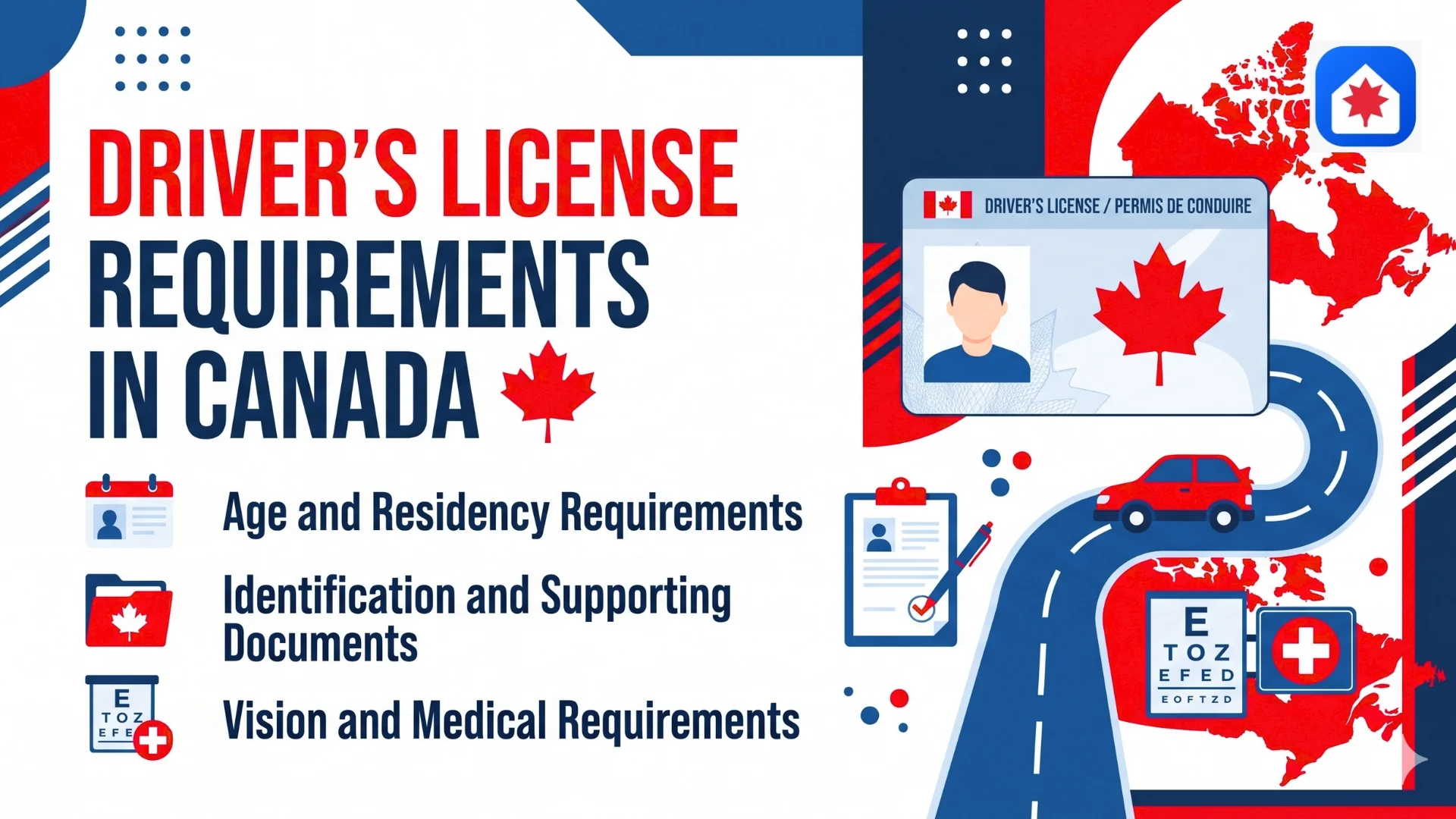
Although exact driver’s license requirements Canada depend on the province or territory, most applicants need to meet several basic conditions before receiving a Canadian driver's licence.
2.1. Age and Residency Requirements
You must meet the minimum age requirement for the license class you want to obtain. For regular passenger vehicles, the minimum age is generally 16, although some provinces have different rules or additional conditions for younger applicants. You may also need to demonstrate that you are a resident of the province where you are applying.
2.2. Identification and Supporting Documents
When applying for a driver's license Canada, you will generally need to provide documents confirming your identity and eligibility. Depending on your circumstances and province, these may include:
- A valid passport or other accepted government-issued identification.
- A permanent resident card, work permit, or study permit, where applicable.
- Proof of residential address.
- Your existing driver's licence, if you already hold one. If your foreign driver's license is not in English or French, you may also need an accepted translation or an International Driving Permit (IDP), depending on the province.
- An official driving record or license history, if you want previous experience recognized.
2.3. Vision and Medical Requirements
A vision test is a common part of the application process. It helps determine whether you can see well enough to operate a vehicle safely. Some applicants may also need to provide medical information or undergo additional assessments. This can depend on their age, medical circumstances, license class, or the requirements of the provincial authority.
3. How to Get a Driver's License in Canada: Step-by-Step
If you have never held a driver's license before, you will generally need to complete several stages before receiving full driving privileges. The following steps provide a general overview of how to get a driver’s license Canada.
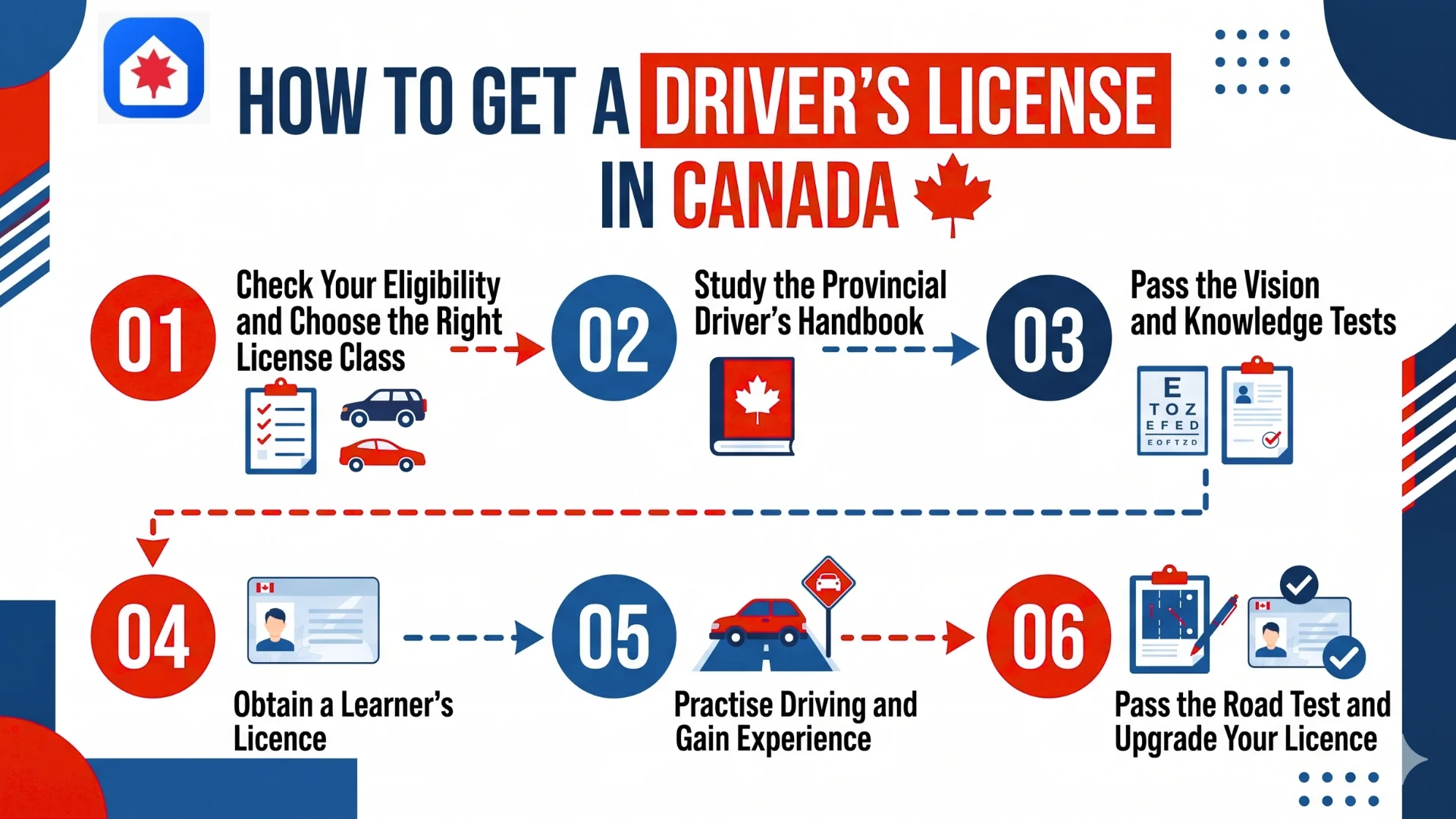
3.1. Check Your Eligibility and Choose the Right License Class
Start by identifying the type of vehicle you want to drive. If you only need to operate a regular passenger car, you will generally apply for the standard passenger vehicle license in your province.
Next, check the minimum age, residency conditions, identification requirements, and applicable fees. It is also worth confirming whether your province has a graduated licensing system. This system allows new drivers to gain experience gradually before receiving unrestricted driving privileges.
3.2. Study the Provincial Driver's Handbook
Once you understand the eligibility requirements, prepare for the knowledge test. Each province publishes an official driver's handbook covering local traffic laws, road signs, driving responsibilities, and safe driving practices. You should study the handbook issued by your province rather than relying entirely on general driving guides.
For example:
- Ontario provides the Official MTO Driver's Handbook.
- British Columbia provides the Learn to Drive Smart guide.
- Alberta provides the Driver's Guide.
3.3. Pass the Vision and Knowledge Tests
Most first-time applicants must complete a vision screening and a written knowledge test.
The knowledge test generally assesses your understanding of:
- Traffic signs and road markings.
- Speed limits and right-of-way rules.
- Traffic signals and intersections.
- Safe driving practices.
- Basic vehicle operation and road safety regulations.
The examination format varies by province. Some authorities use multiple-choice questions, while others may provide computer-based testing. Make sure you understand the test registration process, available languages, fees, and retake policies before booking your appointment.
3.4. Obtain a Learner's Licence
After meeting the initial testing requirements, eligible applicants receive a learner's licence. This allows you to begin practising on public roads, but you must follow the restrictions attached to your licence.
Depending on your province, these restrictions may include:
- Driving only with a qualified supervising driver.
- Maintaining a zero blood alcohol level.
- Limiting the number of passengers.
- Avoiding certain roads or driving during restricted hours.
These restrictions are designed to give beginners supervised driving experience before they move to the next licensing stage.
3.5. Practise Driving and Gain Experience
Passing the knowledge test does not mean you are ready for a full driver's license Canada. You need to develop practical driving skills and become comfortable handling different road conditions.
During this stage, focus on:
- Steering, braking, and controlling vehicle speed.
- Changing lanes and checking blind spots.
- Making safe turns and navigating intersections.
- Parking and reversing.
- Understanding traffic signs and road markings.
- Driving safely in different weather and traffic conditions.
Consider taking lessons from a qualified driving instructor if you need additional guidance. Some provinces also allow approved driver education programs to reduce the minimum waiting period before a road test. However, eligibility and the amount of time credited depend on local rules.
3.6. Pass the Road Test and Upgrade Your Licence
After completing the required learning period and meeting the experience requirements, you can book a road test. During the examination, an examiner will assess your ability to operate a vehicle safely and follow traffic regulations.
Common assessment areas include:
- Starting, stopping, and controlling the vehicle.
- Turning and changing lanes.
- Checking mirrors and blind spots.
- Parking and reversing.
- Following traffic signals and road signs.
- Responding appropriately to other road users.
If you pass, you may receive an intermediate or full licence, depending on your province and licensing stage. In provinces with graduated licensing, you may need to complete additional practice periods or assessments before receiving unrestricted driving privileges.
4. Getting a Canadian Driver's License with a Foreign Licence
If you already have a valid driver's license from another country, you may not need to complete the entire beginner licensing process. However, the rules depend on where your original license was issued, how long you have been driving, and whether the province has a reciprocal exchange agreement with that jurisdiction.
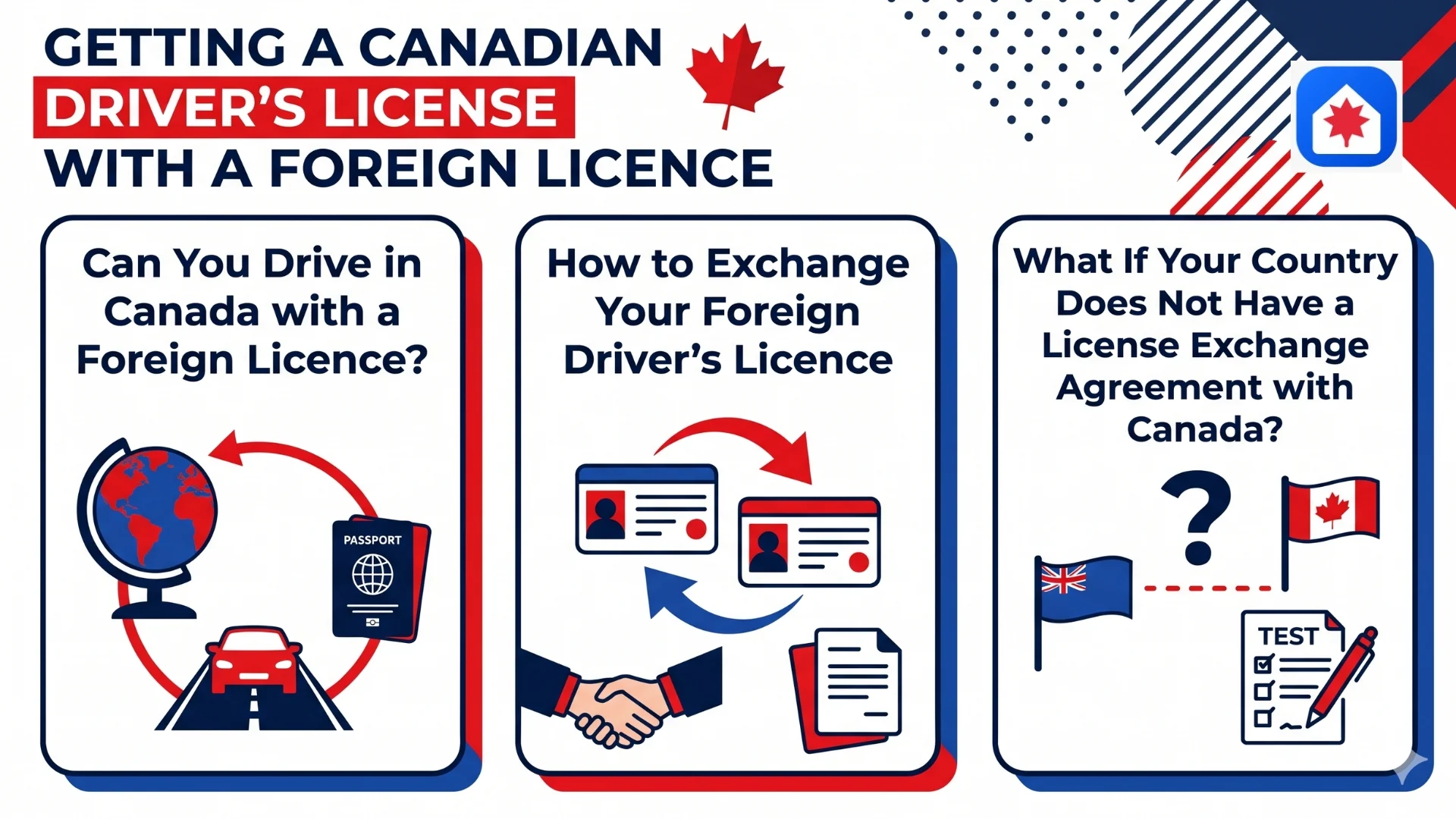
4.1. Can You Drive in Canada with a Foreign Licence?
In many cases, newcomers to Canada can temporarily drive using a valid driver's license issued by their home country. However, the permitted period varies by province or territory.
For example:
- Ontario: New residents can use a valid foreign license for up to 60 days before switching to an Ontario licence.
- British Columbia: New residents generally have 90 days to switch to a B.C. licence.
- Alberta: Permanent residents must exchange their existing license within 90 days.
You should also check whether your foreign license needs to be accompanied by an International Driving Permit. For more details, consult the Government of Canada's official guide to driving in Canada.
4.2. How to Exchange Your Foreign Driver's Licence
If your province recognizes your home country's licence, you may be eligible to exchange it for an equivalent Canadian licence. Although the procedure varies, the process generally involves the following steps:
- Check whether your country has an exchange agreement: Visit your provincial licensing authority's website to determine whether your country is eligible for a direct exchange. Some jurisdictions allow eligible drivers to exchange their licences without taking a knowledge or road test.
- Gather your identification and driving documents: Prepare your original foreign driver's licence, proof of identity, proof of residency, and documents confirming your legal status in Canada. You may also need a driving record or an official letter confirming when your license was first issued.
- Book an appointment with the licensing authority: Depending on the province, you may need to visit a licensing office or an authorized service centre. Bring all required original documents and be prepared to pay the applicable fees.
- Complete any required tests: If your license qualifies for a direct exchange, you may not need to take additional examinations. Otherwise, you may need to pass a vision test, knowledge test, and road test. Your previous driving experience may also count toward the provincial graduated licensing requirements.
- Receive your provincial driver's licence: Once your application is approved, the licensing authority will issue a license according to the applicable provincial rules. Be aware that some provinces require you to surrender your original foreign license when completing an exchange.
4.3. What If Your Country Does Not Have a License Exchange Agreement with Canada?
You may still be able to use your previous driving experience to obtain a Canadian driver's licence, even if your country does not have a direct exchange agreement. In this situation, the licensing authority may require you to complete additional tests.
Depending on the province, you may need to provide:
- Your valid foreign driver's licence.
- An official driving history or license abstract.
- A certified translation, if required.
- Documents verifying the date your license was originally issued.
The licensing authority will assess your documents and determine how much previous experience can be recognized. This is particularly important for newcomers who have been driving for several years. Proper documentation may help them avoid repeating the entire beginner licensing process.
5. How Much Does It Cost to Get a Driver's License in Canada?
The cost of obtaining a Canadian driver's license depends on your province, license class, and previous driving experience. First-time drivers generally have more expenses because they may need to pay for several examinations, a learner's licence, driving lessons, and a final road test. Newcomers who qualify for a license exchange may have fewer testing expenses, although they still need to pay the applicable licensing fees.
Here are the main costs to consider:
- Application fee: Processing your driver's license application.
- Knowledge test fee: Taking the written examination.
- Vision test: Assessing your ability to see clearly while driving.
- Learner's license fee: Issuing your beginner licence.
- Road test fee: Evaluating your practical driving skills.
- Driving lessons: Professional instruction and practice.
- License issuance or renewal: Receiving or renewing your provincial licence.
6. Tips for Passing Your Canadian Driving Tests
Preparing properly for your examinations can make the licensing process easier and reduce the likelihood of paying for repeated tests.
6.1. Preparing for the Knowledge Test
The knowledge test evaluates your understanding of local driving regulations and road safety. Instead of memorizing answers without understanding them, focus on the reasons behind each rule.
Start by reading the official handbook and reviewing important topics such as right-of-way rules, speed limits, road signs, intersections, and safe driving distances. You can also use practice questions to identify areas where you need more preparation.
CanadaHomeHub offers a driving knowledge preparation resource that can help visitors explore driving test preparation materials.
6.2. Preparing for the Road Test
The road test focuses on your ability to drive safely in real traffic conditions. Before booking your examination, practise regularly with a qualified supervisor or driving instructor.
Pay particular attention to checking mirrors, signalling before turning or changing lanes, maintaining appropriate speed, and observing pedestrians. You should also become comfortable with parallel parking, reversing, and navigating intersections.
If possible, practise in different weather conditions. Rain, snow, ice, and reduced visibility can make driving more challenging, especially for newcomers who are unfamiliar with Canadian roads.
6.3. Common Mistakes to Avoid
Some mistakes can affect your test results even when you understand the basic driving rules.
Common examples include:
- Forgetting to check blind spots before changing lanes.
- Failing to signal at the correct time.
- Driving too fast or too slowly for road conditions.
- Not stopping completely at stop signs.
- Following other vehicles too closely.
- Failing to yield to pedestrians.
- Becoming distracted or making rushed decisions.
The best way to improve is to practise consistently and ask your instructor to explain any mistakes you make during training.
Frequently Asked Questions
1. Can I drive in Canada with my foreign driver's licence?
Yes, in many cases. Newcomers can generally use a valid foreign driver's license for a limited period after arriving in Canada. However, the permitted period varies by province or territory.
2. Is an International Driving Permit required in Canada?
Not always. Whether you need an IDP depends on your destination province, the language of your original licence, and your circumstances. An IDP is a supporting translation document and must be carried with your valid original driver's licence.
3. How long does it take to get a driver's license Canada?
The timeline depends on your province and previous driving experience. First-time drivers may need to complete several graduated licensing stages, which can take months or years. Newcomers who qualify for a license exchange may receive a provincial license much sooner.
4. Can newcomers exchange their foreign driver's licences?
Yes, if they meet the requirements of their province or territory. Some jurisdictions have reciprocal exchange agreements with Canada, allowing eligible drivers to obtain an equivalent license without completing every examination. Other applicants may need to take knowledge and road tests.
5. Do I need to take a driving test if I already have a licence?
Not necessarily. If your original license comes from a jurisdiction with a recognized exchange agreement, you may qualify for an exemption from some or all testing requirements. Otherwise, the provincial authority may require additional examinations.
6. Can I get a Canadian driver's license without taking driving lessons?
Yes. In many provinces, taking professional driving lessons is not mandatory for standard passenger vehicle applicants. However, you must still meet the applicable knowledge, practical testing, and graduated licensing requirements. Approved driver education courses may also provide certain benefits.
7. How much does a driver's license cost in Canada?
There is no single nationwide fee. The total cost depends on the province, license class, examination fees, and whether you need professional driving lessons. Check the official licensing authority's website for the latest fee schedule.
Getting a driver's license Canada requires understanding the licensing rules in your province, preparing the necessary documents, and completing the appropriate examinations. Before applying, check the requirements of your provincial licensing authority and confirm whether your existing driving experience can be recognized. Preparing early can help you avoid unnecessary tests, delays, and expenses.
For newcomers building their lives in Canada, understanding practical requirements like driver's licensing is an important part of settling in. Explore CanadaHomeHub for additional Canadian guides, driving preparation resources, and practical tools to help you navigate everyday life in the country.