
Purchasing or selling a home is one of the most significant financial transactions you will ever undertake. While finding the right property or securing a competitive mortgage rate often takes center stage, the legal foundation of your transaction is equally critical. Securing an experienced real estate lawyer Canada trusts is essential to protecting your money, ensuring your rights are upheld, and making your property transition seamless. This comprehensive guide breaks down everything you need to know about what real estate lawyers do, how much their services cost, how to find a reputable practitioner near you, and what steps you can take to guarantee a smooth closing day.
What Does a Real Estate Lawyer Do in Canada?
Many buyers and sellers assume that a lawyer only enters the picture on the day keys are exchanged. In reality, a qualified real estate legal professional oversees critical statutory steps well before the property formally changes hands, safeguarding your financial investment at every stage.
Reviewing the Agreement of Purchase and Sale
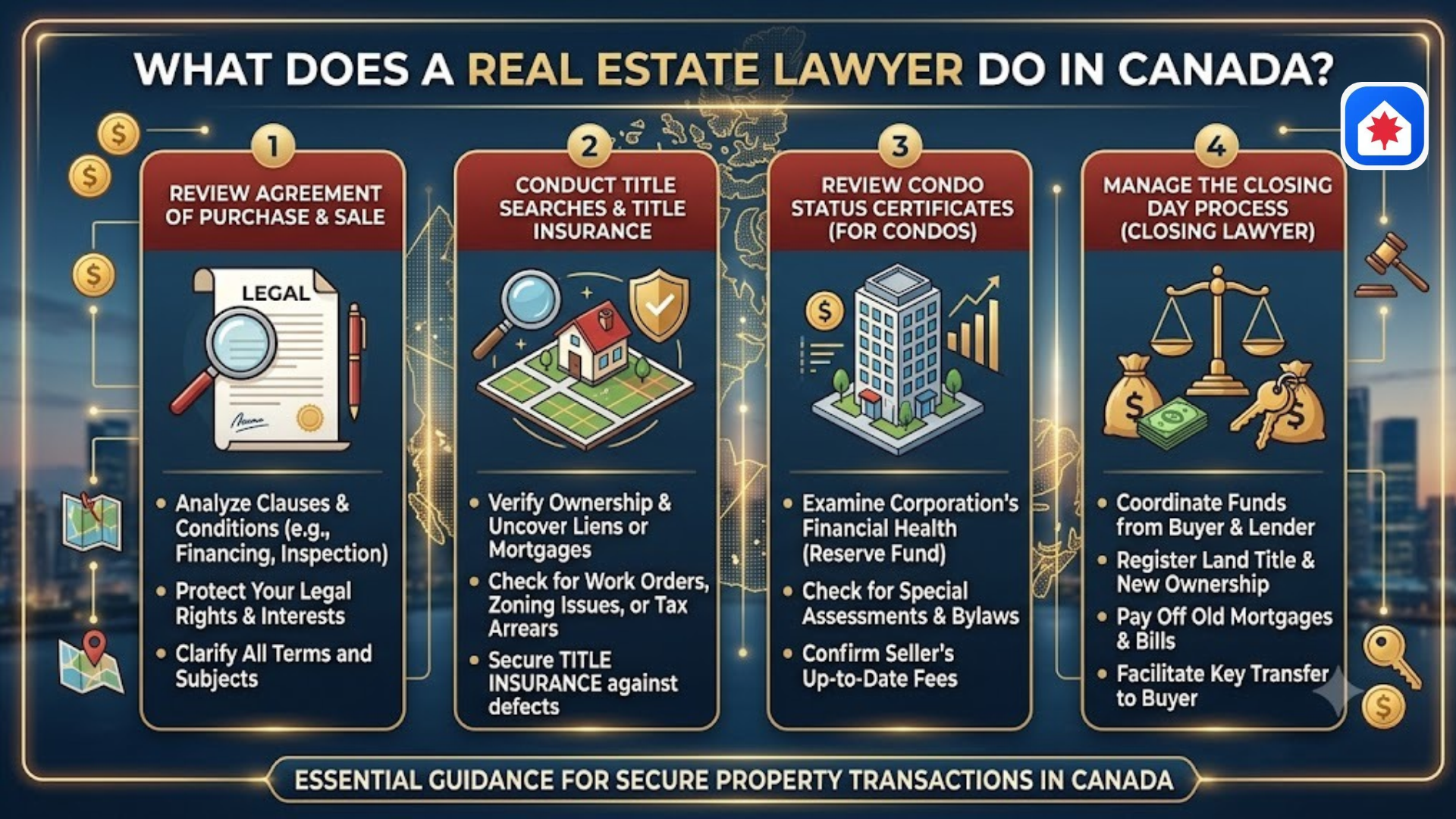
The Agreement of Purchase and Sale (APS) is a legally binding contract. Once signed without conditions, you are legally committed to the terms outlined within it. A lawyer reviews this document—ideally during the conditional period—to check for problematic clauses, verify that conditional clauses (such as home inspections, financing contingencies, or sale of a current home) protect your interests, and ensure clear language regarding inclusions, exclusions, and deposit conditions.
Conducting Title Searches and Title Insurance
A primary responsibility of your legal counsel is performing a thorough title search through the provincial land registry system. This process verifies that the seller actually owns the property and has the legal right to sell it free of hidden surprises. The search uncovers any existing claims against the property, including:
- Prior unpaid mortgages, construction liens, or private loans.
- Municipal work orders, building code violations, or unresolved zoning issues.
- Utility or property tax arrears.
- Easements, restrictive covenants, or rights-of-way that could restrict your use of the land.
To protect you against undiscovered title defects, boundary disputes, survey errors, or fraudulent claims after closing, your lawyer will also help you secure title insurance. Most major institutional lenders in Canada require a valid title insurance policy before issuing mortgage funds.
Reviewing Condo Status Certificates (For Condominium Buyers)
If you are purchasing a condominium unit, your lawyer’s role expands to reviewing the Status Certificate. This vital legal document provides a snapshot of the corporation's financial health. Your lawyer will examine the reserve fund study, check whether there are any pending special assessments (extra out-of-pocket fees levied against owners for major repairs), review condo bylaws regarding pets or rentals, and verify that the seller has paid all monthly maintenance fees up to date.
Managing the Closing Day Process as a Closing Lawyer
On closing day, your designated closing lawyer Canada manages the intricate transfer of funds and legal documents. They receive funds from your mortgage lender, collect your remaining down payment, pay off any outstanding mortgages or claims held by the seller’s side, transfer the land registration with the provincial land registry office, and deliver the final legal clearance so the key exchange can take place securely.
Real Estate Lawyer Fees Canada: What to Expect?
Understanding real estate lawyer fees Canada helps you budget accurately for your total closing costs without facing unexpected financial surprises at the finish line.
Average Legal Fees (Flat Fee vs. Hourly Rate)
For standard residential buying or selling transactions, most real estate lawyers charge a flat fee rather than an open-ended hourly rate.
- Flat Fees: Typically range between $800 and $2,500 CAD for a basic residential purchase or sale, depending on your province, city, and transaction complexity. For instance, transactions in high-cost metropolitan areas like Toronto or Vancouver often skew slightly higher due to elevated overhead costs.
- Hourly Rates: Range from $250 to $500+ CAD per hour. Hourly billing usually applies only if your transaction involves unique legal complications, estate sales, commercial elements, or extensive contract renegotiations outside standard conveyancing.
Understanding Disbursements
Your final legal invoice will consist of two parts: the lawyer’s professional service fee and disbursements. Disbursements are out-of-pocket expenses paid by the law firm on your behalf to third parties to process your transaction.
Common disbursements include:
- Title Search Fees: $150 – $300 (Costs paid to access provincial land registry databases like Teraview or LTSA)
- Title Insurance Premium: $250 – $600 (A one-time insurance fee protecting against title defects and fraud)
- Tax and Utility Certificates: $100 – $200 (To verify no outstanding municipal debt or water bills)
- Software, Courier, & Administrative Fees: $100 – $250 (Document handling, electronic filing, and secure wire transfer charges)
Provincial Differences in Legal Costs and Taxes
Closing costs and legal overhead vary significantly by jurisdiction across Canada:
- Ontario: Often incurs higher administrative, electronic registration, and land registry search costs due to complex municipal systems and provincial Land Transfer Taxes (plus municipal LTT if buying in Toronto).
- British Columbia: Real estate conveyancing can be handled by either a real estate lawyer or a licensed Notary Public, which can create distinct competitive fee structures. Property transfer taxes also apply.
- Alberta: Uses a streamlined Land Titles system, often resulting in slightly lower title search disbursements compared to eastern provinces.
Always ask for an itemized quote upfront to ensure the quoted baseline price covers both professional legal fees and estimated third-party disbursements.
Why You Need a Dedicated Lawyer for Buying a House in Canada
If you are entering the property market, hiring a dedicated lawyer for buying a house Canada offers essential safeguards that extend far beyond simple paperwork filing.
Handling Mortgage Instructions and Lender Requirements
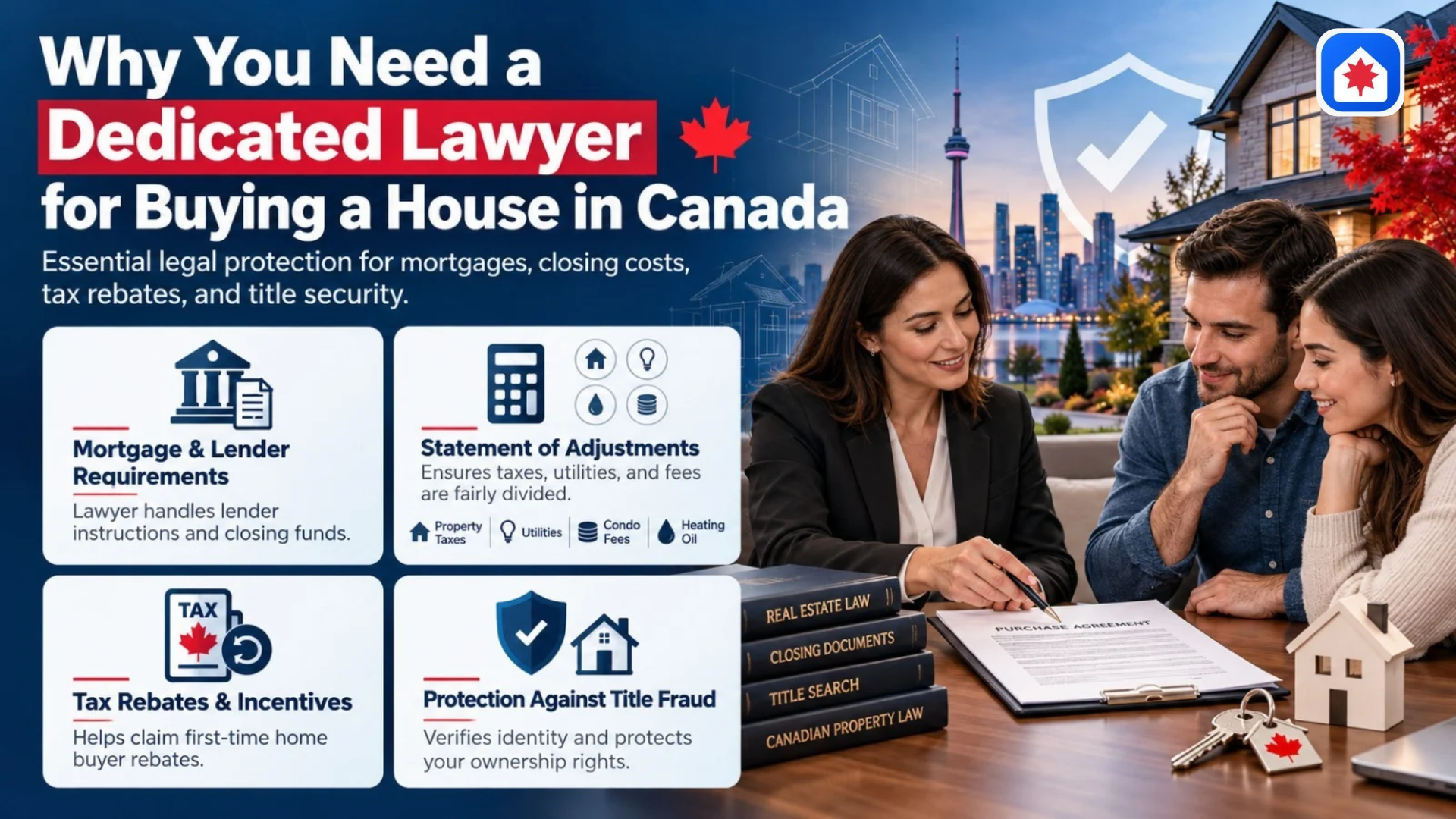
When you secure a mortgage, your lender does not send the money directly to your personal bank account. Instead, they issue strict, legally binding instructions to your lawyer. Your lawyer acts on behalf of both you and the financial institution to confirm that all financial conditions are satisfied, mortgage documents are properly executed, and funds are drawn down precisely on schedule for closing day.
Statement of Adjustments Calculation
One of the most valuable financial services your lawyer performs is preparing or reviewing the Statement of Adjustments. This document ensures that prepaid costs are fairly divided between the buyer and the seller as of the exact closing date.
For example, if the seller prepaid property taxes for the entire year, your lawyer will calculate the exact daily rate and adjust the final purchase price so you credit the seller for the months you will own the home. Common adjustments cover:
- Municipal property taxes.
- Unmetered or prepaid utility bills.
- Monthly condominium or strata maintenance fees.
- Fuel oil adjustments (if the home runs on a heating oil tank).
Land Transfer Tax Rebates and Government Incentives
A knowledgeable real estate lawyer will also help you navigate and claim various government programs, such as first-time home buyer land transfer tax refunds available in provinces like Ontario, British Columbia, and Prince Edward Island, saving you thousands of dollars at closing.
Protection Against Title Fraud and Scams
Real estate title fraud - where sophisticated scammers impersonate homeowners to fraudulently sell or mortgage a property while the owners are traveling or renting it out - is a growing concern in major Canadian metropolitan areas. A specialized real estate lawyer employs strict identity verification protocols, anti-fraud compliance measures, and robust title insurance policies to defend your asset against identity theft and unauthorized claims.
How to Find a Reliable Real Estate Lawyer Near Me
Searching for a real estate lawyer near me yields dozens of local options, but choosing the right legal partner requires systematic due diligence.
Where to Search for Local Legal Experts
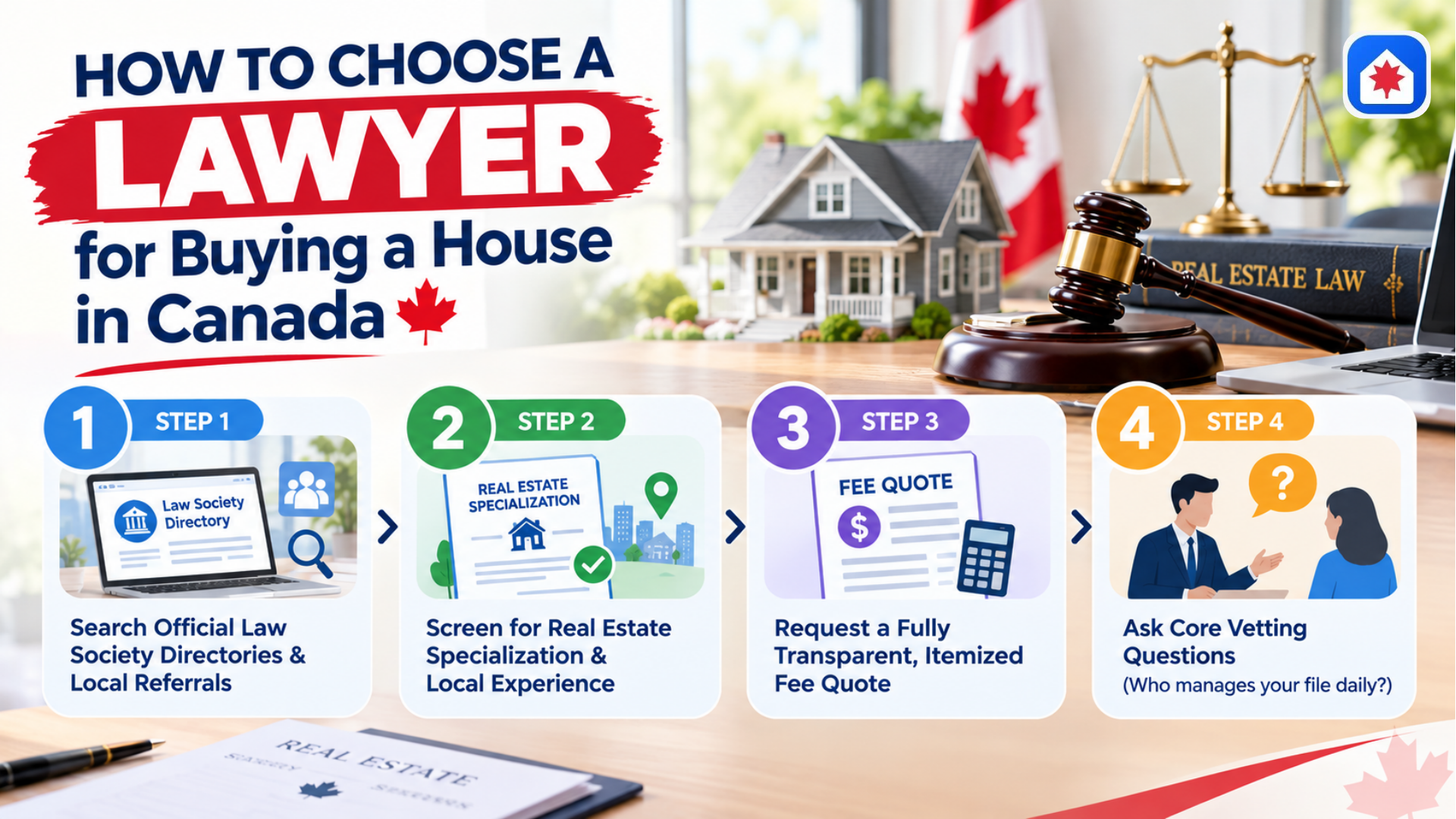
- Provincial Law Societies: Use official public directories such as the Law Society of Ontario (LSO), Law Society of British Columbia, or Law Society of Alberta. These directories verify that a lawyer is active, licensed, and in good standing without professional disciplinary records.
- Professional Referrals: Ask your mortgage broker or real estate agent for recommendations. Because they navigate local deals daily, they know which lawyers communicate proactively and consistently meet tight closing deadlines.
- Personal Network: Friends, family, or colleagues who recently purchased property in your municipality can offer candid feedback regarding a law firm's responsiveness, pricing transparency, and overall service quality.
Crucial Questions to Ask Before Hiring
Before signing a retainer agreement with any firm, ask these fundamental questions:
- "What percentage of your legal practice is dedicated specifically to residential real estate?"
Why it matters: You want a specialist who handles property closings daily, not a general practitioner who only handles a handful of transactions a year.
- "Does your fee quote include all anticipated disbursements, administrative fees, and applicable taxes?"
Why it matters: Prevents unexpected surprise add-ons on your final billing statement on closing day.
- "Who will be my primary day-to-day point of contact during the transaction?"
Why it matters: Real estate law offices often rely on legal assistants and real estate clerks for routine coordination. Make sure you know who is managing your file and how accessible the supervising lawyer is for complex questions.
- "Have you handled transactions involving my specific property type (e.g., pre-construction condos, rural properties with private well and septic systems, or tenanted properties)?"
Why it matters: Specialized property types require unique legal clauses, independent environmental inspections, and specialized municipal compliance checks.
Essential Tips for a Smooth Closing Process
Even with an exceptional lawyer in your corner, proactive organization on your part keeps your closing on track and stress-free.
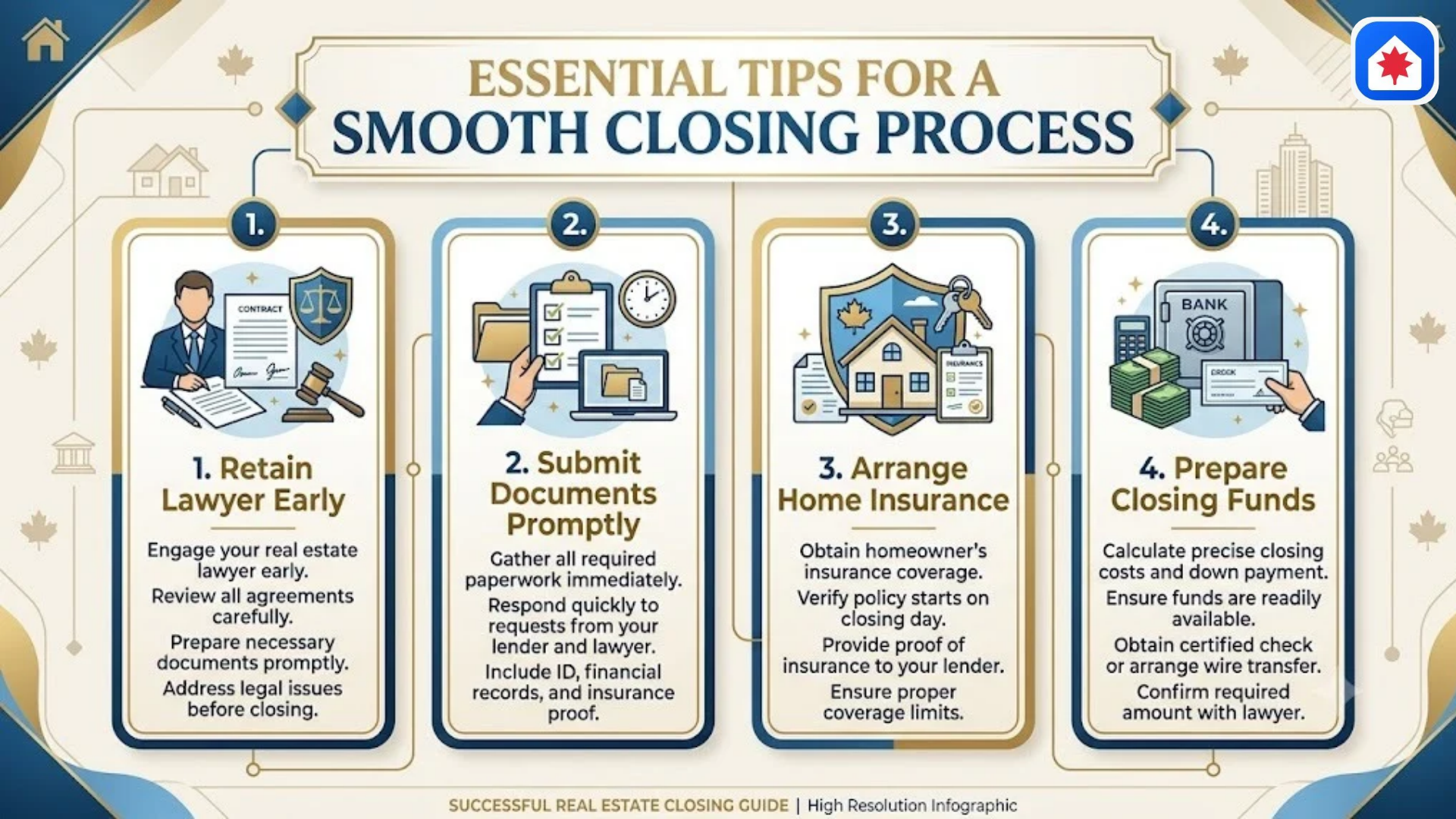
- Retain Your Lawyer Early: Do not wait until a week before closing to hire legal counsel. Engage a lawyer as soon as your offer is accepted - or ideally before you firm up conditions on your Agreement of Purchase and Sale.
- Submit Documents Promptly: Respond immediately to requests for government-issued photo identification, proof of down payment origin, mortgage details, and marital status documentation required under Canadian anti-money laundering regulations.
- Arrange Home Insurance Ahead of Time: Lenders will not release mortgage funds unless you provide proof of active home insurance listing the lender as the primary loss payee. Secure your policy at least two weeks before closing and forward the binder certificate to your lawyer immediately.
- Prepare Closing Funds in Advance: Your lawyer will require the balance of your down payment and closing expenses via certified cheque or secure electronic wire transfer usually 1 to 3 days prior to closing. Ensure your liquid funds are not locked in non-redeemable investments or subject to unexpected hold periods at your commercial bank.
Frequently Asked Questions (FAQ)
Can I use the same real estate lawyer as the seller?
In most Canadian jurisdictions, a single lawyer cannot represent both the buyer and the seller in the same standard transaction due to an inherent conflict of interest. Both parties have competing financial and legal objectives during a negotiation. While rare, narrow exceptions exist in remote rural areas with limited legal representation, independent legal representation is strongly recommended and generally mandated by provincial law societies.
When should I hire a real estate lawyer during a home purchase?
It is best to contact a lawyer before you sign an Agreement of Purchase and Sale, especially if you are purchasing a pre-construction home or a condominium with complex status certificates. At absolute minimum, retain your lawyer immediately after your offer is conditionally accepted so they have adequate time (typically 30 to 60 days) to run necessary title searches, review condo docs, and coordinate with your lender.
What happens if a real estate closing is delayed?
Closing delays can occasionally occur due to unexpected mortgage funding holds, uncompleted move-out cleanings, or missing administrative documentation. If a delay happens, your lawyer will negotiate an extension agreement (an amendment) with the opposing party's lawyer. Depending on who caused the delay, per-diem interest charges or bridge financing arrangements may be implemented to protect the compliant party from financial loss.
Conclusion
Finding the right real estate lawyer Canada offers is one of the most effective investments you can make when buying or selling real estate. Beyond registering legal deeds and transferring funds, a qualified closing lawyer shields you from costly title disputes, unrecorded liabilities, and administrative errors.
Take the time to gather itemized quotes, ask detailed questions about experience and fees, and partner with a local specialist. With a dedicated legal expert handling your paperwork, you can move forward with confidence, knowing your property rights and financial investments are fully protected.