
Moving to Canada is an exciting new chapter, but many newcomers face an immediate financial surprise: your excellent credit history from back home does not follow you. Whether you arrive as a permanent resident, temporary foreign worker, or international student, Canadian financial institutions view you as having a clean slate—or what lenders call "credit invisibility." Without an established Canadian credit score, everyday milestones like renting an apartment, signing a phone contract, or buying a car become needlessly complicated and expensive.
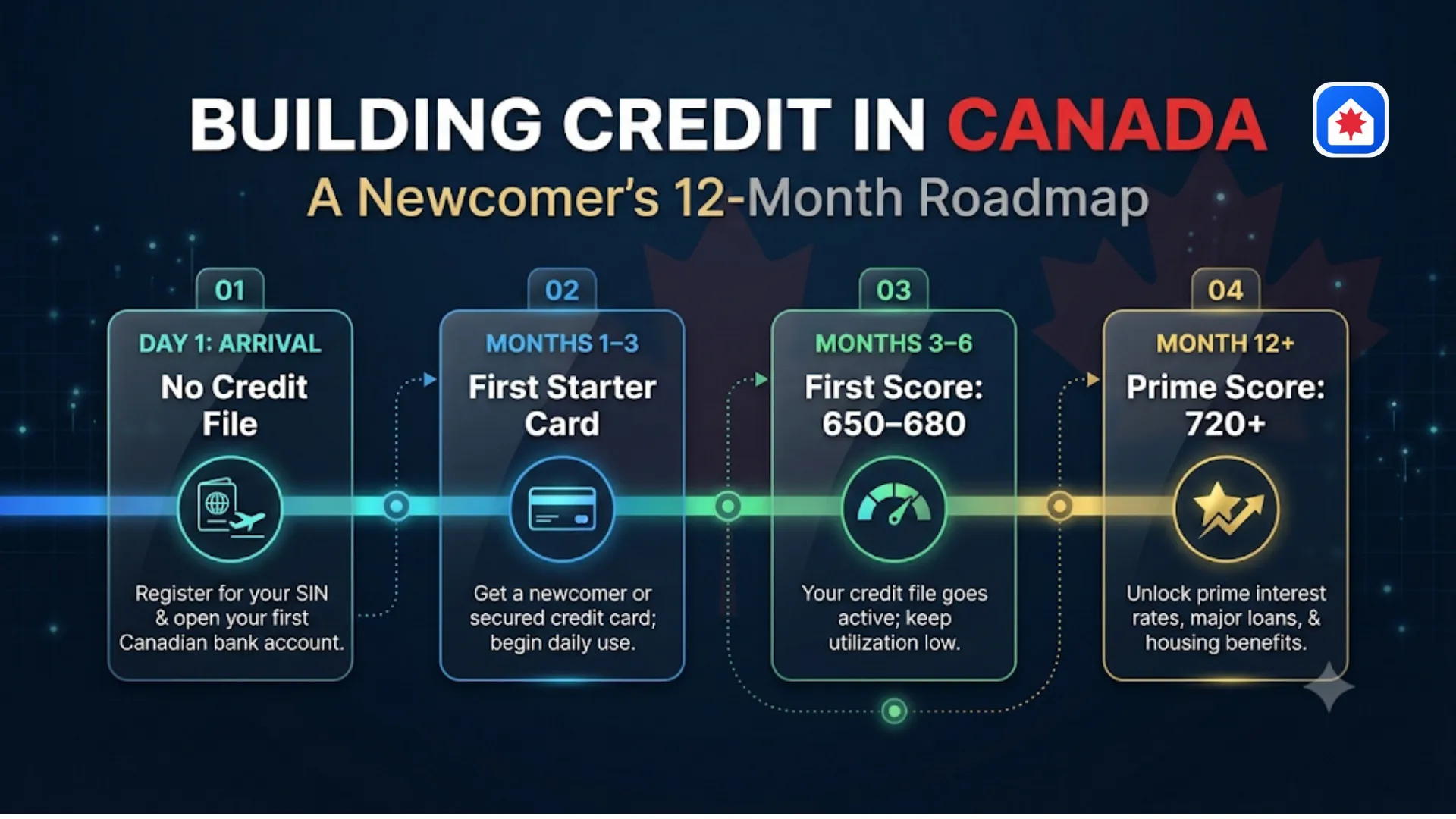
The good news is that you do not need years to establish a stellar financial reputation. By following a structured approach, you can generate your first official credit score within three to six months and enter the "good-to-excellent" range within your first year. This comprehensive guide outlines exactly how to build credit in Canada, how to pick the right credit card to build credit Canada, and the daily financial habits required to steadily improve credit score Canada as you establish your life here.
Why Your Overseas Credit History Doesn’t Follow You to Canada
When you first land in Canada, credit reporting bureaus cannot access or evaluate your foreign credit records. Canadian financial institutions are regulated under federal legislation like the Bank Act and provincial consumer reporting laws. Because foreign jurisdictions use different reporting standards, consumer protection rules, and risk metrics, Canadian banks cannot legally verify or rely on foreign credit scores.
This leads directly to the classic newcomer dilemma:
- You cannot qualify for standard unsecured credit cards or personal loans without a Canadian credit record.
- You cannot build a Canadian credit history without opening and using credit accounts.
If you apply blindly for premium rewards cards online during your first few weeks, automated bank algorithms will decline your application. Each rejection adds a "hard inquiry" to your credit file, lowering your initial rating before you even begin.
While isolated exceptions exist—such as the American Express Global Transfer program (which lets existing Amex cardholders transfer accounts internationally) or cross-border platforms like Nova Credit—most newcomers will need to establish their credit profile using Canada’s domestic newcomer banking programs.

How the Canadian Credit System Works: Equifax, TransUnion, and Score Ranges
Before opening any credit account, you need to understand who monitors your financial behaviour and how your score is calculated.
Canada's Two Major Credit Bureaus
Consumer credit information in Canada is collected and maintained by two private, federally regulated credit reporting agencies:
- Equifax Canada
- TransUnion Canada
Every month, lenders, mobile telecom providers, and utility companies report your account status, current balance, and payment timeliness to one or both of these agencies. Because some institutions report exclusively to Equifax and others report only to TransUnion, your score can vary slightly between them. This variance is entirely normal.
Canadian Credit Score Ranges (300 to 900)
Canadian credit scores run on a scale from 300 to 900 points. Lenders evaluate your risk profile based on where your score falls within this range:
- 760 – 900 (Excellent): Prime borrower status. You qualify for the most competitive mortgage rates, high-tier travel credit cards, and preferred auto financing terms.
- 725 – 759 (Very Good): Solid financial profile. Applications with major banks are approved quickly with competitive rates.
- 660 – 724 (Good): The baseline target for everyday borrowing in Canada. This range is sufficient for standard rental leases, typical credit cards, and prime mortgages.
- 560 – 659 (Fair): Approval is possible, but terms may require higher interest rates, security deposits, or a co-signer.
- 300 – 559 (Poor): Subprime status. Traditional banks will decline unsecured credit applications; you will be limited to secured credit cards and specialized B-lenders.
As a newly arrived immigrant, you do not start at 300; you simply start with no score at all. After opening an active trade line (such as a credit card or mobile phone contract), it takes three to six months of reporting data for Equifax and TransUnion to generate your initial numerical score.
The 5 Factors That Determine Your Credit Score
Both bureaus use proprietary algorithms (principally based on FICO and VantageScore models) to compute your score. The underlying weight is distributed across five categories:
- Payment History (~35%): The single most critical factor. Did you pay at least the minimum balance on time every billing cycle? Late payments past 30 days cause immediate score drops.
- Credit Utilization Ratio (~30%): How much of your total approved limit are you actively spending? Keeping balances low relative to your limit demonstrates disciplined borrowing.
- Credit History Length (~15%): The average age of your accounts. Older accounts provide more data points, making your profile more reliable to lenders.
- Credit Inquiries & New Credit (~10%): The frequency of hard credit checks conducted by lenders over the past 12 to 24 months.
- Credit Mix (~10%): A balanced combination of revolving credit (credit cards) and installment credit (car loans, student loans, or personal loans).
5 Practical Steps to Build Credit in Canada as a Newcomer
To establish your financial footprint quickly and avoid common pitfalls, follow this five-step sequence during your first few months.
Step 1: Open an Account Through a Dedicated Newcomer Banking Package
Within your first two weeks, book an appointment at a branch of one of Canada’s “Big Five” chartered banks:
- Royal Bank of Canada (RBC): RBC Newcomer Advantage
- TD Bank: TD New to Canada Banking Package
- Scotiabank: StartRight Program
- Bank of Montreal (BMO): BMO NewStart Program
- CIBC: CIBC Welcome to Canada Package
These programs are designed specifically for permanent residents, temporary workers, and international students arriving within the last three to five years. To open an account, bring your original passport, Confirmation of Permanent Residence (COPR) or valid work/study permit, proof of Canadian residential address (such as a lease or utility bill), and your Social Insurance Number (SIN).
Most newcomer packages waive monthly chequing account fees for the first 12 months and include an unsecured starter credit card with an initial limit between $1,000 and $5,000 CAD. Because these cards are designed for newcomers, banks approve them without requiring an existing Canadian credit score or local job history.
Step 2: Use a Secured Credit Card if Traditional Approval Fails
If you do not meet the criteria for a newcomer package—for instance, if you are awaiting permanent resident sponsorship on a visitor visa or working as an independent contractor without initial documentation—a secured credit card is your best alternative.
With a secured card, you provide a refundable security deposit (typically $300 to $1,000 CAD), which acts as collateral and establishes your credit limit. If you deposit $500, your spending limit is $500.
Crucially, secured credit cards report to Equifax and TransUnion exactly like traditional unsecured cards. The credit bureaus do not distinguish between secured and unsecured accounts. Reliable Canadian providers include Home Trust Secured Visa, Capital One Guaranteed Mastercard, and Neo Financial Secured Mastercard. After 12 to 18 months of consistent on-time payments, most issuers will refund your deposit and upgrade your account to an unsecured card.
Step 3: Set Up Postpaid Mobile and Home Utility Accounts in Your Name
Prepaid mobile SIM cards do not report to credit bureaus and do nothing to establish your credit rating.
Instead, visit a major Canadian carrier (such as Rogers, Bell, Telus, Fido, Koodo, or Virgin Plus) and sign up for a postpaid monthly plan. Telecom providers perform a basic credit evaluation upon enrollment and report your payment records to TransUnion or Equifax every month.
Ensure home utility accounts (electricity/hydro, water, natural gas, home internet) are registered in your legal name as well. While utility companies rarely report on-time payments, overdue bills sent to collection agencies will severely damage an early credit file.
Step 4: Report Your Monthly Rent to Canadian Credit Bureaus
For most newcomers living in cities like Toronto, Vancouver, or Ottawa, residential rent is their single largest monthly expense, often consuming 30% to 50% of take-home pay. Historically, rent payments were invisible on credit reports unless a tenant defaulted and faced collections.
Today, innovative Canadian platforms bridge this gap by reporting verified rent payments directly to Equifax Canada:
- Chexy: Allows tenants to pay rent using their Canadian credit card, earning rewards while reporting on-time rent payments to Equifax.
- FrontLobby & Borrowell Rent Advantage: Work with tenants and landlords to record monthly lease payments as a legitimate credit tradeline.
Enrolling in a rent-reporting program allows you to leverage an expense you are already paying to accelerate your credit history.
Step 5: Consider a Structured Credit Builder Loan
To build an optimal credit file, scoring models look for a balanced credit mix of revolving lines and installment loans.
If you want to accelerate your timeline, consider a Canadian credit builder program offered by fintech platforms like Borrowell or regional credit unions. Under this model:
- The provider approves a small "credit savings loan" (e.g., $1,000 CAD) locked in a secure account.
- You do not receive the cash upfront. Instead, you make small monthly installment payments (typically $30 to $50 CAD) over a 12- to 24-month term.
- Every payment is reported to both Equifax and TransUnion as a positive installment trade line.
- Once the term concludes, the locked funds are released back to your savings account (minus modest administrative interest).
This approach builds a documented installment history while encouraging structured personal savings.
Proven Credit Card Strategies to Improve Credit Score Canada
Simply owning a credit card does not guarantee a strong credit score. How you manage your card each month determines your progress. Follow these three fundamental strategies:
Maintain a Credit Utilization Ratio Below 30%
Your Credit Utilization Ratio measures how much of your total revolving credit limit you spend at any point during a billing cycle. This metric represents approximately 30% of your total credit score calculation.
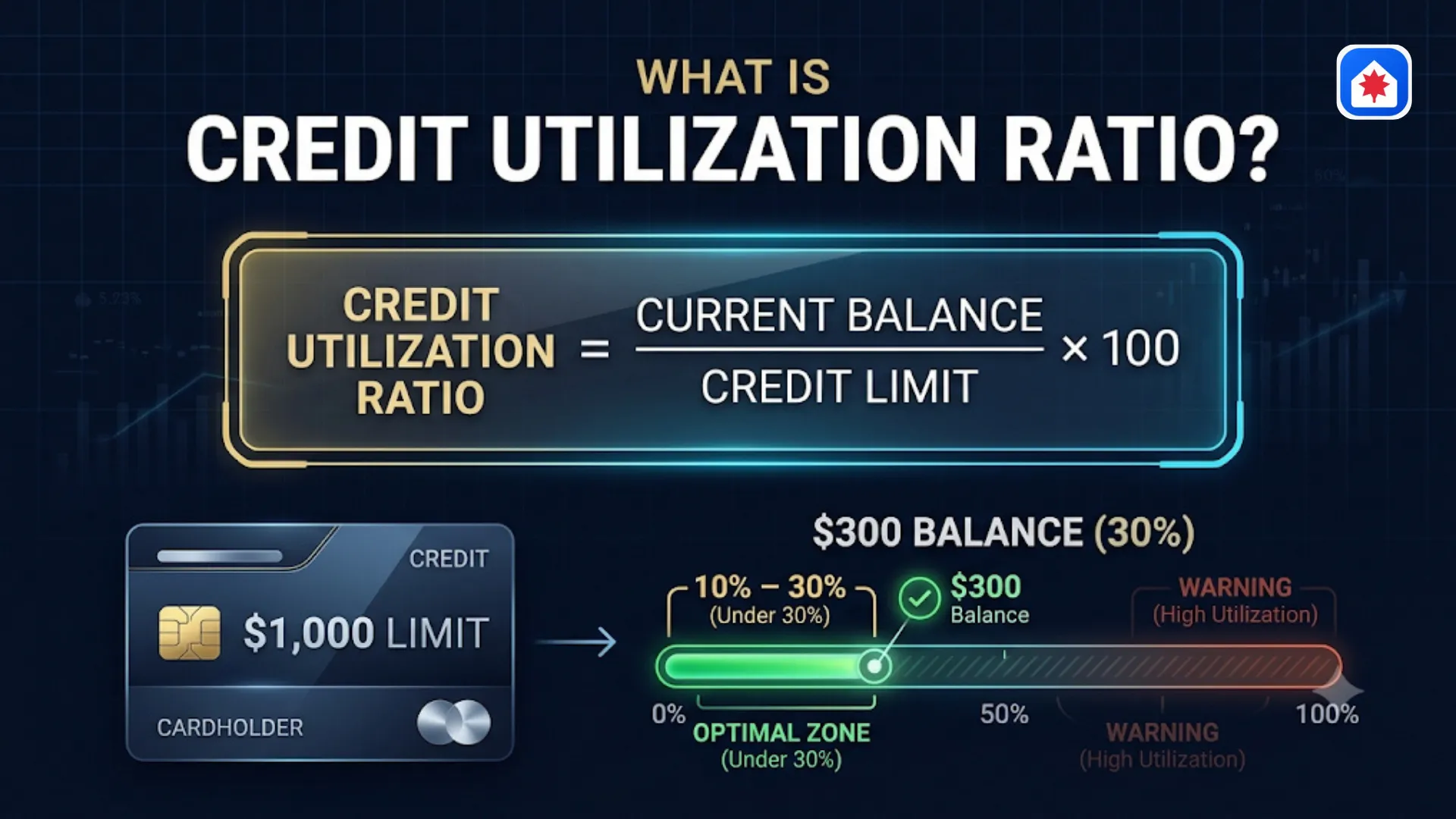
- If your credit card limit is $1,000 CAD, your statement balance should never exceed $300 CAD (30%).
- For the fastest score gains, aim for under 10% to 15% (less than $150 balance on a $1,000 limit).
The Statement Closing Date Tactic: Many newcomers mistakenly believe that paying off their card before the payment due date keeps their utilization low. However, credit card companies take a snapshot of your balance on your Statement Closing Date (which occurs about 21 days before your payment due date) and report that specific balance to Equifax and TransUnion. If you charge $800 on a $1,000 card, wait for the statement, and then pay it in full, the bureau still records an 80% utilization rate for that month.
To prevent this, make an interim payment online a few days before your monthly statement closing date so that your reported balance remains well under 15%.
Pay 100% of the Statement Balance Every Month
Your credit card statement lists two numbers: the Minimum Payment Due (typically $10 or 3% of the balance) and the Full Statement Balance.
Paying only the minimum prevents late fees, but the remaining balance accumulates interest at steep rates (often 19.99% to 24.99% APR) and compounds your debt, ballooning your credit utilization.
Always set up an automated pre-authorized debit (PAD) linked directly to your Canadian chequing account to pay 100% of the statement balance automatically each billing cycle. On-time payment history represents 35% of your credit score; missing a payment by 30 days or more can drop your score by 50 to 100 points immediately.
Keep Your Oldest Account Open and Active
The length of your credit history accounts for 15% of your score. The older your average account age, the more reliable you appear to prospective lenders.
Never cancel the very first credit card you opened upon arriving in Canada, even if you later upgrade to a lucrative rewards card with a different bank. Keep that original card active by placing a small recurring charge on it (such as a streaming subscription) and setting up automated bill payments.
Comparing Options: Best Credit Cards to Build Credit Canada
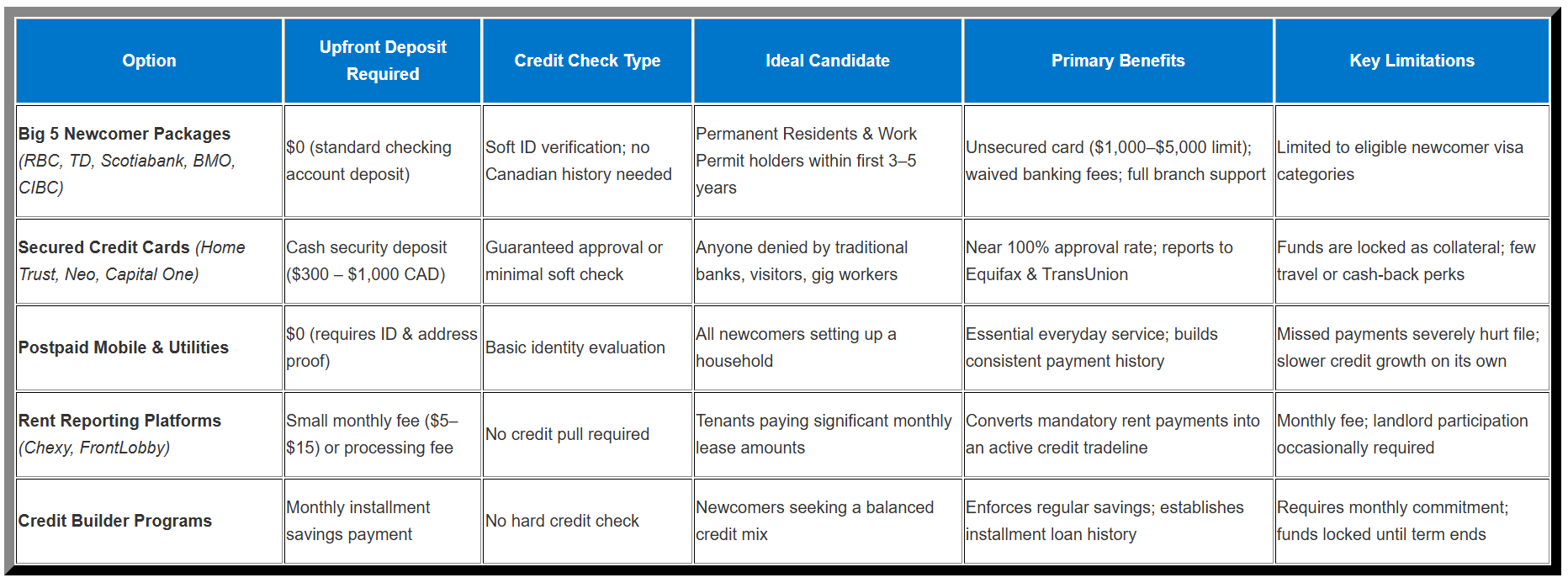
To help you decide which financial path fits your circumstances, review the comparison table below:
5 Costly Credit Mistakes Newcomers Must Avoid
Even with the best intentions, newcomers unfamiliar with Canadian lending standards can make missteps that delay their progress:
- Applying for Multiple Credit Cards Simultaneously: Every formal credit application triggers a hard credit inquiry (hard pull). A single hard inquiry temporarily drops your score by 3 to 10 points. Submitting four or five applications across different banks within a short window flags your profile as financially distressed, leading to immediate automated rejections. Space credit applications by at least six months.
- Treating Credit as Additional Income: Credit limits are short-term loans, not supplementary income. Relying on credit cards to cover gaps in living expenses while seeking employment leads to high-interest debt traps that take years to clear.
- Omitting Your Social Insurance Number (SIN) on Applications: Under federal guidelines by the Financial Consumer Agency of Canada (FCAC), providing your SIN on credit applications is legally optional. However, withholding it as a newcomer can cause clerical mismatches. Without an established address history, credit bureaus can easily misplace records or create fragmented duplicate files if your name is spelled inconsistently. Providing your SIN ensures all positive trade lines are consolidated into a single profile.
- Closing Your First Starter Credit Card: When you qualify for a premium card with better perks down the road, resist the urge to close your original starter card. Closing your oldest account shortens your average account age and reduces your aggregate credit limit, artificially spiking your credit utilization ratio overnight.
- Trusting "Quick Fix" Credit Repair Companies: Be wary of advertisements promising to "erase bad credit marks or build an 800 credit score in 30 days." No third party can alter verified bureau data. Building authentic credit in Canada requires legitimate trade lines, real time, and consistent financial habits.
The Long Game: How Good Credit Unlocks Apartment Rentals and Mortgages in Canada
Why does your credit score matter so much? Because in Canada, it serves as your universal financial resume. A strong score opens doors to two critical life milestones: renting a quality home and buying your first property.
Passing Rental Background Checks Without Prepaying Rent
Canada’s major urban rental markets - particularly the Greater Toronto Area (GTA), Metro Vancouver, and Calgary - are highly competitive. Landlords regularly demand Equifax or TransUnion credit reports through screening services like SingleKey or Naborly.
Applicants with a credit score above 680 stand out immediately, whereas those with no credit profile are frequently passed over or asked to provide Canadian co-signers (guarantors) and substantial prepaid rent deposits.
Preparing Your Credit File for CMHC and Mortgage Pre-Approval
If homeownership is part of your long-term plan in Canada, your credit score is the cornerstone of your mortgage approval:
- CMHC Insurance Minimum: The Canada Mortgage and Housing Corporation (CMHC) requires at least one borrower on an application to have a minimum credit score of 600 for default-insured mortgages (purchases with less than a 20% down payment).
- Prime Bank Standards: Major chartered banks generally require a credit score of 680 or higher to qualify for their lowest advertised fixed and variable mortgage rates. Borrowers with scores between 600 and 650 may face stricter terms or higher interest rates from alternative B-lenders.
Furthermore, Canadian mortgage underwriters evaluate your Debt Service Ratios:
- Gross Debt Service (GDS): Your housing costs (mortgage principal, interest, taxes, heat, and half of condo fees) must not exceed 39% of your pre-tax income.
- Total Debt Service (TDS): All debts combined (housing costs plus credit card balances, car loans, and student loans) must not exceed 44% of your pre-tax income.
Carrying ongoing credit card balances negatively affects your TDS ratio, directly reducing the maximum mortgage amount you can borrow.
To better understand your homeownership readiness and evaluate your borrowing power, explore CanadaHomeHub, an independent Canadian real estate and settlement resource. Their settlement guides and free tools allow you to model purchase scenarios based on official OSFI stress test standards, helping you plan your down payment and monthly budget with clarity.
Frequently Asked Questions (FAQ)
How long does it take to establish your first credit score in Canada?
It typically takes between three and six months of consistent account activity for Equifax Canada and TransUnion to generate your first official credit score. To ensure your file populates without delays, open a newcomer bank account with a starter credit card within your first two to four weeks in the country.
Can I get a Canadian credit card without a Social Insurance Number (SIN)?
Yes. Under Canadian federal banking regulations, banks cannot refuse to open an account or issue a credit card solely because an applicant declines to provide a SIN (unless the account earns taxable investment interest). However, providing your SIN is strongly recommended for newcomers because it prevents your credit file from being split or misattributed to another individual with a similar name.
Does checking my own credit score hurt my credit rating in Canada?
No. Checking your own score using your bank’s free mobile application (e.g., RBC CreditView, TD Credit Card Alerts, or Scotiabank Credit Score powered by TransUnion) or through platforms like Equifax or Borrowell is considered a soft credit inquiry. Soft inquiries have zero impact on your credit score and can be completed as often as you like. Only hard inquiries initiated by lenders evaluating a loan application temporarily lower your score.
What is the fastest credit card to build credit Canada for newcomers with no job offer?
If you have just arrived and do not have a Canadian employment letter or recent pay stubs, your fastest options are:
- A Big Five Newcomer Banking Program credit card, where approval is based on your newcomer visa status and landing funds rather than local employment history.
- A secured credit card (such as Home Trust Secured Visa or Capital One Guaranteed Mastercard), where your refundable cash collateral guarantees immediate approval regardless of your employment status.
What credit score do I need to buy a house in Canada?
While CMHC guidelines set the absolute minimum score for an insured mortgage at 600, most major banks and prime lenders look for 680 or higher to offer their lowest mortgage rates. Borrowers with scores between 600 and 650 may still qualify, but may face stricter underwriting conditions or need to borrow through alternative B-lenders at higher interest rates.
Does paying monthly rent automatically build my credit score in Canada?
No. Standard rent payments made by Interac e-Transfer, post-dated cheque, or cash are not reported to credit bureaus. To have rent count toward your credit file, you must use a dedicated rent-reporting service such as Chexy or FrontLobby that transmits your verified payment data directly to Equifax Canada.
Conclusion & Next Steps: Take Control of Your Canadian Financial Journey
Building a strong credit score in Canada is not an arbitrary process; it is a predictable mathematical outcome based on disciplined financial habits. The system does not assess how much wealth you held abroad—it evaluates how reliably you manage modest amounts of Canadian credit today.
By opening a dedicated newcomer banking package, keeping your revolving credit utilization strictly under 30%, and automating full monthly payments, you can build a strong credit profile within 12 to 24 months. That foundation will open doors to seamless rental approvals, competitive car financing, and prime mortgage rates when you are ready to buy a home.
As you plan your next steps, make use of practical Canadian resources. You can connect with experienced mortgage professionals and model your home financing numbers at CanadaHomeHub.ca to make confident, well-informed decisions throughout your settlement journey.
Thank you for reading our article!