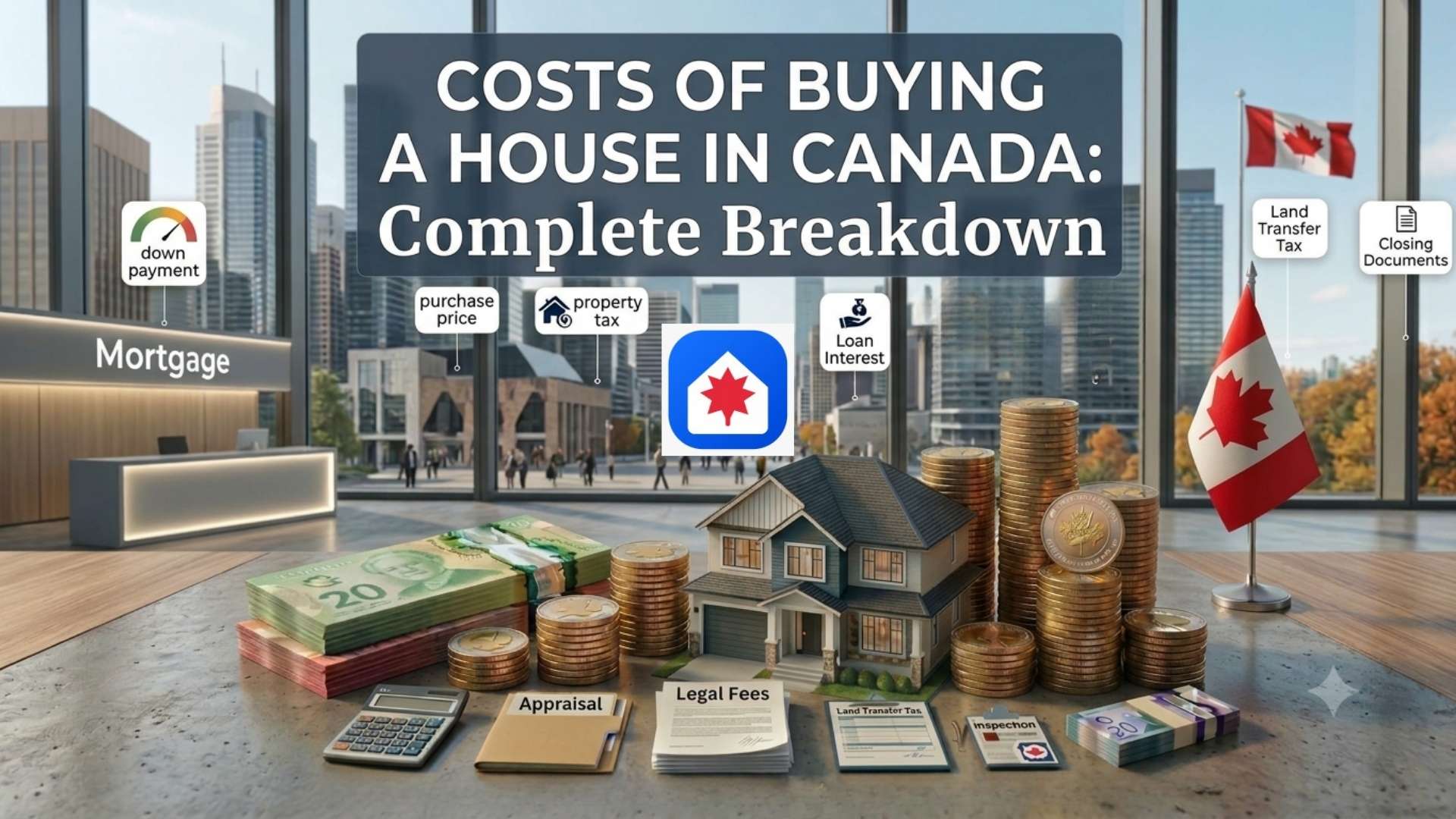
Buying a suitable home is only one part of your financial plan. It is just as important to know how much money you need to complete the purchase and cover your expenses after moving in. In Canada, buyers need to budget for more than the purchase price and down payment. Taxes, legal fees, insurance, maintenance, and other expenses can also add up. So, what are the costs of buying a house in Canada? This guide breaks down the main expenses to help you plan your finances with greater confidence.
1. Overview of the Costs of Buying a House in Canada
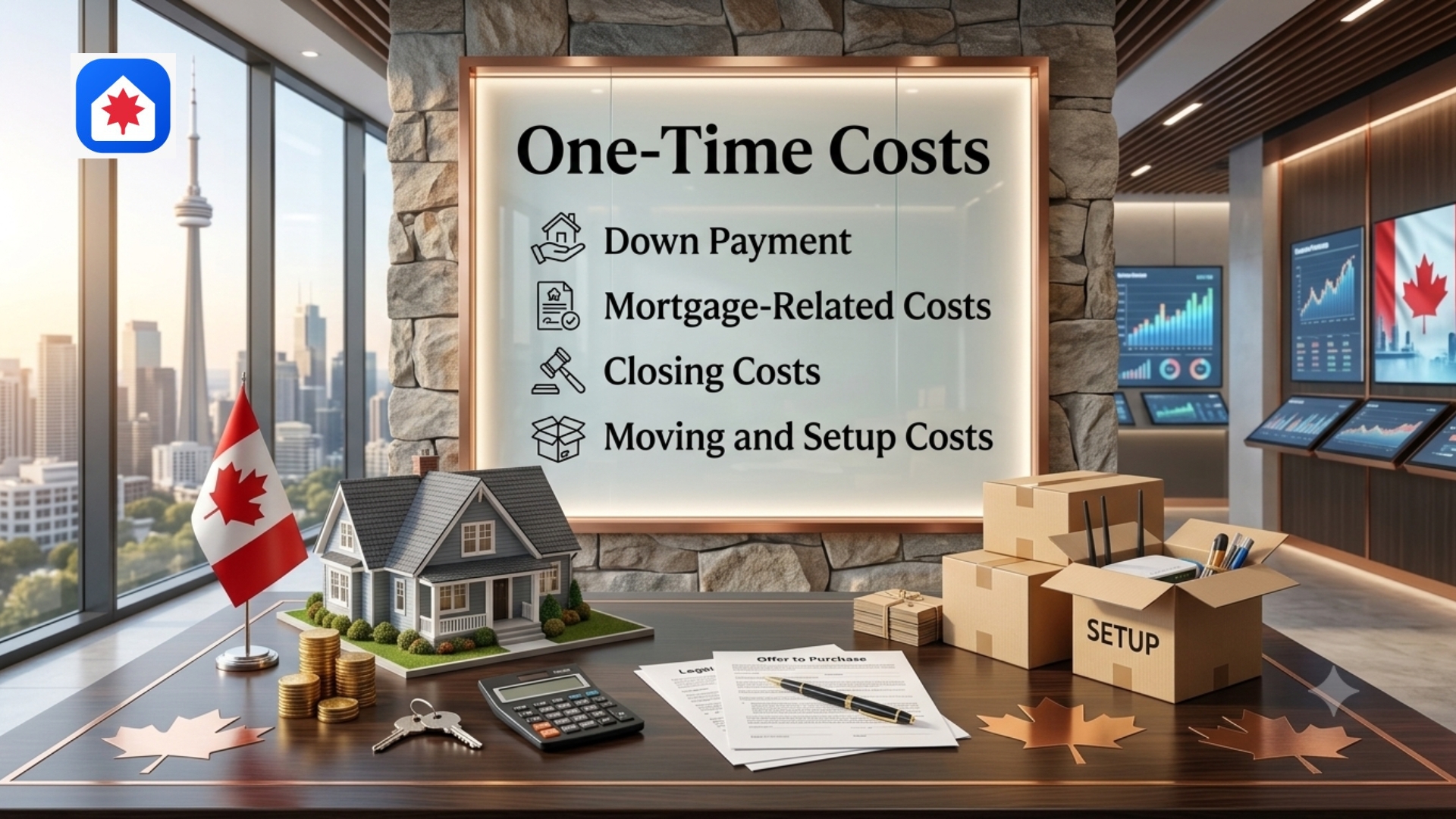
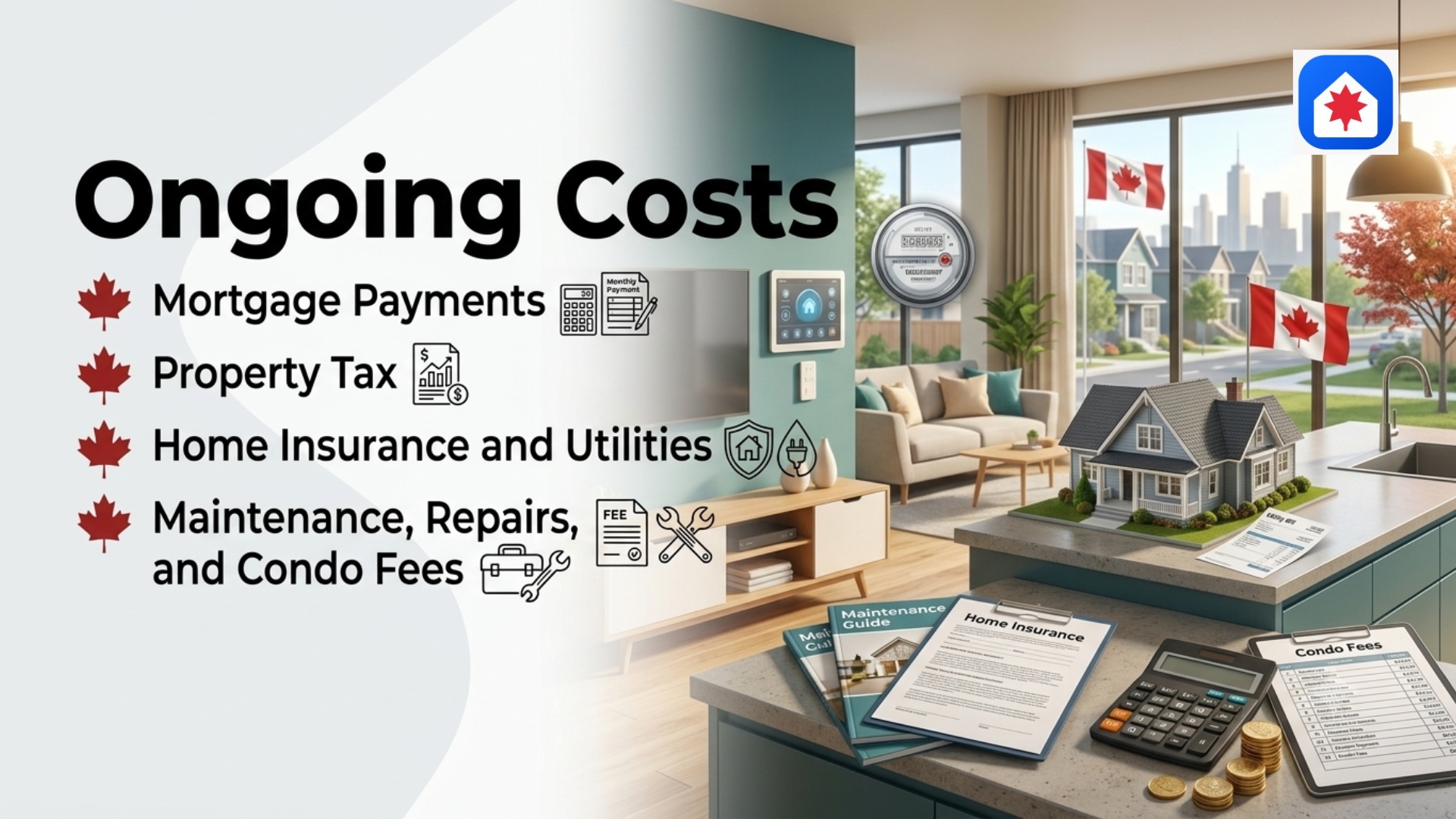
Buying a house in Canada comes with more than just the price tag. From upfront fees to ongoing expenses, these costs fall into two main categories: one-time and ongoing costs.
One-Time Costs are expenses you pay during the home-buying process, from completing the purchase to preparing the property for move-in. These costs are generally paid once rather than on a regular basis.
Ongoing Costs are recurring expenses that come with owning a home after you take possession of the property. They form part of your regular household budget and need to be considered when assessing the long-term cost of homeownership.
Understanding the difference between these two categories helps you estimate how much money you need upfront and whether you can afford the property over the long term. The following sections explain each cost, how it is calculated, and which factors may affect your overall home-buying budget.
2. One-Time Costs: Expenses to Prepare for When Buying a Home
2.1. Down Payment
A down payment is the portion of the home’s purchase price that you pay upfront. The remaining amount is usually covered by a mortgage. A larger down payment means borrowing less, which can reduce the amount you pay in interest over time. In Canada, the minimum down payment depends on the home’s purchase price. According to the Financial Consumer Agency of Canada, the general minimums are:
| Home purchase price | Minimum down payment |
|---|---|
| CAD 500,000 or less | 5% of the purchase price |
| More than CAD 500,000 but less than CAD 1.5 million | 5% of the first CAD 500,000, plus 10% of the amount above CAD 500,000 |
| CAD 1.5 million or more |
20% of the purchase price |
For example, if a home costs CAD 600,000, the minimum down payment under these general rules is CAD 35,000: 5% of the first CAD 500,000 (CAD 25,000), plus 10% of the remaining CAD 100,000 (CAD 10,000). This is the general minimum, but it does not mean every buyer will be approved for a mortgage with that down payment.
2.2. Mortgage-Related Costs
Taking out a mortgage may involve additional expenses beyond the down payment. Two costs to check are mortgage default insurance and a home appraisal fee, if required by the lender.
2.2.1. Mortgage Default Insurance
If your down payment is less than 20%, you will generally need mortgage default insurance if your mortgage meets the applicable eligibility requirements. This insurance protects the lender if you cannot repay the loan; it does not protect the buyer against personal losses.
The premium depends on the amount borrowed and the down payment percentage. Buyers can often pay the premium upfront or add it to the mortgage if permitted. If it is added to the mortgage, you will also pay interest on that amount. In Ontario, Manitoba, and Quebec, provincial sales tax on the insurance premium must be paid separately and cannot be added to the mortgage.
2.2.2. Home Appraisal Fee
A lender may require an appraisal to assess the property’s value before approving the mortgage. If you are responsible for the fee, confirm the amount and who will pay it with the lender in advance. Not every transaction involves this cost. To avoid double-counting, ask which fees must be paid separately, which can be included in the mortgage, and which are already covered by a service quote.
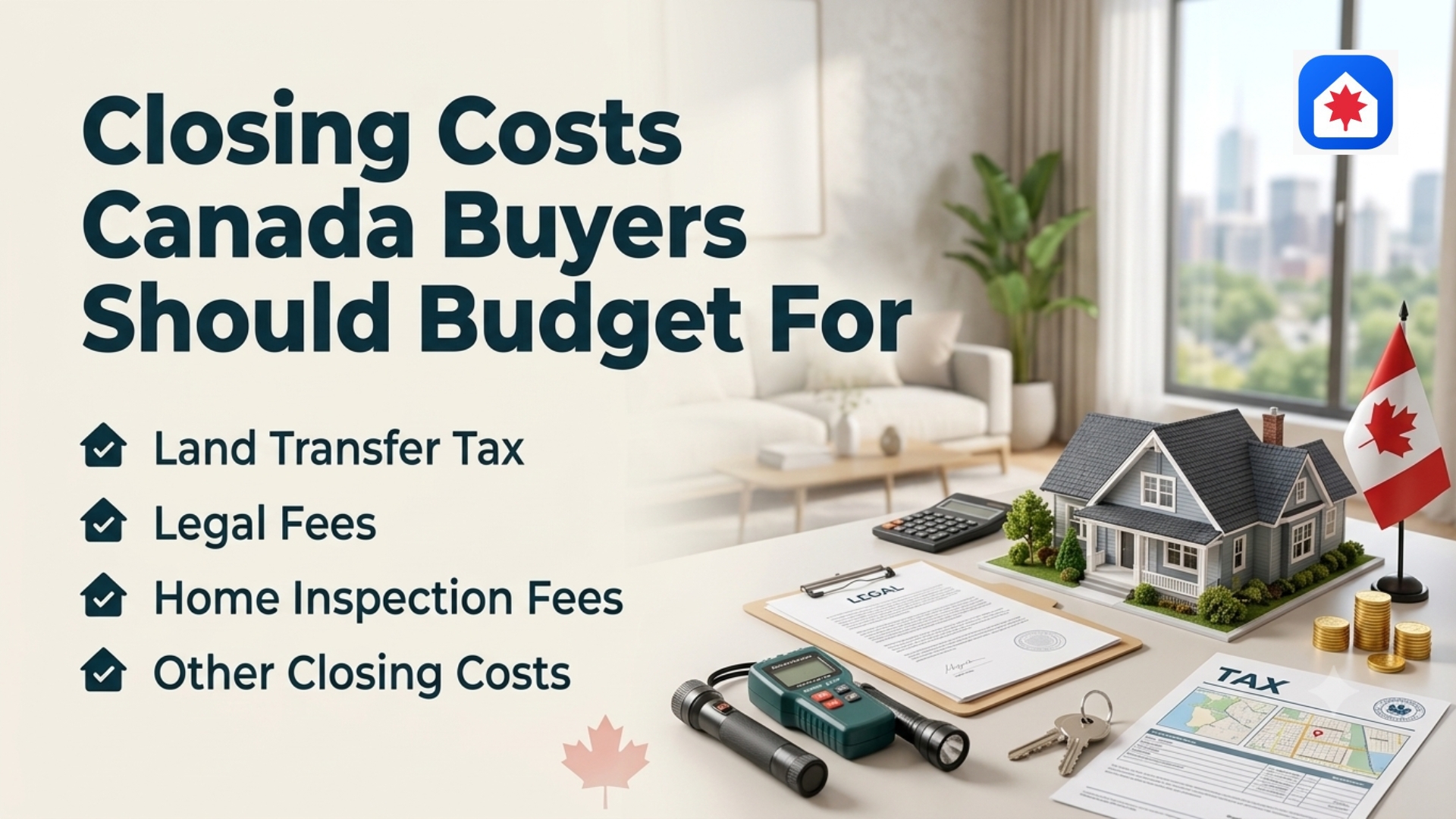
2.3. Closing Costs Canada Buyers Should Budget For
Closing costs in Canada are the expenses buyers need to pay to complete the transaction and take legal ownership of the home. These fees are an important part of the costs of buying a house in Canada. According to the Financial Consumer Agency of Canada, buyers can generally budget around 1.5%-4% of the purchase price for closing costs. This is a broad estimate, not a fixed rate for every transaction. The actual amount depends on the location, purchase price, and applicable fees.
For example, for a home priced at CAD 500,000, this estimate works out to CAD 7,500-20,000. You should still check each expense before finalizing your budget.
2.3.1. Land Transfer Tax
Land transfer tax may apply when ownership of a property transfers from the seller to the buyer. The tax rate and calculation method depend on the province, and some cities also charge their own municipal land transfer tax. Do not apply one province’s rate to all of Canada. This tax can make a significant difference to your home-buying budget, so ask the lawyer or professional handling the transaction to estimate the amount due before closing. When budgeting for this tax, you should:
- Check the tax rules in the province and city where the property is located.
- Confirm whether provincial tax, municipal tax, or both apply.
- Check whether you qualify for any first-time homebuyer exemptions or rebates.
2.3.2. Legal Fees
A real estate lawyer Canada, depending on local rules and practices, helps handle the legal steps required to complete the purchase. Their work may include reviewing documents, checking title, preparing transfer documents, handling payment funds, and registering ownership. Fees vary by provider, location, and transaction complexity. When requesting a quote, ask:
- Which services are included in the legal fee?
- Are disbursements, registration fees, and taxes charged separately?
- Could additional fees apply if the file requires work beyond the usual scope?
2.3.3. Home Inspection Fees
A home inspection assesses the property’s condition before the transaction is finalized. Depending on the scope of the service, the inspector may examine accessible areas and systems such as the roof, foundation, electrical system, plumbing, and heating. The cost depends on the type, size, age, and location of the home, as well as the scope of the inspection. Ask in advance which areas will be inspected, how long the inspection will take, and what the report will cover.
A home inspection is not always legally required, but it is a step worth considering. Where possible, review the inspection conditions in your offer to purchase and seek professional advice before signing. Home inspection Canada costs can vary, so confirm the fee with your inspector before booking.
2.3.4. Other Closing Costs
In addition to land transfer tax, legal fees, and home inspection fees, buyers may encounter the following expenses:
- Title insurance: Protects against certain risks specified in the insurance policy.
- Land registration fees: Fees for registering the property transfer or mortgage, depending on the transaction and location.
- Property tax adjustments: An amount paid between the buyer and seller when one party has already paid property tax for a period that extends beyond their ownership.
- Utility adjustments: Adjustments for certain utility bills that have already been paid, where applicable.
- Other applicable fees and taxes: Additional costs depending on the property type and transaction terms.
2.4. Moving and Setup Costs
After completing the purchase, you may need extra money to move in and prepare the home. These expenses are generally not included in closing costs Canada, but they should still be part of your upfront budget. Common expenses include:
- Moving costs: Hiring movers, renting a truck, packing belongings, or paying for storage.
- Utility setup costs: Connection or setup fees charged by service providers, if applicable.
- Initial repairs and renovations: Painting, changing locks, addressing necessary repairs, or upgrading features that do not meet your needs.
- Furniture and equipment: Appliances, curtains, gardening tools, or snow-removal equipment, depending on the property and location.
3. Ongoing Costs: Expenses After Buying a Home
3.1. Mortgage Payments
If you use a mortgage to buy a home, you will make payments according to the schedule agreed upon with the lender. Payments are often monthly, although other schedules may be available. The amount depends on the principal borrowed, interest rate, amortization period, and payment frequency.
For example, suppose you buy a home for CAD 600,000, make a CAD 120,000 down payment, and borrow CAD 480,000. If you choose a fixed mortgage rate of 4.5% per year for a five-year term, that rate will remain unchanged during those five years. With a 25-year amortization period and monthly payments, you would pay approximately CAD 2,667 per month toward principal and interest. If you choose a variable rate, the rate may rise or fall based on the lender’s reference rate and the terms of your mortgage. When the rate changes, your monthly payment or the portion allocated to principal may change, depending on the mortgage type.
Before choosing a mortgage, compare fixed and variable rates and check how the lender adjusts payments when interest rates change.
3.2. Property Tax
Property tax when buying a house in Canada is an important ongoing expense. Homeowners generally pay this recurring tax to their local government. The calculation method, tax rate, and payment schedule vary by city or region. The amount is usually based on the property’s assessed or taxable value and the local tax rate. As a result, two homes with similar purchase prices may have different property tax bills if they are located in different areas.
3.3. Home Insurance and Utilities
Home insurance helps protect you financially against certain risks covered by the policy, such as fire damage or other specified property-related incidents. Coverage, deductibles, and exclusions vary between policies. Compare quotes based on the actual protection offered rather than choosing solely by the lowest premium.
In addition to insurance, homeowners should budget for utilities such as:
- Electricity, natural gas, and heating: Costs depend on the home’s size, insulation, appliances, and seasonal weather.
- Water and wastewater services: Charges may be based on usage or local rates.
- Internet and communication services: Costs depend on the provider and plan you choose.
- Other services: These may include garbage collection or local service charges not already included in the property tax bill.
3.4. Maintenance, Repairs, and Condo Fees
Homeowners should set aside money for property maintenance and repairs in addition to regular bills. Some tasks can be scheduled, such as servicing the heating system, cleaning gutters, or maintaining the yard. Other costs arise only when equipment breaks down or part of the home needs replacing. Actual expenses depend on the property’s age, condition, and type. Older homes may require more frequent repairs, while homes with yards may involve additional costs for landscaping, snow removal, or walkway maintenance. Inspect the property before buying and keep a separate reserve for unexpected work.
If you buy a condominium, you will generally pay condo fees, also known as maintenance or strata fees in some regions. These fees usually contribute to the operation, maintenance, and repair of shared areas such as hallways, elevators, roofs, and common amenities. Depending on the building, some services or utilities may be included, but do not assume that all costs are covered.
4. How to Manage Costs and Avoid Budget Shortfalls When Buying a Home
Understanding the costs of buying a house in Canada is the first step. To avoid financial pressure after closing, you need to set a realistic budget, check available assistance programs, and plan for expenses that may arise. Here are four ways to make your plan more practical.
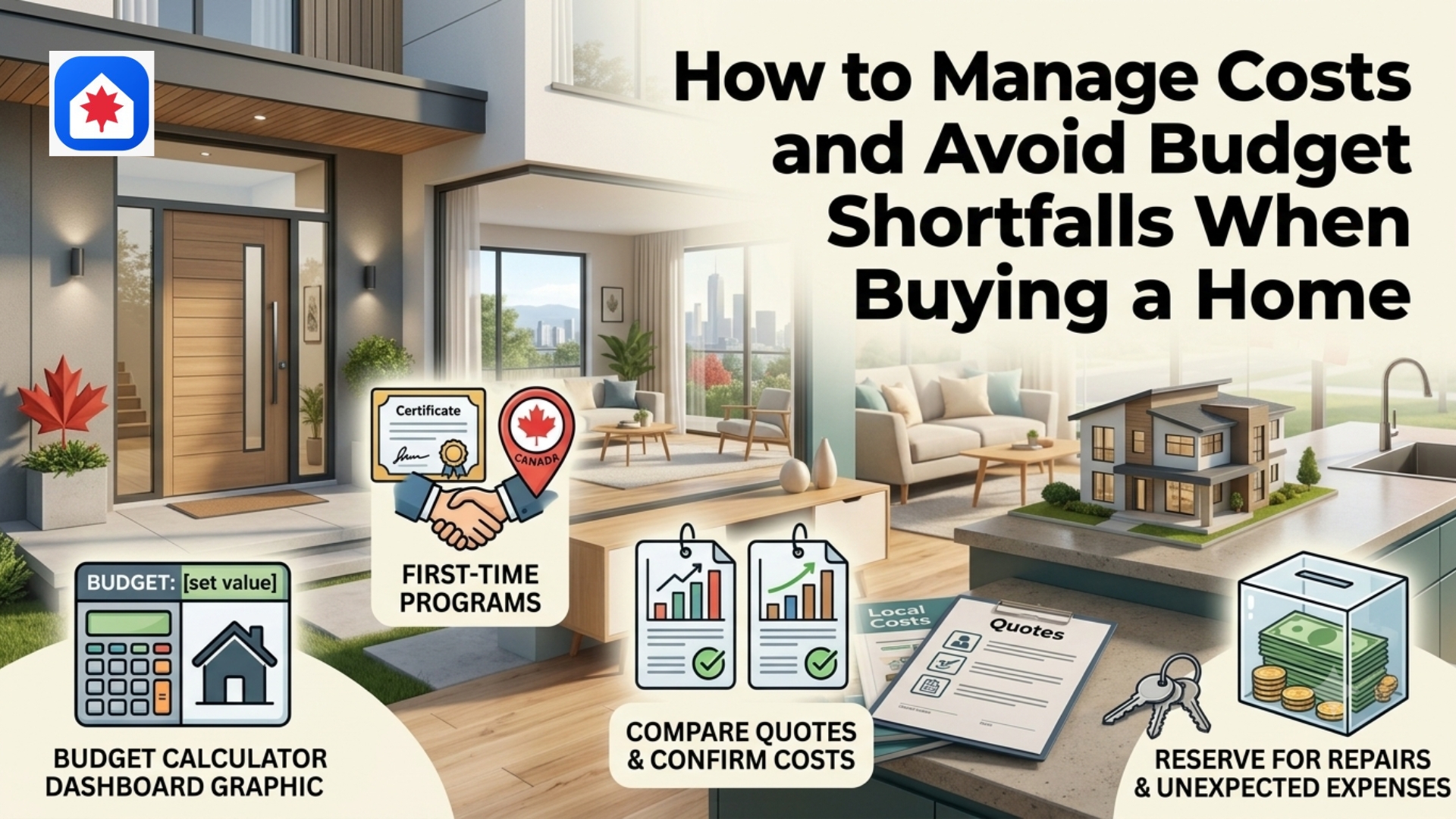
4.1. Set Your Budget Before Choosing a Home
Before looking for properties, determine how much you can afford for the down payment, closing costs, and other upfront expenses. Also estimate your mortgage payments and recurring costs such as property tax, insurance, utilities, and maintenance. Do not rely solely on the amount a lender is willing to approve when deciding what price range is right for you. Mortgage approval does not automatically mean you can comfortably afford every related expense. Consider your income, existing debts, living costs, and how much you want to keep in an emergency fund.
A simple approach is to create two separate budgets:
- Upfront budget: Down payment, mortgage-related fees due upfront, closing costs, moving expenses, and an emergency reserve.
- Monthly budget: Mortgage payments, property tax, insurance, utilities, maintenance, and condo fees, if applicable.
Separating these costs helps you choose a home that fits both your immediate finances and your long-term plans.
4.2. Check First-Time Homebuyer Programs
If you are buying your first home, look into federal and provincial government programs. Depending on your circumstances, certain programs may help reduce upfront costs or make it easier to save for a home.
Options worth researching include:
- First Home Savings Account (FHSA): A savings account for eligible first-time homebuyers, with tax advantages under the applicable rules.
- Home Buyers’ Plan (HBP): Allows eligible buyers to withdraw money from their RRSP to buy or build a qualifying home, subject to current limits and conditions.
- Land transfer tax rebates or refunds: Some provinces and municipalities offer programs for first-time homebuyers who meet specific criteria.
4.3. Get Quotes and Confirm Local Costs
Some costs of buying a house in Canada cannot be estimated accurately from the property price alone. Land transfer tax in Canada, real estate lawyer fees in Canada, home insurance, and other transaction-related expenses can vary by location and purchase.
To make your budget more accurate:
- Ask your real estate lawyer Canada or transaction professional for an itemized estimate of closing costs, separating taxes, service fees, and disbursements.
- Check land transfer tax rates in the province and city where the property is located.
- Get an insurance quote based on the specific home you plan to buy.
- Ask the seller for recent utility bills and check the current property tax amount.
- Confirm which costs are already included in quotes to avoid counting the same expense twice.
4.4. Set Aside a Reserve for Repairs and Unexpected Expenses
Not every expense within the costs of buying a house in Canada can be identified before buying a home. Appliances may fail, the heating system may need servicing, or previously unnoticed problems may increase your costs after you move in. Keep some money aside after paying the down payment and closing costs. The amount of your reserve should reflect the home’s condition, the age of major systems, your financial situation, and any work needed soon after moving in.
For a detached home, pay particular attention to the roof, heating system, electrical system, plumbing, and foundation. For a condo, check the unit’s condition and review information about the building’s reserve fund and the possibility of special assessments.
5. How Can CanadaHomeHub Help Homebuyers?

Buying a home in Canada involves several considerations, from assessing your finances and transaction costs to finding the right professional. CanadaHomeHub offers tools and resources to help buyers research their options and prepare a budget before making a decision. You can use CanadaHomeHub to:
- Calculate mortgage payments monthly or biweekly, estimate total interest, and review a projected repayment schedule based on the loan amount, interest rate, and amortization period.
- Estimate the maximum home price you may be able to afford based on household income, existing debts, and affordability criteria used in Canada.
- Calculate the minimum down payment for a given home price and estimate CMHC mortgage insurance premiums.
- Estimate the funds needed to close a purchase, including land transfer tax, legal fees, home inspection costs in Canada, and title insurance.
Use the information on the website as a starting point; it does not replace legal, tax, or financial advice tailored to your circumstances.
A sound home-buying plan involves more than having enough money for a down payment. You also need to be able to cover transaction fees and ongoing living expenses. Understanding the costs of buying a house in Canada can help you assess your finances, compare properties, and reduce the risk of unexpected expenses. Before making a purchase, calculate your upfront budget, estimate your monthly homeownership costs, and set aside a reserve for unexpected situations. With careful preparation, you can make a decision that better fits your financial circumstances and homeownership goals.
Thank you for taking the time to read this article.
For more information, please visit CanadaHomeHub.